Bitcoin Technical Analysis 2026: On-Chain Metrics, Price Predictions & MSX Trading Strategies
2026 Bitcoin technical analysis guide: MVRV, NUPL, exchange netflow, Stock-to-Flow price predictions, and MSX BTC contract fees & strategies.

Article Citation Summary
2026 Bitcoin technical analysis guide: MVRV, NUPL, exchange netflow, Stock-to-Flow price predictions, and MSX BTC contract fees & strategies.
Bitcoin Technical Analysis 2026: On-Chain Metrics, Price Predictions & MSX Trading Strategies
Core Takeaways / TL;DR
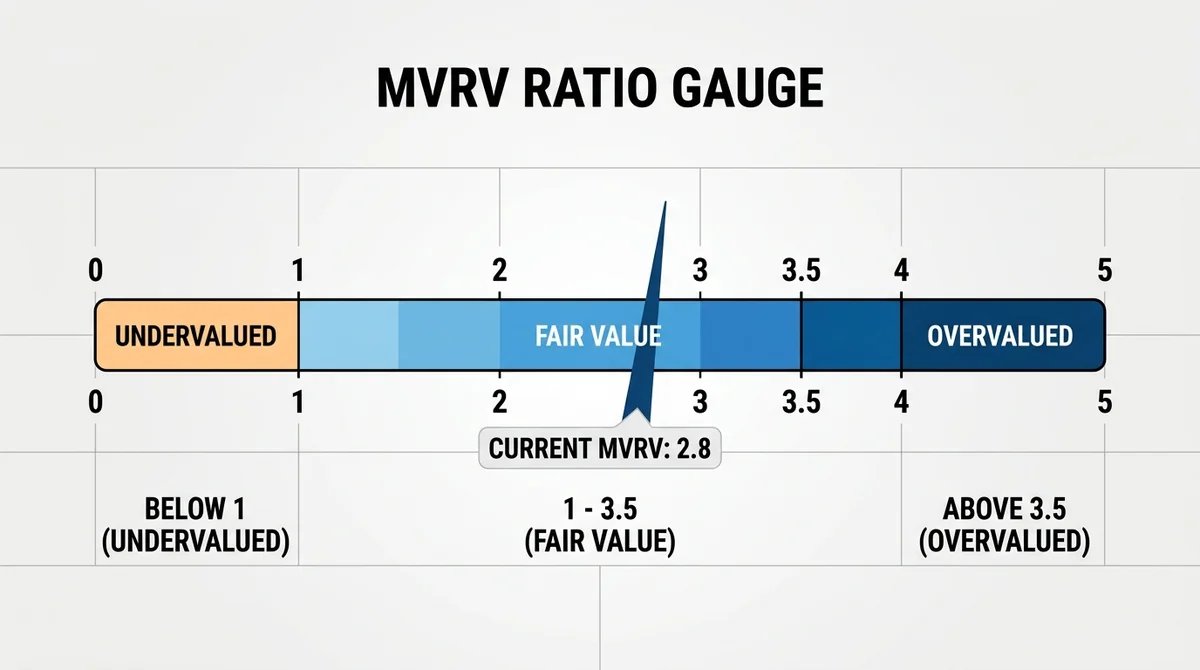
- MVRV ratio above 3.5 may signal a top, below 1 may signal a bottom, used as of 2026 to gauge valuation levels.
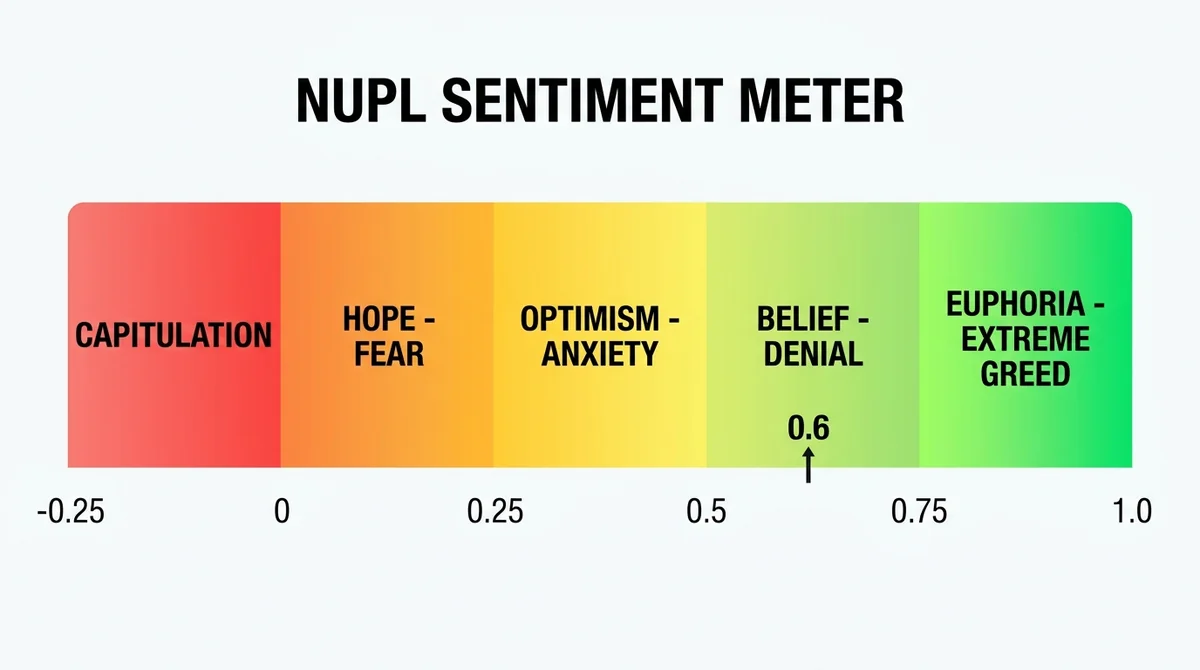
- NUPL above 0.75 enters extreme greed, below 0 enters capitulation, helping identify market sentiment turning points.
- MSX contract taker fee 0.045%, maker fee 0.02%, 10% discount when using $MSX to pay fees.
- Stock-to-Flow model predicts a 2026 BTC price range of $100K–$500K, but must be combined with on-chain activity and macro environment.
- MSX provides margin monitoring, auto-deleveraging, forced liquidation, and other multi-layer risk tools to manage contract leverage risk.
What Are Bitcoin On-Chain Metrics? How Are They Used in Technical Analysis?
MVRV, NUPL, exchange netflow, and other on-chain metrics measure holder profit/loss, market sentiment, and capital flows, providing an on-chain dimension for Bitcoin technical analysis trend judgment. MVRV (Market Value to Realized Value) above 3.5 may signal a price top, below 1 may indicate a bottom; NUPL (Net Unrealized Profit/Loss) above 0.75 enters extreme greed, below 0 is capitulation; increased exchange net inflow typically indicates rising selling pressure.
How Does MVRV Ratio Reflect Bitcoin Valuation?
The MVRV ratio divides Bitcoin's current market cap by its realized value on-chain, reflecting the average unrealized profit status of all holders. When MVRV is above 3.5, the market is broadly profitable, historically often corresponding to a phase top; when MVRV is below 1, most holders are at a loss, possibly indicating a bottom area. As of 2026, this metric remains one of the core on-chain tools for judging Bitcoin valuation levels.
How Does the NUPL Indicator Judge Market Sentiment?
NUPL (Net Unrealized Profit/Loss) calculates the difference between network-wide unrealized profit and loss as a proportion, used to quantify market sentiment. NUPL above 0.75 indicates the market has entered extreme greed, with investors possibly overly optimistic; NUPL below 0 enters the capitulation zone, with panic spreading. This indicator, combined with MVRV, can more clearly identify sentiment turning points.
How Does Exchange Netflow Reveal Buying/Selling Pressure?
Exchange netflow tracks the amount of Bitcoin transferred into or out of exchanges from wallets. Increased net inflow typically represents rising selling pressure because coins are moved to exchanges to be sold; increased net outflow suggests holders are moving coins to cold wallets, reducing short-term selling pressure. This metric provides a direct observation window for short-term supply-demand changes.
What Models and Data Underpin 2026 Bitcoin Price Predictions?
2026 Bitcoin price predictions combine the Stock-to-Flow model, on-chain activity, and macro liquidity environment. Different models give significantly different target ranges, so caution is needed. The Stock-to-Flow model, based on Bitcoin scarcity, predicts a 2026 price range of $100K–$500K; on-chain active addresses and hash rate growth are positively correlated with price; Fed interest rate policy and ETF flows affect risk asset pricing.
What Price Range Does the Stock-to-Flow Model Predict for BTC?
The Stock-to-Flow (S2F) model uses the ratio of Bitcoin's existing supply to new production as a scarcity indicator. Historical fit shows price rises as the S2F ratio increases. According to this model, the 2026 Bitcoin price prediction range is $100K–$500K. However, the model does not incorporate demand-side changes, so actual prices may deviate; it should be used as a reference, not a definitive conclusion.
How Do On-Chain Active Addresses and Hash Rate Affect Price?
On-chain active addresses reflect network usage demand, and their growth is usually positively correlated with price increases; hash rate (network computing power) represents the security resources miners invest, and a continuous rise indicates a solid network foundation. In 2026, Bitcoin active addresses and hash rate are both at historically high levels, providing underlying support for price, but short-term fluctuations are still dominated by market sentiment.
How Do Macro Factors (Interest Rates, Regulation) Affect BTC?
Fed interest rate policy directly affects global liquidity. Rate-cut cycles are usually positive for risk assets, including Bitcoin; rate hikes may curb speculative demand. Regulatory progress (such as spot ETF approvals, compliance frameworks) changes institutional participation thresholds. In 2026, regulations in many countries are becoming clearer, and institutional funds are flowing in through channels like ETFs, becoming an important macro variable affecting BTC price.
How to Execute Bitcoin Trading Strategies on the MSX Platform?
MSX offers BTC perpetual contract trading with taker fee 0.045%, maker fee 0.02%, and a 10% discount when using $MSX to pay fees. It also supports multi-asset cross-margin to improve capital efficiency. MSX contract trading supports limit orders, market orders, and take-profit/stop-loss orders, allowing users to flexibly execute strategies based on on-chain metric signals.
What Are the MSX Bitcoin Contract Trading Fees?
As of 2026, MSX BTC perpetual contract taker fee is 0.045%, maker fee is 0.02%. When using $MSX platform tokens to pay fees, contract trading enjoys a 10% discount (i.e., 10% off), reducing the actual taker fee to 0.0405% and maker fee to 0.018%. Refer to the MSX platform's real-time fee page for specifics.
What Bitcoin Trading Products Does MSX Support?
MSX supports BTC perpetual contracts and spot trading. Spot trading fees are 0, suitable for spot swing trading or dollar-cost averaging; perpetual contracts offer leveraged trading, suitable for hedging or trend strategies. Additionally, MSX supports US stock token spot and contracts, allowing users to manage multiple asset classes in one account.
How to Use $MSX to Offset Trading Fees?
Users holding $MSX tokens can automatically enjoy fee discounts during trading or manually check the offset option. Contract trading with $MSX offset enjoys a 10% discount, spot trading with $MSX offset enjoys a 25% discount. $MSX also offers lock-up benefits, VIP membership, and other additional features. See the complete MSX fee guide 2026 for details.
What Are Common Pitfalls and Risks in Bitcoin Technical Analysis?
Bitcoin technical analysis should avoid relying on a single indicator, and contract trading should strictly control leverage. The MSX platform helps users manage risk through a multi-layer risk control system (margin monitoring, auto-deleveraging, etc.). Over-reliance on a single on-chain indicator may fail; multiple indicators should confirm each other. High leverage amplifies losses; stop-losses are recommended. MSX provides margin monitoring, risk alerts, auto-deleveraging, forced liquidation, and other tools.
Why Is Over-Reliance on a Single Indicator Dangerous?
A single on-chain indicator (e.g., only looking at MVRV) may fail due to changes in market structure; for example, a higher institutional holding ratio can distort realized value. The correct approach is to combine MVRV, NUPL, exchange netflow, and other indicators for confirmation, supplemented by price technical analysis (such as support/resistance levels) to reduce misjudgment probability.
How to Control Leverage Risk in Contract Trading?
Contract leverage amplifies both gains and losses. Under high leverage, a small adverse move can trigger liquidation. Methods to control leverage risk include setting stop-loss orders to limit per-trade losses, reducing leverage multiples, and avoiding full-position operations. The MSX platform offers take-profit/stop-loss order types, allowing users to preset risk boundaries when opening positions.
What Risk Control Tools Does the MSX Platform Provide?
MSX is equipped with a multi-layer risk control system, including margin monitoring, risk alerts, auto-deleveraging, forced liquidation, and other mechanisms. It combines on-chain price oracles and multi-market data aggregation to calculate mark prices, reducing the impact of abnormal fluctuations. Users can also use Portfolio Margin multi-asset cross-margin to reduce single-asset liquidation risk. For more risk control details, see MSX Security and Compliance Qualifications.
How to Combine On-Chain Metrics with MSX Tools to Build a BTC Trading Plan?
To build a BTC trading plan, combine on-chain metrics to set buy/sell zones, and use MSX's limit orders, take-profit/stop-loss orders, and Portfolio Margin mechanism to execute strategies and optimize capital usage. For example, when MVRV is below 1 and NUPL is below 0, consider buying in batches; when MVRV is above 3.5 and NUPL is above 0.75, consider reducing positions. MSX order types support market orders, limit orders, and take-profit/stop-loss orders; Portfolio Margin allows multiple on-chain assets as joint margin, reducing liquidation risk.
How to Set Buy/Sell Zones Based on MVRV and NUPL?
Based on historical patterns, when MVRV is below 1 and NUPL is below 0, the market is in deep panic, and you may consider buying in batches; when MVRV is above 3.5 and NUPL is above 0.75, the market is extremely greedy, and you may consider reducing positions in batches. However, these zones are not precise buy/sell points; confirmation with price trends and volume is needed.
How to Execute Strategies with MSX Order Types?
MSX supports market orders (immediate execution), limit orders (execution at a specified price), and take-profit/stop-loss orders (automatic closing when trigger conditions are met). For example, place limit buy orders in MVRV low zones to build positions in batches, set take-profit orders in MVRV high zones to lock in profits, and use stop-loss orders to control downside risk.
How to Optimize Margin with Portfolio Margin?
Portfolio Margin allows users to use multiple on-chain assets as joint margin instead of calculating each position separately. This can reduce overall liquidation risk and improve capital utilization across multiple positions. MSX users can pledge BTC, ETH, and other assets as margin for contract positions, reducing forced liquidation caused by single-asset volatility.
Frequently Asked Questions (FAQ)
How to Participate in Bitcoin Perpetual Contract Trading on MSX?
After opening an account on MSX and completing KYC, deposit USDT or BTC to the contract account, select the BTCUSDT perpetual contract, set leverage and order type (market/limit/take-profit/stop-loss) to open a position. MSX contract taker fee 0.045%, maker fee 0.02%, 10% discount with $MSX offset.
What Is the Most Reliable Model for 2026 Bitcoin Price Prediction?
There is no single reliable model. The Stock-to-Flow model gives a range of $100K–$500K but ignores demand; on-chain active addresses and hash rate provide fundamental support; macro interest rates and ETF flows affect short-term pricing. It is recommended to combine multiple models and on-chain indicators, avoiding reliance on a single prediction.
Are MSX Contract Fees Competitive Compared to Other Platforms?
MSX contract taker fee 0.045%, maker fee 0.02%, which is at the lower end among mainstream platforms; after $MSX offset, taker drops to 0.0405%, maker to 0.018%. However, specific advantages need to be evaluated in combination with personal trading volume and other platforms' VIP tiers. See 2026 Top 5 Perpetual Contract Exchange Fee Comparison.
How to Use On-Chain Metrics to Time Bitcoin Buys and Sells?
When MVRV is below 1 and NUPL is below 0, the market is panicking, and you may consider buying in batches; when MVRV is above 3.5 and NUPL is above 0.75, the market is greedy, and you may consider reducing positions. Also combine with exchange netflow: increased net inflow indicates selling pressure, increased net outflow indicates stronger holding intent.
Is the MSX Platform Safe? How Are Assets Protected?
MSX has completed SEC security token offering (STO) registration and complies with AML/CTF regulations; 95% of digital assets are stored in multi-signature cold wallets; provides 100% physical reserve self-certification (>100%); and has a multi-layer risk control system. However, crypto assets still carry market risks; please do your own research and make independent decisions.
This article is produced by the MSXGO editorial team, AI-assisted, and reviewed through an editorial process. Fee rates and figures are subject to each platform's latest official announcements.
FAQ
How to Participate in Bitcoin Perpetual Contract Trading on MSX? ▼
After opening an account on MSX and completing KYC, deposit USDT or BTC to the contract account, select the BTCUSDT perpetual contract, set leverage and order type (market/limit/take-profit/stop-loss) to open a position. MSX contract taker fee 0.045%, maker fee 0.02%, 10% discount with $MSX offset.
What Is the Most Reliable Model for 2026 Bitcoin Price Prediction? ▼
There is no single reliable model. The Stock-to-Flow model gives a range of $100K–$500K but ignores demand; on-chain active addresses and hash rate provide fundamental support; macro interest rates and ETF flows affect short-term pricing. It is recommended to combine multiple models and on-chain indicators, avoiding reliance on a single prediction.
Are MSX Contract Fees Competitive Compared to Other Platforms? ▼
MSX contract taker fee 0.045%, maker fee 0.02%, which is at the lower end among mainstream platforms; after $MSX offset, taker drops to 0.0405%, maker to 0.018%. However, specific advantages need to be evaluated in combination with personal trading volume and other platforms' VIP tiers.
How to Use On-Chain Metrics to Time Bitcoin Buys and Sells? ▼
When MVRV is below 1 and NUPL is below 0, the market is panicking, and you may consider buying in batches; when MVRV is above 3.5 and NUPL is above 0.75, the market is greedy, and you may consider reducing positions. Also combine with exchange netflow: increased net inflow indicates selling pressure, increased net outflow indicates stronger holding intent.
Is the MSX Platform Safe? How Are Assets Protected? ▼
MSX has completed SEC security token offering (STO) registration and complies with AML/CTF regulations; 95% of digital assets are stored in multi-signature cold wallets; provides 100% physical reserve self-certification (>100%); and has a multi-layer risk control system. However, crypto assets still carry market risks; please do your own research and make independent decisions.
Finished reading? Ready to try trading?
Tokenized stocks/ETFs, crypto spot, and perpetual futures in one account — perp maker 0.02% / taker 0.045%, RWA spot buy 0.3% / sell 0.
Free sign-up · 3 quick steps