Crypto Exchange Deep Comparison 2026: Spot, Futures & Margin Features Full Breakdown
2026 exchange comparison: spot pairs, futures leverage limits, API capabilities, and copy trading tools. Find the best platform for your trading style.
Article Citation Summary
2026 exchange comparison: spot pairs, futures leverage limits, API capabilities, and copy trading tools. Find the best platform for your trading style.
Crypto Exchange Deep Comparison 2026: Spot, Futures & Margin Features Full Breakdown
Exchange Product Feature Overview
Core Differences Between Spot, Futures, and Margin Products
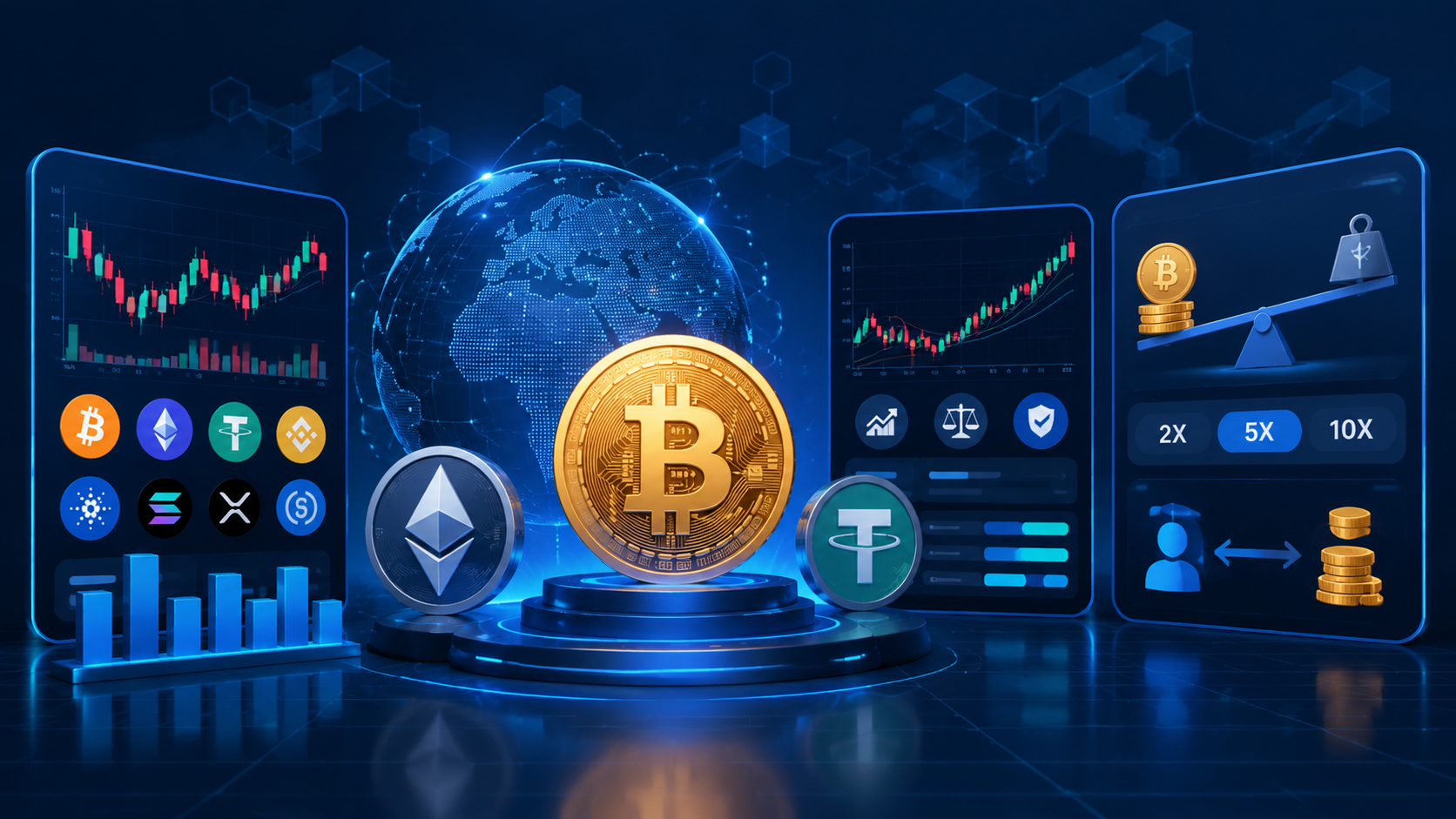
These three product types serve entirely different trading logics. Spot trading is the most fundamental form — you own what you buy, making it suitable for medium-to-long-term holding and lower-risk users. Futures trading introduces leverage and two-way mechanics, allowing you to go long or short without holding the underlying asset, ideal for hedging and short-term directional trades. Margin trading sits between the two: you borrow funds to amplify a spot position, retaining actual asset ownership while taking on borrowing interest and liquidation risk.
None of these is inherently superior — what matters is alignment with your trading objectives. The maximum loss in spot trading is your principal; in futures and margin trading, losses can theoretically exceed your principal (though in isolated margin mode, the maximum loss per position is capped at the margin allocated to that position).
Why Feature Differences Affect Strategy Execution
An exchange's feature set directly determines which strategies you can execute. Does the platform support conditional orders (such as take-profit/stop-loss and trailing stops)? Does futures trading offer sufficient leverage limits? Does the API support millisecond-level data streaming? These are not nice-to-have extras — they are the foundational infrastructure that determines whether a strategy can be deployed at all.
For quantitative traders, WebSocket real-time feed latency and API rate limits are the core constraints. For manual traders, the trigger logic of take-profit/stop-loss orders and the responsiveness of the order interface determine execution precision. The closer the platform's features align with your needs, the less execution friction you face.
📌 Citable Summary: Crypto exchange product offerings are typically divided into three categories: spot, futures, and margin. Spot suits medium-to-long-term holding; futures supports two-way trading and hedging; margin trading amplifies positions through borrowing. Order type variety, maximum leverage limits, and API capabilities are the three key indicators for assessing whether an exchange meets the requirements of a specific trading strategy.
Spot Trading Feature Comparison
Number of Trading Pairs and Listing Speed
As of 2026, leading exchanges generally offer more than 500 spot trading pairs, with some platforms exceeding 700–1,000 pairs. A larger number of trading pairs means earlier access to emerging assets, but it also comes with the risk of low-liquidity tokens — the more pairs an exchange lists, the higher the proportion of "tail assets" with thin liquidity tends to be.
Listing speed is another dimension worth watching. Exchanges that can quickly list popular new projects give users more opportunities to participate in early price action. However, fast listing may also indicate relatively relaxed vetting standards, requiring users to conduct their own due diligence on assets. MSX's spot section supports diversified
FAQ
What are the fundamental differences between spot, futures, and margin trading? ▼
The three product types serve entirely different trading logics. Spot trading is the most basic form — you actually own the asset upon purchase, making it suitable for medium-to-long-term holding and lower-risk users. Futures trading lets you go long or short without holding the underlying asset, making it ideal for hedging and short-term directional trades. Margin trading sits between the two: you borrow funds to amplify a spot position, retaining actual asset ownership but taking on borrowing interest and liquidation risk. None is inherently better — what matters is alignment with your trading objectives.
What is the maximum possible loss in futures and margin trading? ▼
In theory, losses in futures and margin trading can exceed your initial capital, whereas spot trading's maximum loss is limited to your principal going to zero. However, in isolated margin mode, the maximum loss on a single futures position is capped at the margin allocated to that position, and will not affect other funds in the account. Understanding this risk boundary is essential when using futures and margin products.
What features should quantitative traders prioritize when choosing an exchange? ▼
For quantitative traders, WebSocket real-time feed latency and API rate limits are the core constraints. These two factors directly determine whether strategy signals can be captured and executed in time. In addition, support for conditional order types (such as take-profit/stop-loss and trailing stops) and millisecond-level API data streaming are key infrastructure indicators for evaluating whether an exchange can support live quantitative strategy deployment.
What exchange features matter most for manual traders? ▼
Manual traders should focus primarily on the trigger logic of take-profit/stop-loss orders and the responsiveness of the order interface, as these directly determine execution precision. The closer the platform's features align with actual needs, the less execution friction there is. Compared to API latency, user experience and the completeness of conditional order types have a more direct impact on manual traders.
How many spot trading pairs do leading exchanges typically offer in 2026? ▼
As of 2026, leading exchanges generally offer more than 500 spot trading pairs, with some platforms reaching 700 to 1,000 pairs or more. A higher number of trading pairs means earlier access to emerging assets, but it also means a higher proportion of "tail assets" with thin liquidity. Users trading lesser-known tokens should conduct their own due diligence.
Does a faster token listing speed mean a better exchange? ▼
Fast listing speed has both advantages and drawbacks. Exchanges that quickly list popular new projects do give users more opportunities to participate in early price action. However, faster listing may also indicate more relaxed vetting standards, which can expose users to higher project risk. Listing speed should therefore be evaluated alongside the platform's review process and should not be used in isolation as a positive indicator of exchange quality.