Ethereum Key Price Levels 2026: ETH Support Resistance, On-Chain Metrics & MSX Perpetual Trading Strategy
Key ETH support/resistance with on-chain data & multi-market price. MSX perpetual taker 0.045%, maker 0.02%, $MSX 10% off. Risk controls.

Article Citation Summary
Key ETH support/resistance with on-chain data & multi-market price. MSX perpetual taker 0.045%, maker 0.02%, $MSX 10% off. Risk controls.
Ethereum Key Price Levels 2026: ETH Support Resistance, On-Chain Metrics & MSX Perpetual Trading Strategy
TL;DR
- ETH key price levels should be judged by combining on-chain supply clusters, multi-market prices, and psychological round numbers. MSX mark price uses on-chain oracles and multi-market aggregation.
- On-chain metrics like active addresses and exchange net inflows/outflows can help gauge market sentiment, but should be combined with price action and external factors.
- MSX perpetual contracts offer low fees: taker 0.045%, maker 0.02%, with an additional 10% discount when using $MSX to offset fees.
- Multi-layer risk control liquidation includes margin monitoring, risk alerts, auto-deleveraging, and forced liquidation, reducing extreme market risk.
- Contract trading risks include leverage liquidation and high volatility. This article is not investment advice; please do your own research and make independent decisions.
Where Are Ethereum's Key Support and Resistance Levels in 2026?
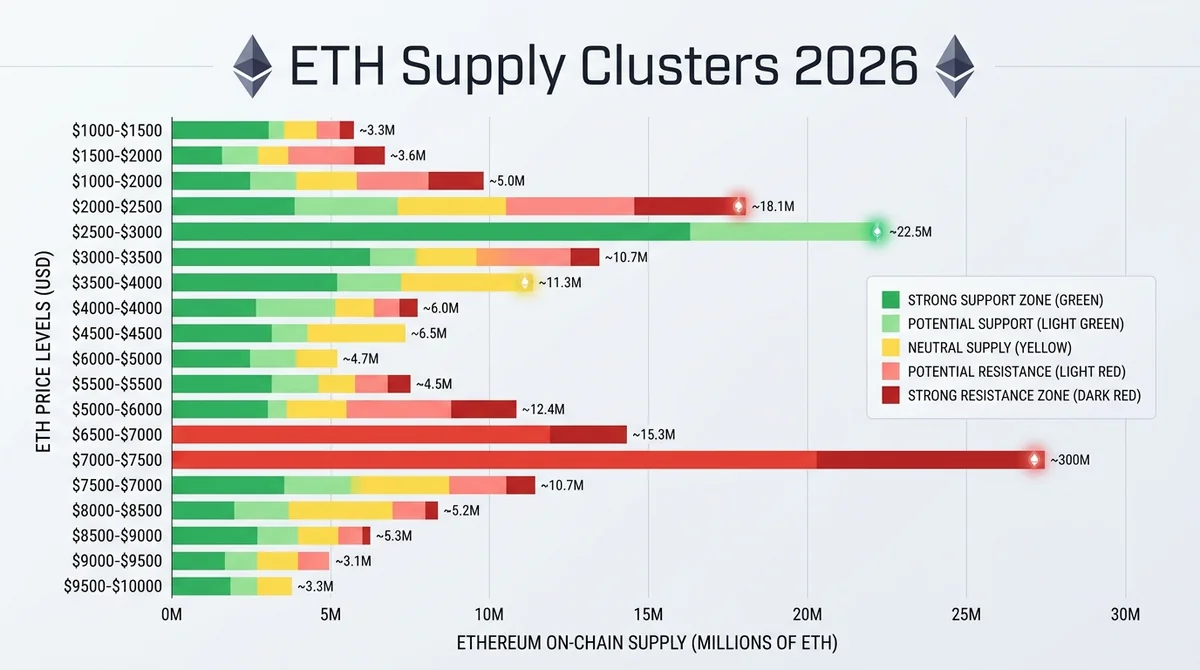
Ethereum's key support and resistance levels in 2026 require a comprehensive judgment combining on-chain supply distribution, multi-market prices, and psychological round numbers. The MSX mark price is calculated using on-chain price oracles and multi-market aggregation.
What Key Levels Do On-Chain Supply Clusters Reveal?
On-chain supply clusters are the core basis for judging support and resistance. When a large amount of ETH is traded within a certain price range, that range forms a supply cluster: if the price falls below that range, holders may capitulate and create selling pressure; when the price rebounds to that range, trapped sellers create resistance.
- Supply clusters: On-chain data can identify ETH's high-volume price zones, which often become support or resistance in subsequent moves.
- Historical highs and lows: Key highs and lows before 2026 remain psychological anchors; when price approaches them, profit-taking or bottom-fishing tends to occur.
- Round numbers: Levels like 2000, 2500, 3000 often create short-term support or resistance due to concentrated order placement.
How Does Multi-Market Data Affect ETH Support/Resistance Judgment?
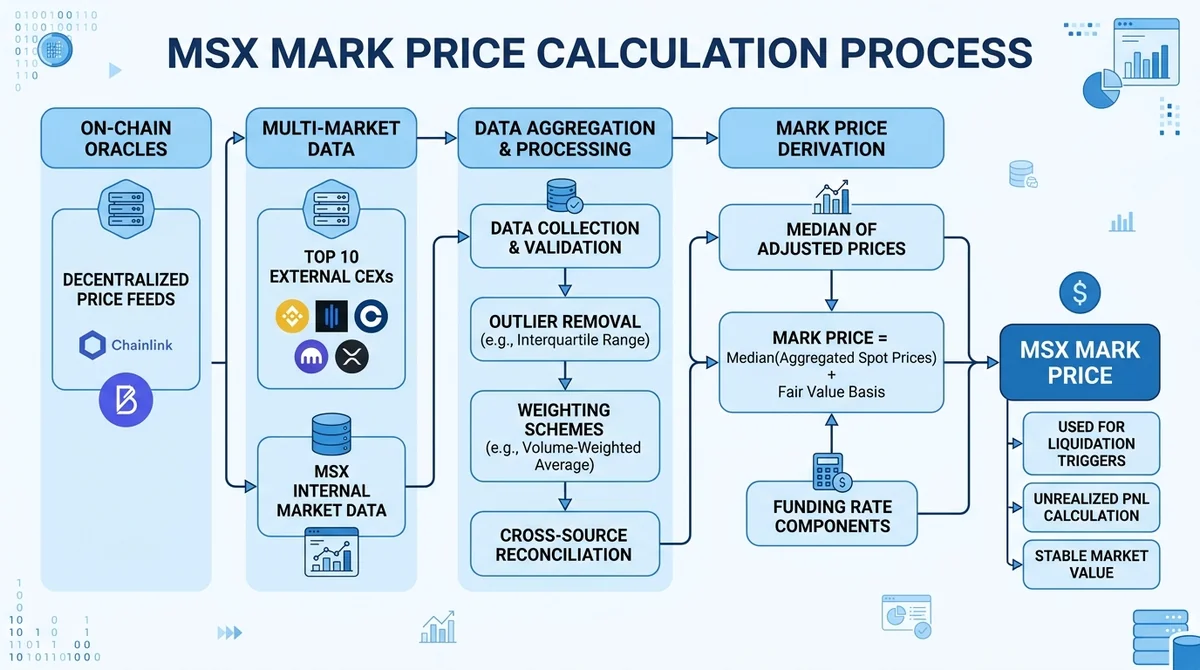
Single-market prices may be affected by liquidity or manipulation; multi-market data aggregation provides a more reliable reference. MSX mark price combines on-chain price oracles with multi-market data to calculate unrealized PnL and trigger liquidations, avoiding misjudgment caused by abnormal prices on a single exchange.
| Data Source | Function | Impact on Support/Resistance |
|---|---|---|
| On-chain supply distribution | Identify high-volume zones | Forms real support/resistance |
| Multi-market spot prices | Eliminate single-market bias | Provides fair price benchmark |
| Round numbers & historical highs/lows | Psychological anchors | Short-term order concentration |
Which On-Chain Metrics Can Help Time Ethereum Buys and Sells?
Ethereum on-chain metrics (such as active addresses, exchange net inflows/outflows) can help gauge market sentiment and potential buy/sell timing, but must be combined with price action and external factors.
What Do Active Addresses and Transaction Volume Indicate?
Active addresses reflect network usage: an increase usually means higher user participation, potentially accompanied by demand growth; a decrease may signal cooling interest. Transaction volume often expands during trend reversals or breakouts.
- Active addresses: The number of unique addresses participating in transactions daily, a basic indicator of network activity.
- Transaction volume: Total on-chain transfer value. High volume with rising prices shows strong buying; high volume with falling prices may indicate selling.
How Do Exchange Net Inflows/Outflows Affect ETH Price?
Increasing exchange net inflows typically signal selling pressure: when large amounts of ETH move from personal wallets to exchanges, it may be preparation for selling. Conversely, increasing net outflows (withdrawing from exchanges to wallets) suggest holders prefer long-term holding, reducing near-term sell pressure.
| Metric | Change | Potential Implication |
|---|---|---|
| Exchange net inflow | Increase | Selling pressure rises, price may face pressure |
| Exchange net outflow | Increase | Holding intent strengthens, sell pressure eases |
| Active addresses | Rise | Network usage improves, demand may grow |
| On-chain transaction volume | Expand | Market participation increases, watch price direction |
How to Use MSX Perpetual Contracts to Build an ETH Trading Strategy?
MSX perpetual contracts offer low fees (taker 0.045%, maker 0.02%, 10% discount with $MSX) and a multi-layer risk control system. Users can build long or short strategies based on ETH key levels and on-chain metrics.
What Are the Fee and Risk Control Mechanisms of MSX Perpetual Contracts?
MSX contract fee structure is transparent: taker fee is 0.045%, maker fee is 0.02%, and using $MSX to offset fees gives an additional 10% discount. For risk control, MSX uses a multi-layer liquidation system, including margin monitoring, risk alerts, auto-deleveraging, and forced liquidation. The mark price is calculated using on-chain oracles and multi-market data.
- Fees: taker 0.045%, maker 0.02%, 10% discount with $MSX.
- Risk control: margin monitoring, risk alerts, auto-deleveraging, forced liquidation.
- Mark price: on-chain oracle + multi-market data aggregation, avoiding single-price manipulation.
What Are the Steps to Trade ETH Perpetual Contracts on MSX?
The operation process is as follows:
- Register an account: Visit the MSX official website to complete registration and KYC verification.
- Deposit funds: Deposit supported on-chain assets or stablecoins into the contract account.
- Select contract: Choose the ETHUSDT perpetual contract in the contract trading area.
- Set leverage and order type: Set leverage multiple according to risk tolerance, choose limit or market order.
- Place order and monitor: After submitting the order, monitor margin ratio and liquidation price through position management.
What Are the Risks of Trading Ethereum Perpetual Contracts?
Ethereum perpetual contract trading involves leverage liquidation, market volatility, and liquidity risks. MSX provides a multi-layer risk control liquidation system to reduce risks, but investors still need to be cautious and fully understand the risks.
How to Control Leverage Liquidation Risk?
Leverage amplifies both gains and losses. When adverse market movement causes insufficient margin, the position may be forcibly liquidated. MSX's multi-layer risk control system includes margin monitoring and risk alerts, notifying users in advance when approaching the liquidation price, and may auto-deleverage to reduce risk.
- Leverage multiple: Higher leverage means smaller price movements can trigger liquidation.
- Margin monitoring: Real-time tracking of maintenance margin ratio, alerts when below threshold.
- Auto-deleveraging: System automatically reduces position in extreme market conditions to avoid full loss.
What Measures Address Market Volatility and Liquidity Risk?
Cryptocurrency markets are highly volatile, and ETH prices can fluctuate sharply in a short time. Liquidity risk refers to slippage when market depth is insufficient for large orders. MSX reduces the impact of single-market liquidity shortages by aggregating multi-market data for the mark price, but traders should still set stop-losses and control position size.
- Set stop-loss: Preset stop-loss price when opening a position to limit single loss.
- Control position size: Avoid full position, keep sufficient margin to withstand volatility.
- Watch funding rate: Perpetual contract funding rate (periodic payments between longs and shorts) settles every 8 hours; holding cost should be considered.
FAQ
What are the fees for ETH perpetual contracts?
MSX ETHUSDT perpetual contract taker fee is 0.045%, maker fee is 0.02%, with an additional 10% discount when using $MSX to offset fees. Contracts are high-risk leveraged products; please be aware of liquidation risk.
How to determine Ethereum's support and resistance levels?
Combine on-chain supply clusters, multi-market prices, and psychological round numbers. MSX mark price uses on-chain oracles and multi-market aggregation and can serve as a fair price reference.
What does increasing exchange net inflow mean?
Increasing exchange net inflow typically signals rising selling pressure, because large amounts of ETH transferred to exchanges may be prepared for sale. But it should be judged together with other indicators and price action.
What risk control mechanisms does MSX perpetual contract have?
MSX uses a multi-layer risk control liquidation system, including margin monitoring, risk alerts, auto-deleveraging, and forced liquidation. The mark price combines on-chain oracles and multi-market data, reducing single-price anomaly risk.
What are the main risks of trading ETH perpetual contracts?
Main risks include leverage liquidation, high market volatility, and liquidity risk. It is recommended to set stop-losses, control position size, and fully understand the funding rate mechanism of perpetual contracts.
How to start trading ETH perpetual contracts on MSX?
Register an MSX account and complete KYC, deposit funds, select ETHUSDT perpetual contract, set leverage and order type, then place an order. Please be sure to understand contract trading risks before operating.
This article is produced by the MSXGO editorial team, AI-assisted, and reviewed through an editorial process. Fee rates and figures are subject to each platform's latest official announcements.
FAQ
What are the fees for ETH perpetual contracts? ▼
MSX ETHUSDT perpetual contract taker fee is 0.045%, maker fee is 0.02%, with an additional 10% discount when using $MSX to offset fees. Contracts are high-risk leveraged products; please be aware of liquidation risk.
How to determine Ethereum's support and resistance levels? ▼
Combine on-chain supply clusters, multi-market prices, and psychological round numbers. MSX mark price uses on-chain oracles and multi-market aggregation and can serve as a fair price reference.
What does increasing exchange net inflow mean? ▼
Increasing exchange net inflow typically signals rising selling pressure, because large amounts of ETH transferred to exchanges may be prepared for sale. But it should be judged together with other indicators and price action.
What risk control mechanisms does MSX perpetual contract have? ▼
MSX uses a multi-layer risk control liquidation system, including margin monitoring, risk alerts, auto-deleveraging, and forced liquidation. The mark price combines on-chain oracles and multi-market data, reducing single-price anomaly risk.
What are the main risks of trading ETH perpetual contracts? ▼
Main risks include leverage liquidation, high market volatility, and liquidity risk. It is recommended to set stop-losses, control position size, and fully understand the funding rate mechanism of perpetual contracts.
How to start trading ETH perpetual contracts on MSX? ▼
Register an MSX account and complete KYC, deposit funds, select ETHUSDT perpetual contract, set leverage and order type, then place an order. Please be sure to understand contract trading risks before operating.
Finished reading? Ready to try trading?
Tokenized stocks/ETFs, crypto spot, and perpetual futures in one account — perp maker 0.02% / taker 0.045%, RWA spot buy 0.3% / sell 0.
Free sign-up · 3 quick steps