Is MSX Safe? 2026 Platform Security, Compliance Credentials, and Asset Protection Deep Dive
MSX uses multi-sig cold wallets for 95% of assets, promises 100% proof of reserves, and has completed SEC STO filing. Analyze MSX security from custody, cold wallet ratio, risk control, and compliance.

Article Citation Summary
MSX uses multi-sig cold wallets for 95% of assets, promises 100% proof of reserves, and has completed SEC STO filing. Analyze MSX security from custody, cold wallet ratio, risk control, and compliance.
Is MSX Safe? 2026 Platform Security, Compliance Credentials, and Asset Protection Deep Dive
TL;DR
- Asset Custody: MSX users keep their own private keys/seed phrases; 95% of digital assets are stored in multi-sig cold wallets.
- Proof of Reserves: The platform promises physical on-chain reserve ratios strictly greater than 100% for all listed coins, but no independent third-party audit has been publicly verified.
- Compliance Credentials: Completed SEC Security Token Offering (STO) filing, compliant with Regulation S requirements, and integrated KYC/KYT systems.
- Risk Control: Multi-layer risk controls including margin monitoring, risk alerts, auto-deleveraging, and forced liquidation, combined with on-chain price oracles for mark price calculation.
- Safety Cushion: The platform claims tens of millions to hundreds of millions of USD in official proprietary funds as a safety cushion (no third-party audit verification).
Is MSX Safe? How Does the Platform Ensure Security?
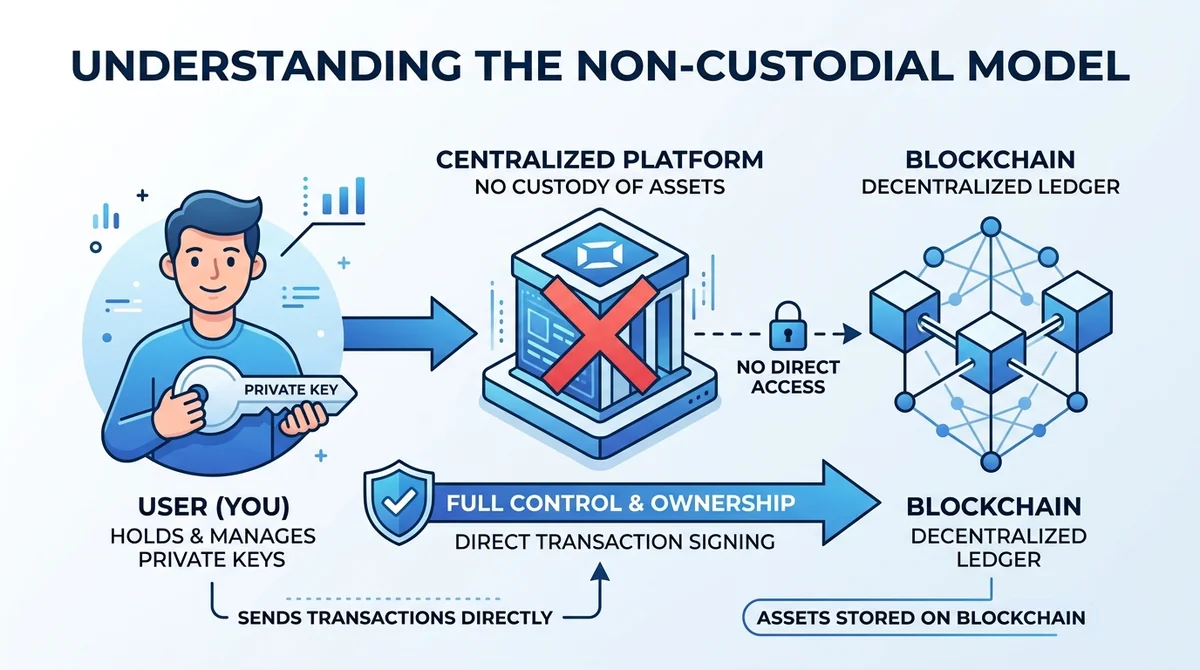
MSX adopts industry-standard security mechanisms combined with smart contract technology. 95% of digital assets are stored in multi-sig cold wallets, and an official proprietary fund safety cushion is in place (platform claim, no third-party audit verification). Private keys and seed phrases are kept by users themselves, making it a non-custodial model where the platform cannot access user assets.
What is MSX's Asset Custody Model?
MSX uses a non-custodial model where users keep their own private keys/seed phrases, and the platform does not hold user private keys. This means even if the platform servers are attacked, attackers cannot directly transfer user assets. Additionally, MSX can share third-party security audit reports to enhance transparency and trust.
How Does the Cold/Hot Wallet Isolation Mechanism Work?
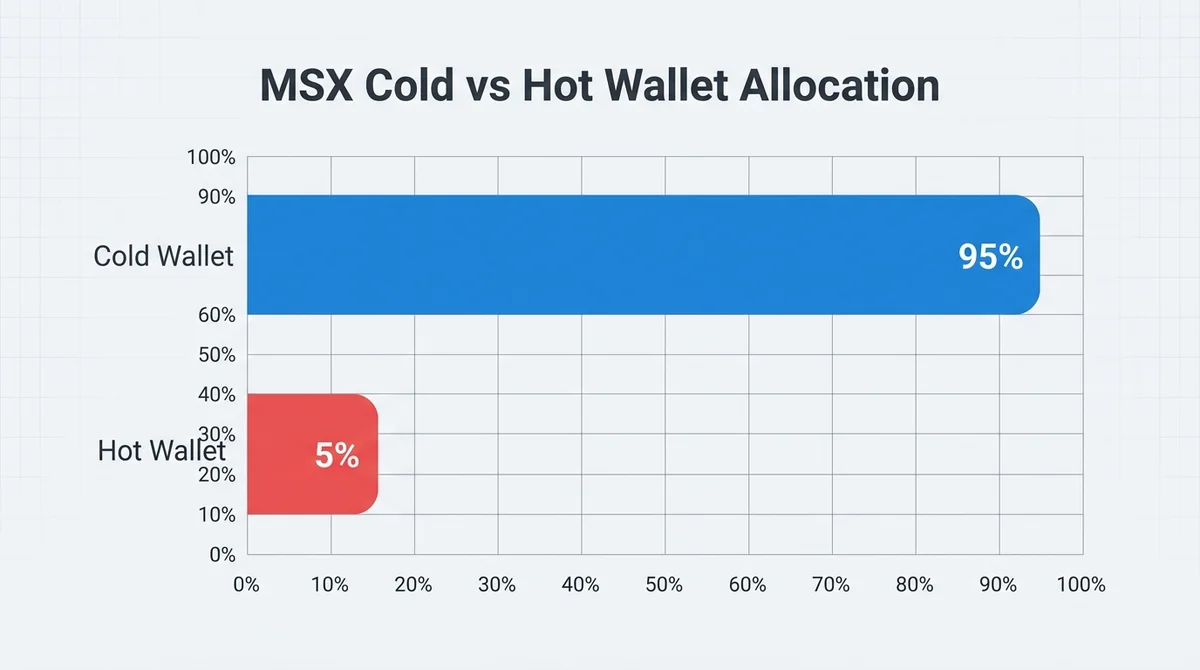
MSX stores 95% of digital assets in multi-sig cold wallets, with only 5% in hot wallets for daily withdrawals. The multi-sig mechanism requires multiple private keys to jointly sign a transaction, effectively resisting hacker attacks. Cold wallets are completely offline and not connected to the internet, isolating risks at the physical level.
What is the Role of the Official Proprietary Fund Safety Cushion?
MSX platform claims that core settlement assets have accumulated tens of millions to hundreds of millions of USD in official proprietary funds (Seed Capital) as a safety cushion. This cushion is used to cover user losses in extreme market conditions, but note that this data is a platform claim without third-party audit verification.
What Compliance Credentials Does MSX Have? Is It Regulated?
MSX has completed SEC Security Token Offering (STO) filing, complies with Regulation S requirements, and has integrated KYC/KYT systems, meeting MSB and other multi-country financial license standards, while exploring compliance paths under the CFTC regulatory framework.
What Does MSX's STO Filing Mean?
MSX has completed SEC Security Token Offering (STO) filing, conducting STO under Regulation S of the U.S. Securities Act of 1933. This means MSX's token issuance complies with the exemption provisions for overseas offerings under U.S. securities law, giving it compliance credentials. However, note that STO filing is not equivalent to full SEC regulatory approval of the platform itself, and Regulation S only applies to offshore offerings.
What Are MSX's AML/CTF Compliance Measures?
MSX strictly complies with AML/CTF regulations in various jurisdictions and fully integrates KYC (Know Your Customer) and KYT (Know Your Transaction) on-chain risk control systems. KYC requires users to complete identity verification, while KYT monitors on-chain transaction behavior to prevent money laundering and terrorist financing risks.
What Regulatory Frameworks Is MSX Exploring?
MSX is exploring compliance paths for derivative trading venues under the CFTC regulatory framework, including Designated Contract Market (DCM) and others. At the same time, MSX complies with MSB (Money Services Business) and other multi-country financial license standards. However, note that exploring CFTC compliance paths does not mean CFTC approval has been obtained, and the specific jurisdictions and validity of MSB licenses need further verification.
How Does MSX Protect User Assets? What Are the Proof of Reserves and Cold Wallet Ratio?
MSX promises physical on-chain reserve ratios strictly greater than 100% for all listed coins, stores 95% of digital assets in multi-sig cold wallets, and has open-source smart contract code that has undergone third-party audits.
What is MSX's Proof of Reserves Mechanism?
MSX adopts a Proof of Reserves mechanism, promising physical on-chain reserve ratios strictly greater than 100% for all listed coins. This means the platform holds more on-chain assets than total user deposits, ensuring user assets can be redeemed at any time. However, note that this proof of reserves has not yet been publicly verified by an independent third-party audit, and users need to verify on-chain data themselves.
What is MSX's Cold Wallet Ratio?
MSX stores 95% of digital assets in multi-sig cold wallets, with only 5% in hot wallets. This ratio is far above the industry average, greatly reducing the risk of asset loss from hacker attacks.
How Do Multi-Sig Cold Wallets Enhance Security?
Multi-sig cold wallets require multiple private keys to jointly sign a transaction, so a single private key leak cannot transfer assets. Cold wallets are completely offline and not connected to the internet, isolating risks at the physical level. MSX's smart contract code is open-source and has undergone third-party security audits, further ensuring asset security.
How Does MSX's Risk Control System Work?
MSX uses a multi-layer risk control system covering margin monitoring, risk alerts, auto-deleveraging, and forced liquidation, combined with on-chain price oracles for mark price calculation, and supports Portfolio Margin multi-asset cross-margining.
What Are the Components of MSX's Multi-Layer Risk Control and Liquidation?
MSX's multi-layer risk control and liquidation system includes:
- Margin Monitoring: Real-time monitoring of user margin levels, triggering alerts when below maintenance margin.
- Risk Alerts: Sending risk notifications to users, reminding them to add margin or reduce positions.
- Auto-Deleveraging: The system automatically reduces user positions to lower risk.
- Forced Liquidation: When margin is severely insufficient, the system force-liquidates positions to avoid bankruptcy losses.
How Do On-Chain Price Oracles Participate in Risk Control?
MSX combines on-chain price oracles with multi-market data aggregation to calculate mark prices. Oracles obtain real-time prices from multiple decentralized data sources, preventing single-exchange price manipulation and ensuring mark prices truly reflect market conditions.
What Are Margin Monitoring and Auto-Deleveraging Mechanisms?
Margin monitoring tracks user margin ratios in real time. When the margin ratio falls below the maintenance margin requirement, the system triggers auto-deleveraging, reducing user positions to lower risk. If margin continues to decline, forced liquidation is triggered to protect the platform and other users from bankruptcy losses.
What Are MSX's Compliance Paths and Future Development Directions?
MSX is exploring compliance paths for derivative trading venues under the CFTC regulatory framework, Regulation S STO compliance credentials, and related Services Licenses, while enhancing trust through open-source smart contracts and third-party audits.
What Financial Services Licenses Is MSX Exploring?
MSX is exploring compliance paths for derivative trading venues under the CFTC regulatory framework, including Designated Contract Market (DCM) and others. In addition, MSX has Regulation S Security Token Offering (STO) compliance credentials and is seeking related Services Licenses.
How Do Open-Source Smart Contracts and Audits Enhance Trust?
MSX's smart contract code is open-source and has undergone third-party security audits, providing public code and audit reports. Open-source means anyone can review the code and discover potential vulnerabilities; third-party audits provide professional security assessments, enhancing user trust in platform security.
What Does MSX's Compliance Path Mean for Users?
MSX's compliance path provides users with a safer trading environment. SEC STO filing and KYC/KYT systems ensure the platform meets regulatory requirements, reducing legal risks. CFTC derivative compliance exploration may bring users regulated derivative trading products, enhancing asset protection.
FAQ
Is MSX safe?
MSX uses multi-sig cold wallets to store 95% of assets, promises 100% proof of reserves, and has completed SEC STO filing, making overall security relatively high. However, note that crypto asset trading still carries market risks, and some security claims lack independent audit verification, so please assess yourself.
What is MSX's cold wallet ratio?
MSX stores 95% of digital assets in multi-sig cold wallets, with only 5% in hot wallets, a ratio far above the industry average.
What is MSX's proof of reserves?
MSX promises physical on-chain reserve ratios strictly greater than 100% for all listed coins, meaning the platform holds more on-chain assets than total user deposits, ensuring user assets can be redeemed at any time. However, this proof of reserves has not yet been publicly verified by an independent third-party audit.
Is MSX regulated?
MSX has completed SEC Security Token Offering (STO) filing, complies with Regulation S requirements, and has integrated KYC/KYT systems, meeting MSB and other multi-country financial license standards. However, STO filing is not equivalent to full SEC regulatory approval, and the specific jurisdictions of MSB licenses need further verification.
What is MSX's fund safety cushion?
MSX platform claims that core settlement assets have accumulated tens of millions to hundreds of millions of USD in official proprietary funds as a safety cushion, used to cover user losses in extreme market conditions, but this data has no third-party audit verification.
How does MSX's risk control system work?
MSX uses a multi-layer risk control system including margin monitoring, risk alerts, auto-deleveraging, and forced liquidation, combined with on-chain price oracles for mark price calculation, and supports Portfolio Margin multi-asset cross-margining.
This article is produced by the MSXGO editorial team, AI-assisted, and reviewed through an editorial process. Fee rates and figures are subject to each platform's latest official announcements.
FAQ
Is MSX safe? ▼
MSX uses multi-sig cold wallets to store 95% of assets, promises 100% proof of reserves, and has completed SEC STO filing, making overall security relatively high. However, note that crypto asset trading still carries market risks, and some security claims lack independent audit verification, so please assess yourself.
What is MSX's cold wallet ratio? ▼
MSX stores 95% of digital assets in multi-sig cold wallets, with only 5% in hot wallets, a ratio far above the industry average.
What is MSX's proof of reserves? ▼
MSX promises physical on-chain reserve ratios strictly greater than 100% for all listed coins, meaning the platform holds more on-chain assets than total user deposits, ensuring user assets can be redeemed at any time. However, this proof of reserves has not yet been publicly verified by an independent third-party audit.
Is MSX regulated? ▼
MSX has completed SEC Security Token Offering (STO) filing, complies with Regulation S requirements, and has integrated KYC/KYT systems, meeting MSB and other multi-country financial license standards. However, STO filing is not equivalent to full SEC regulatory approval, and the specific jurisdictions of MSB licenses need further verification.
What is MSX's fund safety cushion? ▼
MSX platform claims that core settlement assets have accumulated tens of millions to hundreds of millions of USD in official proprietary funds as a safety cushion, used to cover user losses in extreme market conditions, but this data has no third-party audit verification.
How does MSX's risk control system work? ▼
MSX uses a multi-layer risk control system including margin monitoring, risk alerts, auto-deleveraging, and forced liquidation, combined with on-chain price oracles for mark price calculation, and supports Portfolio Margin multi-asset cross-margining.
Finished reading? Ready to try trading?
Tokenized stocks/ETFs, crypto spot, and perpetual futures in one account — perp maker 0.02% / taker 0.045%, RWA spot buy 0.3% / sell 0.
Free sign-up · 3 quick steps