AI and Payments Accelerate Their Convergence: What Stripe's OpenRouter Acquisition Says About the Next Stop for Compute and the Agent Economy
Stripe is set to acquire OpenRouter for over $7B as Nvidia and OpenAI expand data centers, reshaping compute, AI agents and stablecoin payments.
Article Citation Summary
Stripe is set to acquire OpenRouter for over $7B as Nvidia and OpenAI expand data centers, reshaping compute, AI agents and stablecoin payments.
AI and payments are converging faster than ever. Payments giant Stripe is close to acquiring AI startup OpenRouter for more than $7 billion. At the same time, Nvidia's deepening data center ties with OpenAI and the exploration of credit and settlement for AI agents all point in one direction: AI is no longer just a contest of model capability, but a contest of compute, payments and on-chain settlement infrastructure.
Stripe's OpenRouter Acquisition: The Payments Logic Behind the Deal
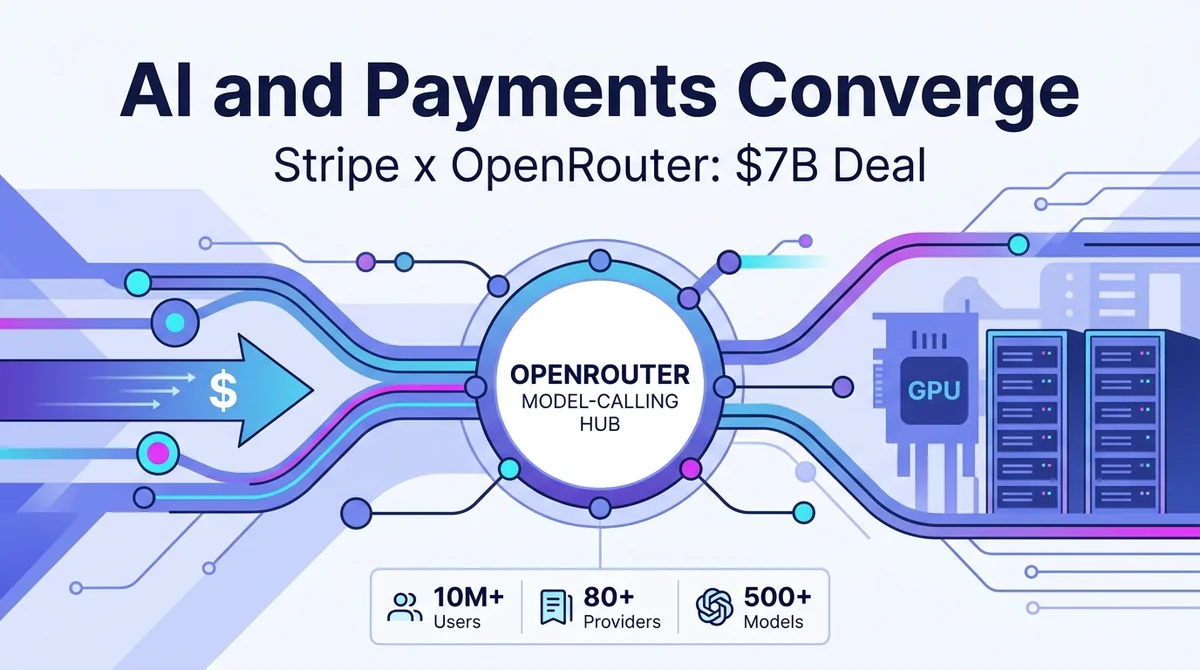
Founded in 2023, OpenRouter is a unified model-calling interface. Developers can call models from Anthropic, OpenAI, Google and other vendors through a single interface without integrating each large model separately. Its public data shows the platform has more than 10 million users worldwide, over 80 model providers and more than 500 models.
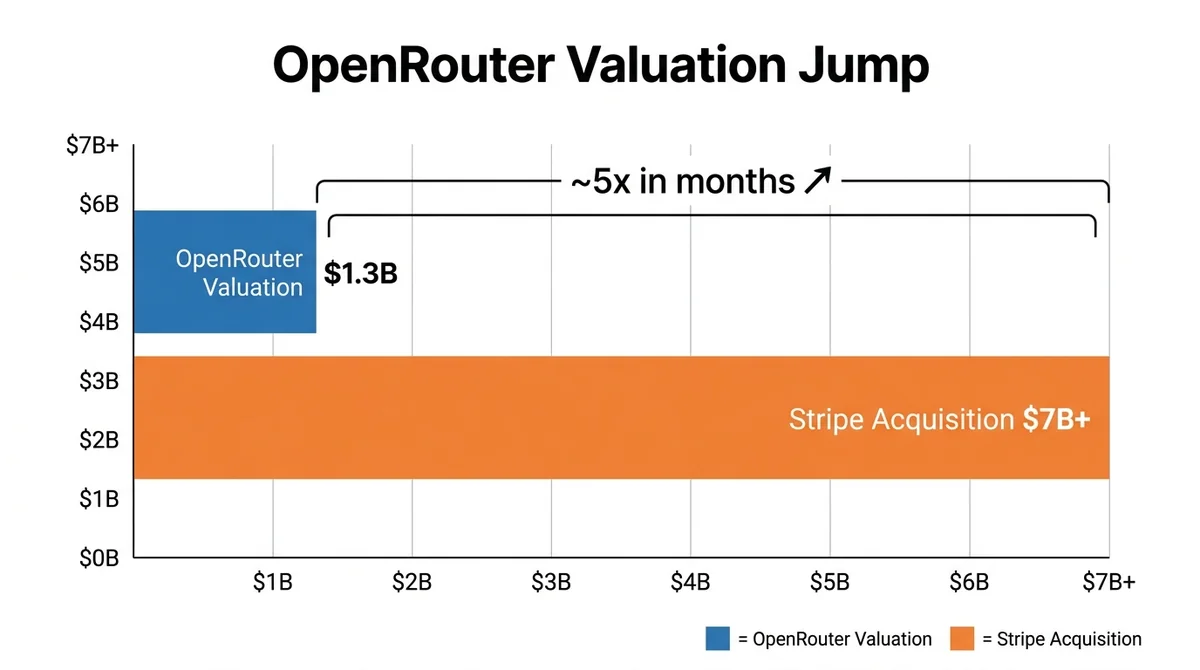
OpenRouter reportedly raised funding at a $1.3 billion valuation. If the Stripe deal closes, that valuation would have grown nearly fivefold in a matter of months.
The significance of the deal goes beyond valuation. Stripe provides online and offline payment capabilities for businesses. When AI agents need to call models autonomously and pay by usage, combining payment rails with model-calling interfaces effectively lays proprietary tracks for "machine payments." Billing, settlement and clearing of model inference will become an infrastructure step that AI commercialization cannot avoid.
The Compute Side: Nvidia and OpenAI's Three Data Center Pillars
Beyond the payments moves, investment on the compute side is also ramping up. Nvidia said it will commit fully to building data centers with OpenAI to provide large-scale compute support for future artificial intelligence.
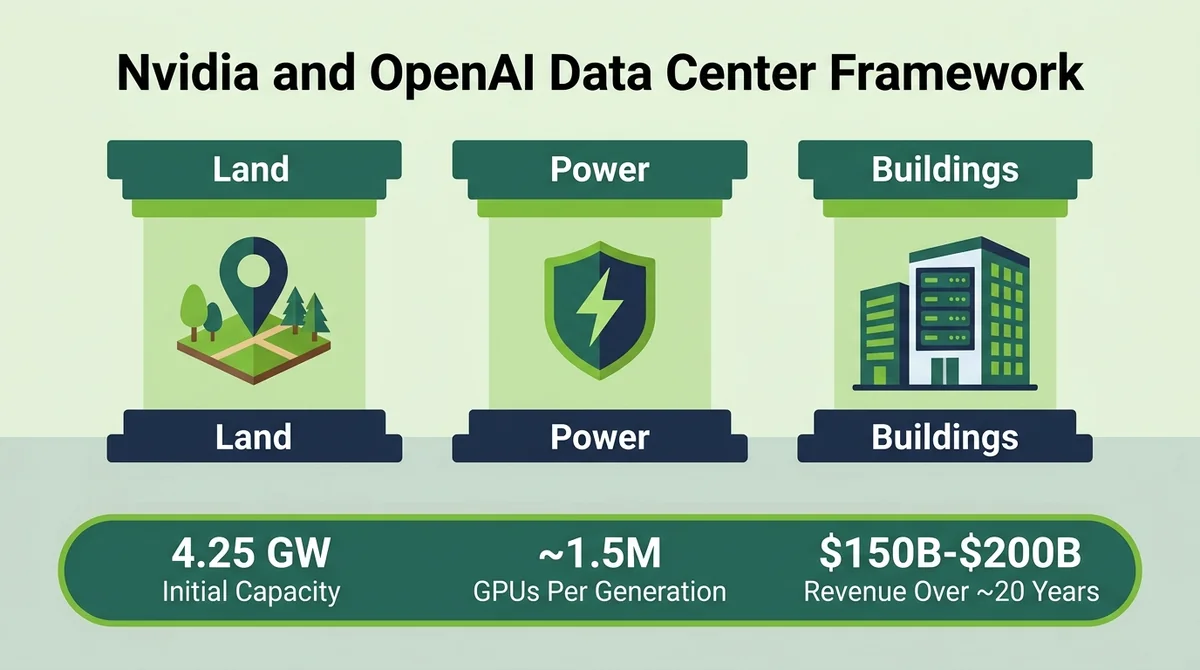
Its proposed framework can be summarized in three pillars:
- Land: site selection and land for data centers;
- Power: energy supply to support large-scale GPU clusters;
- Buildings: the physical data centers housing compute equipment.
On specific projects, the two sides plan to build a large data center in Ohio with initial capacity of 4.25 gigawatts. Each generation will deploy about 1.5 million GPUs, expected to generate $150 billion to $200 billion in revenue for Nvidia over a roughly 20-year cycle. In this structure, OpenAI uses compute as a tenant, while Nvidia earns revenue by supplying it.
This model shows that the underlying variable in AI competition is shifting from model parameters alone to heavy-asset elements such as power, land and GPU clusters.
The Agent Economy: Credit and Settlement Needs for AI Agents
Financial infrastructure around AI agents is also being discussed. Some have floated the idea of opening credit lines for AI agents. Although real entities would ultimately still need to back them, the direction is clear: once AI agents begin executing tasks and paying autonomously, they will need accounts, credit and settlement tools.
This also explains why stablecoins and on-chain payments keep coming up. High-frequency, small-value, cross-border payments between AI agents require a low-cost, programmable settlement medium, and stablecoins and blockchain settlement networks offer exactly that possibility. For users focused on digital assets and blockchain infrastructure, this trend is worth tracking closely.
Market Context: A Crypto Market Still in Correction
It is worth noting that this narrative is unfolding while the crypto market remains in a correction phase. Take Bitcoin: its price is running near the 200-day moving average and has lacked clear direction for an extended period. If Bitcoin falls further, altcoin assets typically come under pressure in tandem. The heat around the AI narrative therefore does not equal short-term price performance, and assessing related sectors should separate "industry trends" from "market cycles."
Sectors Worth Watching
From an industry-logic perspective, the intersection of AI and crypto falls into roughly a few categories:
- Model calling and inference markets: unified interfaces and matching and discount markets for inference compute, with the core aim of lowering model-calling costs;
- Privacy and anonymous access: letting users call large models without exposing identity or data associations, emphasizing data sovereignty;
- Agent and ecosystem platforms: issuance, trading and commercialization protocols built around AI agents;
- Stablecoin settlement chains: blockchain networks using native stablecoins as payment for the agent economy;
- Decentralized compute: aggregating idle or distributed compute for model training and inference;
- Compute assets and infrastructure: projects providing networking and scheduling capabilities for GPU compute.
What these directions share is that they all try to solve real cost and settlement problems in AI commercialization rather than simply packaging concepts. When judging a project's value, focus on whether it has real use cases, a sustainable source of fees, and actual connections to mainstream payment or compute systems.
Risk Warning
The intersection of AI and crypto is highly volatile, and narrative-driven rallies are often followed by sharp drawdowns. This article only summarizes industry developments based on public information and does not constitute investment advice or recommend any specific asset. Before participating in related trading, you should fully understand project mechanics, token utility and your own risk tolerance, and pay attention to custody fee and asset security.
For users who want exposure to both digital assets and diversified assets such as US stocks, tools including spot, futures and tokenized assets news on compliant platforms can help with risk management, but no strategy can eliminate market risk.
This article is produced by the MSXGO editorial team, AI-assisted, and reviewed through an editorial process. Fee rates and figures are subject to each platform's latest official announcements.
Finished reading? Ready to try trading?
Tokenized stocks/ETFs, crypto spot, and perpetual futures in one account — perp maker 0.02% / taker 0.045%, RWA spot buy 0.3% / sell 0.
Free sign-up · 3 quick steps