AMC Tokenized Stock: What the Dispute Means for Tokenized Equities
AMC objected to Robinhood's tokenized AMC shares without approval. Learn what the dispute means for shareholder rights, tokenized equities, and market risks.
Article Citation Summary
AMC objected to Robinhood's tokenized AMC shares without approval. Learn what the dispute means for shareholder rights, tokenized equities, and market risks.
AMC Tokenized Stock: What the Dispute Means for Tokenized Equities
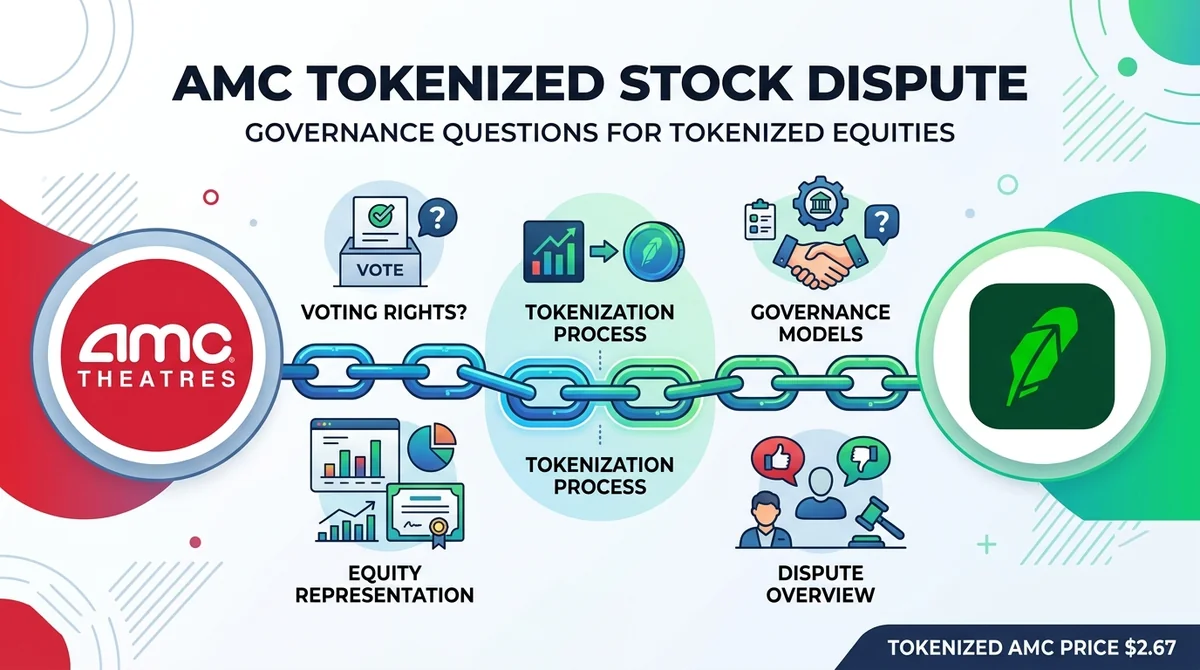
AMC Entertainment Holdings publicly objected to Robinhood offering tokenized versions of AMC shares without company approval. Robinhood and Coinbase responded by attaching traditional shareholder rights, including voting and redemptions, to their tokenized stock products. The clash highlights unresolved governance questions for blockchain-based stocks.
Key Takeaways
- AMC's CEO called Robinhood's tokenized AMC stock offering "contemptible, outrageous, disgusting, detestable, inexcusable, vile."
- Robinhood and Coinbase moved to attach voting and redemption rights to tokenized AMC shares.
- Tokenized AMC shares trade around $2.67 with low market caps and high volatility.
- The dispute raises questions about who controls voting power and how ownership is recorded on blockchain.
- Investors should monitor legal actions, regulatory responses, and market reactions.
What Happened with AMC Tokenized Stock?
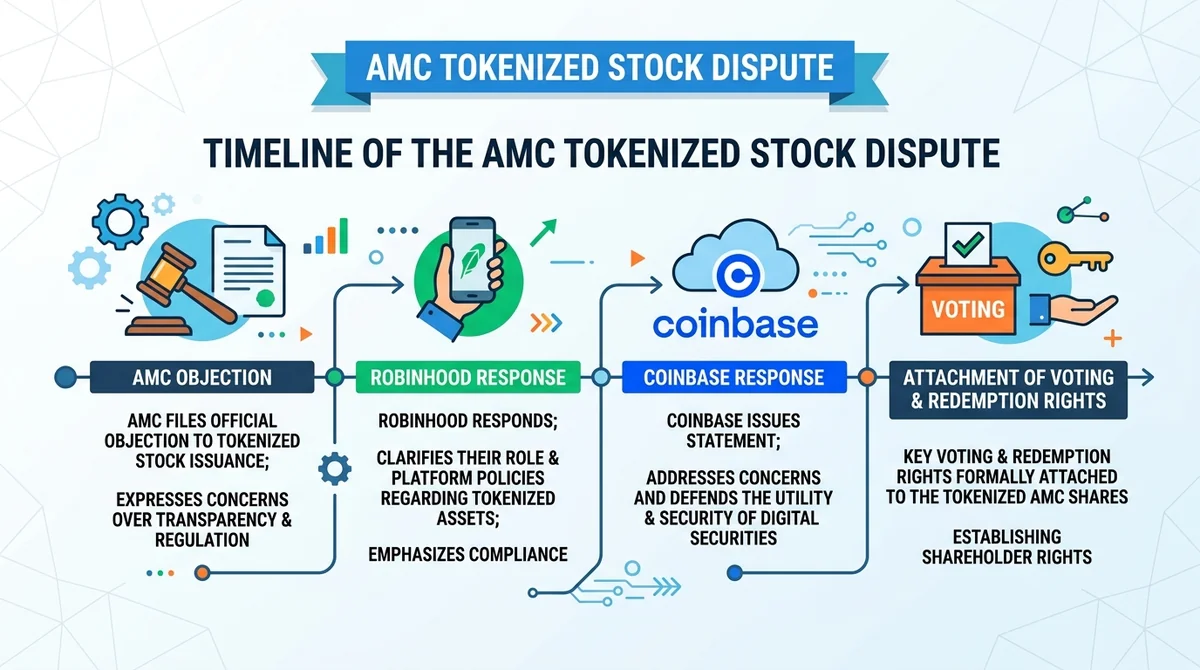
AMC Entertainment Holdings publicly objected to Robinhood offering tokenized versions of AMC shares without company approval. Robinhood and Coinbase both moved to attach traditional shareholder rights, including voting and redemptions, to their tokenized stock products. The clash emerged as blockchain-based tokenized stocks gained traction, with Robinhood's CEO arguing companies cannot fully limit what buyers do with their shares. AMC's CEO used strong language, calling Robinhood's actions "contemptible, outrageous, disgusting, detestable, inexcusable, vile."
Why did AMC object to Robinhood's tokenized shares?
AMC objected because Robinhood offered tokenized AMC shares without obtaining company approval. AMC's CEO publicly criticized the move, using strong language to express disapproval. The objection centers on the lack of consent and potential implications for shareholder rights and corporate governance.
How did Robinhood and Coinbase respond to AMC's objections?
Robinhood and Coinbase responded by moving to attach traditional shareholder rights, including voting and redemptions, to their tokenized stock products. Robinhood's CEO argued that companies cannot fully limit what buyers do with their shares, suggesting a legal and practical basis for tokenization.
Why Is the AMC Tokenized Stock Dispute Important?
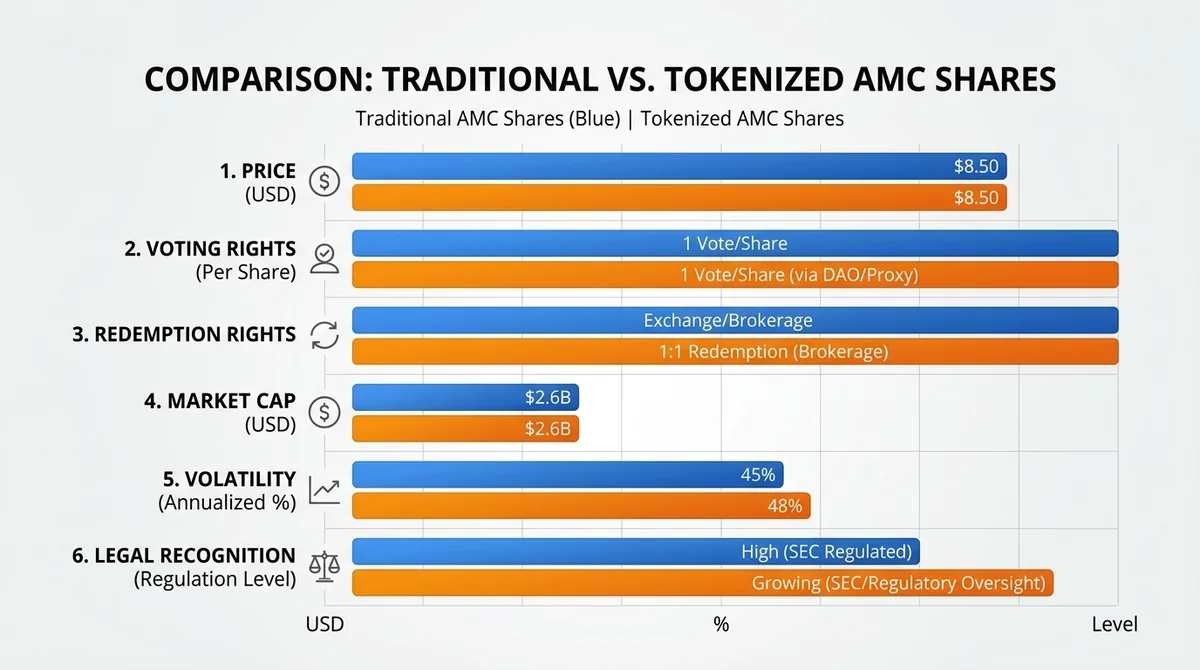
The AMC tokenized stock dispute highlights unresolved questions about voting power and ownership recording on blockchain, potentially reshaping the investment case for AMC. The dispute raises practical questions about who truly controls voting power and how ownership is recorded on blockchain. Uncertainty around shareholder rights could affect investor confidence in tokenized versions of traditional stocks. For AMC, the dispute tests its recovery-focused investment narrative amid heavy debt and negative equity. The tokenized share dispute is more about plumbing and governance than day-to-day operations, so direct business impact appears limited for now.
What does this mean for shareholder rights on tokenized stocks?
Tokenized shares may lack clear legal recognition of shareholder rights, leading to disputes like the AMC case. The dispute raises practical questions about who truly controls voting power and how ownership is recorded on blockchain. Uncertainty around shareholder rights could affect investor confidence in tokenized versions of traditional stocks.
How could this reshape the case for AMC stock?
For AMC, the dispute tests its recovery-focused investment narrative amid heavy debt and negative equity. The tokenized share dispute is more about plumbing and governance than day-to-day operations, so direct business impact appears limited for now.
What Are the Market Details for Tokenized AMC Shares?
Tokenized AMC shares trade around $2.67 with low market caps and high volatility, available on platforms like Ondo and Robinhood. AMC Entertainment Tokenized Stock (Ondo) trades on Ethereum with a current supply of 52,059.05 and last known price around $2.57. Robinhood's AMC tokenized stock has a market cap of $3.47M, 24h volume of $6.02M, and total supply of 1.41M AMC. The tokenized AMC stock has experienced significant volatility, with all-time high of $178.60 and all-time low of $2.35. Tokenized AMC shares are available on platforms like Ondo Finance and Robinhood, with active markets on both CEX and DEX.
What are the current prices and volumes for tokenized AMC stock?
AMC Entertainment Tokenized Stock (Ondo) trades on Ethereum with a current supply of 52,059.05 and last known price around $2.57. Robinhood's AMC tokenized stock has a market cap of $3.47M, 24h volume of $6.02M, and total supply of 1.41M AMC. The tokenized AMC stock has experienced significant volatility, with all-time high of $178.60 and all-time low of $2.35.
Where can investors buy tokenized AMC shares?
Tokenized AMC shares are available on platforms like Ondo Finance and Robinhood, with active markets on both CEX and DEX.
What Could the AMC Tokenized Stock Dispute Mean for Crypto Markets?
The AMC tokenized stock dispute could influence regulatory approaches and adoption of tokenized equities, with scenarios ranging from expanded access to increased restrictions. The dispute could set a precedent for how traditional companies interact with tokenized versions of their shares. If tokenized stocks gain regulatory clarity, they could expand access to U.S. equities for global investors. Possible scenarios include increased adoption with clear shareholder rights, or regulatory pushback limiting tokenization. The outcome may influence whether other companies embrace or resist tokenization of their shares.
How might this affect the adoption of tokenized equities?
The dispute could set a precedent for how traditional companies interact with tokenized versions of their shares. If tokenized stocks gain regulatory clarity, they could expand access to U.S. equities for global investors. Possible scenarios include increased adoption with clear shareholder rights, or regulatory pushback limiting tokenization.
What are the possible market scenarios for tokenized stocks?
Possible scenarios include increased adoption with clear shareholder rights, or regulatory pushback limiting tokenization. The outcome may influence whether other companies embrace or resist tokenization of their shares.
What Risks Should Investors Watch with Tokenized AMC Stock?
Risks include unresolved governance rights, high price volatility, limited liquidity, and potential regulatory uncertainty for tokenized AMC shares. Tokenized shares may lack clear legal recognition of shareholder rights, leading to disputes like the AMC case. High volatility is evident: AMC tokenized stock hit all-time high of $178.60 and low of $2.35 within a short period. Liquidity can be limited, as seen with low market caps and trading volumes on some platforms. Investors should verify the underlying asset backing and the platform's compliance with securities regulations.
What are the governance and legal risks of tokenized stocks?
Tokenized shares may lack clear legal recognition of shareholder rights, leading to disputes like the AMC case. Investors should verify the underlying asset backing and the platform's compliance with securities regulations.
How volatile are tokenized AMC shares?
High volatility is evident: AMC tokenized stock hit all-time high of $178.60 and low of $2.35 within a short period. Liquidity can be limited, as seen with low market caps and trading volumes on some platforms.
What Should Investors Watch Next in the AMC Tokenized Stock Dispute?
Investors should monitor legal actions, regulatory responses, market reactions, and potential copycat objections from other companies. Monitor whether AMC pursues legal action or reaches an agreement with Robinhood and Coinbase. Watch for regulatory guidance from the SEC or other bodies on tokenized stock shareholder rights. Track any changes in trading volume or price of tokenized AMC shares as the dispute evolves. Observe whether other companies follow AMC's lead in objecting to tokenization.
Will AMC take legal action against tokenization platforms?
Monitor whether AMC pursues legal action or reaches an agreement with Robinhood and Coinbase. Observe whether other companies follow AMC's lead in objecting to tokenization.
How will regulators respond to tokenized stock offerings?
Watch for regulatory guidance from the SEC or other bodies on tokenized stock shareholder rights. Track any changes in trading volume or price of tokenized AMC shares as the dispute evolves.
This article is produced by the MSXGO editorial team, AI-assisted, and reviewed through an editorial process. Fee rates and figures are subject to each platform's latest official announcements.
FAQ
What is AMC tokenized stock? ▼
AMC tokenized stock is a blockchain-based representation of AMC Entertainment Holdings shares, offered by platforms like Robinhood and Ondo Finance. It allows investors to gain exposure to AMC's price without directly owning the traditional stock.
Why did AMC object to tokenized shares? ▼
AMC objected because tokenized shares were offered without company approval, raising concerns about shareholder rights and governance. AMC's CEO publicly criticized the move as "contemptible, outrageous, disgusting, detestable, inexcusable, vile."
Where can I buy tokenized AMC shares? ▼
Tokenized AMC shares are available on platforms like Ondo Finance and Robinhood, with active markets on both centralized exchanges (CEX) and decentralized exchanges (DEX).
How volatile is tokenized AMC stock? ▼
Tokenized AMC stock is highly volatile, with an all-time high of $178.60 and an all-time low of $2.35 within a short period. Its market cap and trading volumes are relatively low, contributing to price swings.
What are the risks of tokenized stocks? ▼
Risks include unresolved governance rights, high price volatility, limited liquidity, and potential regulatory uncertainty. Investors should verify the underlying asset backing and the platform's compliance with securities regulations.
Finished reading? Ready to try trading?
Tokenized stocks/ETFs, crypto spot, and perpetual futures in one account — perp maker 0.02% / taker 0.045%, RWA spot buy 0.3% / sell 0.
Free sign-up · 3 quick steps