Bitcoin On-Chain Transfer Fees 2026 Guide: Fee Structure, Block Congestion, and MSX Reduction Strategies
Learn Bitcoin on-chain fee structure, congestion impact, and MSX reduction strategies. Spot trading 0 fees, bridge 0.1%, $MSX discounts.

Article Citation Summary
Learn Bitcoin on-chain fee structure, congestion impact, and MSX reduction strategies. Spot trading 0 fees, bridge 0.1%, $MSX discounts.
Bitcoin On-Chain Transfer Fees 2026 Guide: Fee Structure, Block Congestion, and MSX Reduction Strategies
Key Points / TL;DR
- Bitcoin on-chain transfer fees are determined by transaction size in bytes × fee rate per byte (sat/vB), and surge during congestion.
- Mempool congestion causes unconfirmed transactions to pile up, forcing users to pay higher fees for miners to prioritize inclusion.
- MSX platform offers spot trading 0 fees, cross-chain bridge 0.1%, and $MSX discounts: 10% off contract fees, 25% off spot fees.
- Using SegWit or Taproot addresses reduces transaction size and lowers fees.
- Avoiding network congestion peaks and using wallet calculators effectively control transfer costs.
What Components Make Up Bitcoin On-Chain Transfer Fees?
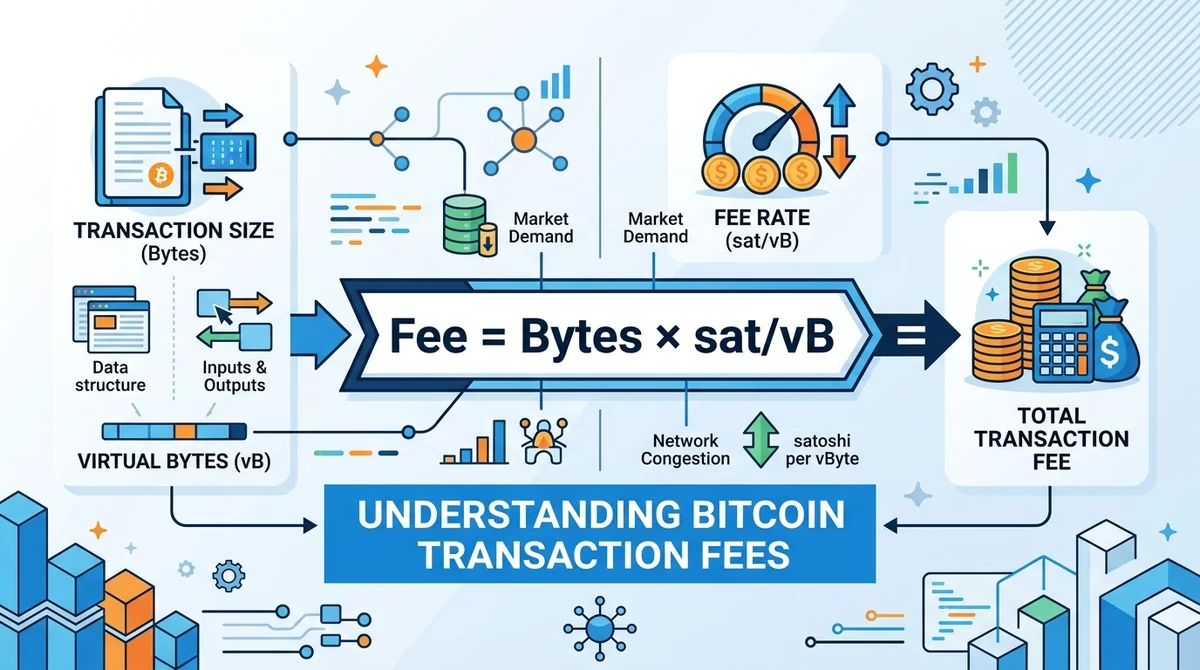
Bitcoin on-chain transfer fees are determined by transaction data size (bytes) and the current network fee rate per byte (sat/vB), with rates surging during congestion. Fee = transaction bytes × fee rate per byte.
How Is the Base Network Fee Rate Calculated?
The base network fee rate is measured in sat/vB (satoshis per virtual byte) and dynamically adjusted by miners based on mempool transaction demand.
- Higher fee rates result in faster inclusion in blocks by miners.
- Users can customize the fee rate in wallets or choose presets like "economy/normal/priority".
- As of 2026, low-priority transfer fees typically range from 1-5 sat/vB, while high-priority can exceed 20 sat/vB. (Note: these are common industry ranges; check real-time data for exact rates.)
How Does Transaction Data Size Affect Fees?
Transaction data size depends on the number of inputs (UTXOs) and outputs; more bytes mean higher fees.
- Regular transfers are about 200-300 bytes; multi-input multi-output transactions can exceed 500 bytes.
- SegWit (Segregated Witness) moves signature data out of the transaction body, reducing byte size by about 30-40%.
- Using native SegWit (bech32) or Taproot addresses further optimizes byte efficiency.
How Does Block Congestion Affect Bitcoin Transfer Fees?
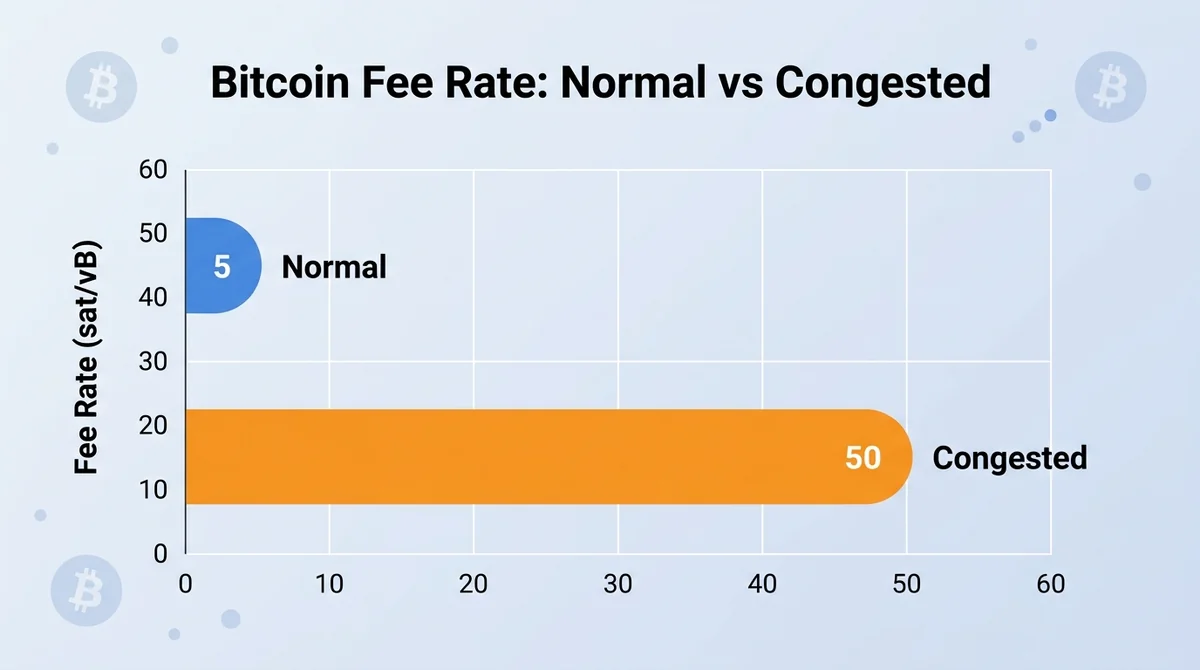
When the Bitcoin network is congested, unconfirmed transactions in the mempool increase, forcing users to pay higher fees for miners to prioritize inclusion, thus raising transfer costs.
How Do Fees Change During Mempool Congestion?
The mempool is the pool of transactions waiting for confirmation; during congestion, the backlog of transactions surges.
- Miners prioritize high-fee transactions; low-fee transactions may wait in queue for a long time.
- During peak congestion, fees can spike from a daily average of 5 sat/vB to over 50 sat/vB. (Note: actual increases depend on network conditions; refer to real-time data.)
- Users can "jump the queue" by raising fees, but costs increase significantly.
How to Check Current Network Congestion?
Use tools like mempool.space to view real-time mempool transaction counts and recommended fees.
- More mempool transactions indicate more severe congestion.
- Recommended fees are divided into high/medium/low priority; users can choose based on urgency.
- Other tools like Blockchain.com Explorer provide similar data.
How Does MSX Platform Help Users Reduce Bitcoin Transfer Costs?
MSX platform offers spot trading 0 fees, cross-chain bridge 0.1%, and $MSX discounts, providing users with low-cost alternatives to Bitcoin on-chain transfers.
What Are MSX Spot Trading Fees?
MSX spot trading fees are 0, allowing users to exchange cryptocurrencies for free.
- Applicable to pairs like BTC/USDT with no hidden fees.
- Compared to typical 0.1% spot fees on centralized exchanges, costs are significantly lower.
- Users can convert BTC to USDT via spot trading and withdraw to other chains, avoiding high on-chain fees.
What Are MSX Cross-Chain Bridge Fees?
MSX cross-chain bridge fees are 0.1%, supporting asset transfers between different blockchain networks.
- For example, bridging BTC from the Bitcoin network to Ethereum or Tron costs only 0.1%.
- Compared to on-chain transfers that may cost tens of dollars, the bridge is much cheaper.
- Bridge address: https://bridge.msxgo.com
What Discounts Are Available Using $MSX for Fee Payment?
Using $MSX tokens to pay fees gives 10% off contract fees and 25% off spot fees.
- In contract trading, paying fees with $MSX reduces costs by 10%.
- In spot trading, paying fees with $MSX reduces costs by 25%.
- Holding $MSX also provides lock-up benefits and VIP membership perks.
How to Calculate Actual Bitcoin On-Chain Transfer Fees?
Users can calculate Bitcoin on-chain transfer fees by estimating transaction bytes and multiplying by the current network fee rate, or use wallets and third-party tools for quick estimates.
What Are the Steps to Calculate Fees?
- Estimate transaction bytes: based on input/output count, regular transfers are about 200-300 bytes.
- Check current recommended fee rate: use mempool.space or wallet built-in fee suggestions.
- Calculate fee: bytes × fee rate (sat/vB), e.g., 250 bytes × 10 sat/vB = 2500 sat.
- Convert to BTC: 2500 sat = 0.000025 BTC, then convert to USD at current price.
What Tools Can Help Estimate Fees?
- Wallet built-in calculators: most Bitcoin wallets display estimated fees when sending.
- Third-party websites: mempool.space provides real-time fee rates and byte estimates.
- Command-line tools: such as bitcoin-cli's estimatesmartfee command.
What Are Some Strategies to Reduce Bitcoin On-Chain Transfer Fees?
Users can reduce Bitcoin on-chain transfer costs by choosing low-fee periods, using SegWit addresses to reduce data size, and leveraging MSX platform's low-fee policies.
Is It Feasible to Transfer During Low-Fee Periods?
Yes, but you must weigh confirmation speed.
- Weekends or Asian trading hours often have lower congestion and cheaper fees.
- Set a low fee rate and wait for network idle time to be mined, suitable for non-urgent transfers.
- For urgent transfers, use the current recommended high-priority fee rate.
Can Using SegWit Addresses Lower Fees?
Yes, SegWit addresses reduce transaction bytes, thereby lowering fees.
- Native SegWit (bech32) addresses start with "bc1" and save about 30% in bytes compared to legacy addresses.
- Taproot addresses further optimize, suitable for complex transactions.
- Transfers using SegWit addresses typically cost 30-40% less in fees than legacy addresses.
What Reduction Strategies Does MSX Platform Offer?
MSX platform provides multiple reduction strategies to help users lower overall transfer costs.
- Spot trading 0 fees: free crypto exchange, avoiding on-chain transfers.
- Cross-chain bridge 0.1%: low-cost cross-chain asset transfers.
- $MSX discounts: 10% off contract fees, 25% off spot fees, further reducing trading costs.
- Users can combine these strategies for the lowest-cost asset transfers.
Frequently Asked Questions (FAQ)
How are Bitcoin on-chain transfer fees calculated?
Fee = transaction bytes × fee rate per byte (sat/vB). For example, 250 bytes × 10 sat/vB = 2500 sat, approximately 0.000025 BTC. Use wallets or mempool.space to estimate.
How much do fees increase during Bitcoin network congestion?
During peak congestion, fees can surge from a daily 5 sat/vB to over 50 sat/vB, a 10x increase. However, actual increases depend on network conditions; refer to real-time data.
Can MSX platform reduce Bitcoin transfer fees?
Yes. MSX spot trading 0 fees, cross-chain bridge 0.1%, $MSX discounts of 10% off contract fees and 25% off spot fees. Users can avoid high on-chain fees through these services.
How do USDT TRC20 withdrawal fees compare across platforms?
MSX platform has not disclosed specific USDT TRC20 withdrawal fees. However, users can convert USDT to other assets with zero spot trading fees or use the 0.1% cross-chain bridge to transfer to other chains, reducing withdrawal costs.
What are Coinbase withdrawal fees?
Coinbase withdrawal fees vary dynamically by asset and network; check their official fee page for exact numbers. MSX's zero spot fees and 0.1% bridge serve as low-cost alternatives.
How do DOGEUSDT perpetual contract funding rates compare across platforms?
MSX contract taker fee 0.045%, maker 0.02%, with 10% discount using $MSX. Funding rates fluctuate with market supply and demand; check real-time data for platform differences.
This article is produced by the MSXGO editorial team, AI-assisted, and reviewed through an editorial process. Fee rates and figures are subject to each platform's latest official announcements.
FAQ
How are Bitcoin on-chain transfer fees calculated? ▼
Fee = transaction bytes × fee rate per byte (sat/vB). For example, 250 bytes × 10 sat/vB = 2500 sat, approximately 0.000025 BTC. Use wallets or mempool.space to estimate.
How much do fees increase during Bitcoin network congestion? ▼
During peak congestion, fees can surge from a daily 5 sat/vB to over 50 sat/vB, a 10x increase. However, actual increases depend on network conditions; refer to real-time data.
Can MSX platform reduce Bitcoin transfer fees? ▼
Yes. MSX spot trading 0 fees, cross-chain bridge 0.1%, $MSX discounts of 10% off contract fees and 25% off spot fees. Users can avoid high on-chain fees through these services.
How do USDT TRC20 withdrawal fees compare across platforms? ▼
MSX platform has not disclosed specific USDT TRC20 withdrawal fees. However, users can convert USDT to other assets with zero spot trading fees or use the 0.1% cross-chain bridge to transfer to other chains, reducing withdrawal costs.
What are Coinbase withdrawal fees? ▼
Coinbase withdrawal fees vary dynamically by asset and network; check their official fee page for exact numbers. MSX's zero spot fees and 0.1% bridge serve as low-cost alternatives.
How do DOGEUSDT perpetual contract funding rates compare across platforms? ▼
MSX contract taker fee 0.045%, maker 0.02%, with 10% discount using $MSX. Funding rates fluctuate with market supply and demand; check real-time data for platform differences.
Finished reading? Ready to try trading?
Tokenized stocks/ETFs, crypto spot, and perpetual futures in one account — perp maker 0.02% / taker 0.045%, RWA spot buy 0.3% / sell 0.
Free sign-up · 3 quick steps