Strategy Pauses Weekly BTC Buying for $176M Preferred Stock Buyback: Capital B European Accumulation and $9B Whale Sell Pressure Deep Dive 2026
Strategy halts weekly BTC DCA for a $176.3M STRC stock buyback, Capital B adds 376 BTC, and short-term whales reach $9.07B in profit. In-depth analysis.
Article Citation Summary
Strategy halts weekly BTC DCA for a $176.3M STRC stock buyback, Capital B adds 376 BTC, and short-term whales reach $9.07B in profit. In-depth analysis.
Strategy Pauses Weekly BTC Buying for $176M Preferred Stock Buyback: Capital B European Accumulation and $9B Whale Sell Pressure Deep Dive 2026
Key Takeaways / TL;DR:
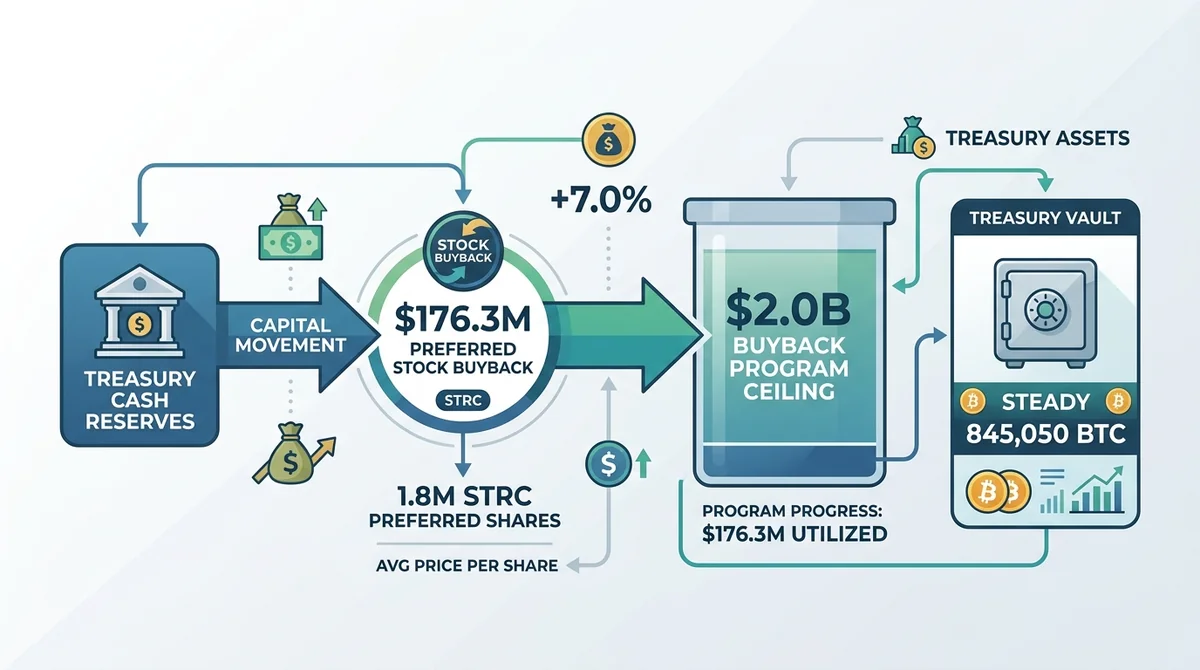
- Divergence in Institutional Capital Allocation: Between August 31 and September 7, 2026, Strategy paused its routine weekly Bitcoin purchases, spending $176.3 million to buy back 1.8 million shares of STRC preferred stock and expanding its digital security buyback program to $2.0 billion.
- Solid Core Holdings: Strategy's current Bitcoin reserve remains at 845,050 BTC, with a cumulative purchase cost of $63.6 billion and an average acquisition price of $75,412 per coin.
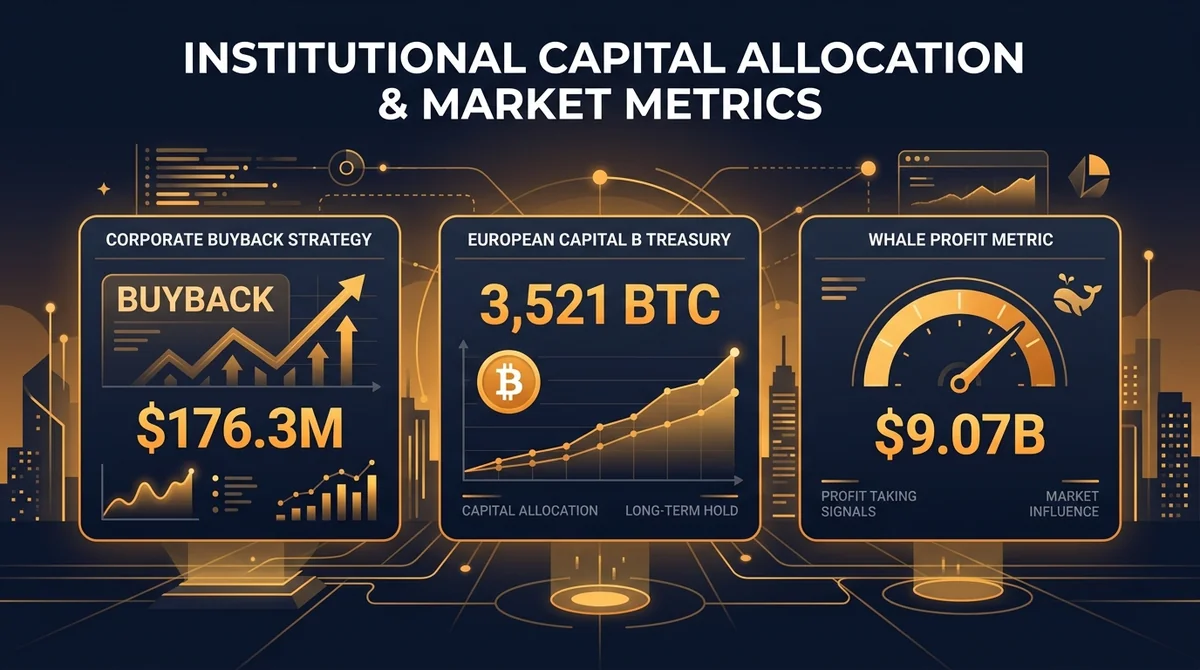
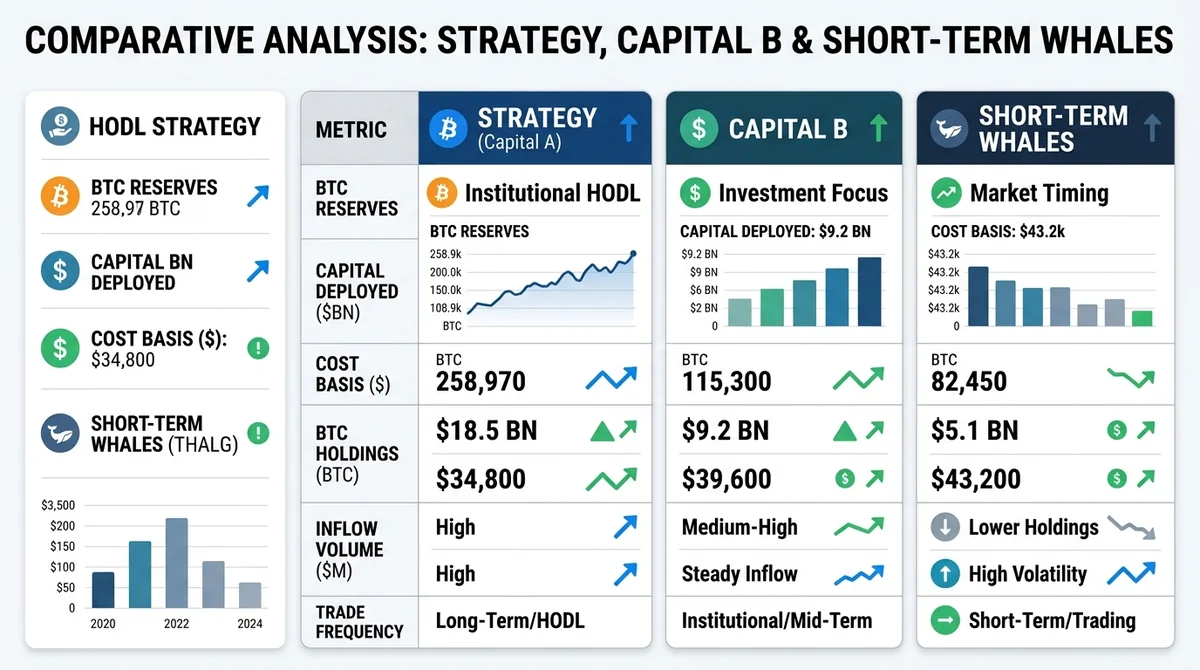
- European Corporate Treasuries Follow Suit: French Bitcoin treasury company Capital B raised approximately €30.1 million and deployed €25.3 million (~$29.5 million) to acquire 376 BTC, bringing its total holdings to 3,521 BTC.
- Short-Term Unrealized Profits Hit All-Time Highs: On-chain data revealed that short-term whales holding BTC for less than 6 months reached a record $9.07 billion in unrealized profit on September 4, 2026, with their aggregate cost basis sitting near $69,000.
What Are the Latest Shifts in Institutional Treasuries and On-Chain Capital?
Direct Answer: In September 2026, Strategy paused its weekly BTC purchases to allocate $176.3 million toward STRC preferred stock buybacks, while short-term whale unrealized profits breached an all-time high of $9.07 billion with an aggregate cost basis at $69,000.
According to public disclosures and on-chain monitoring, global corporate treasuries and high-net-worth capital presented the following developments in early September 2026:
| Institution / Entity | Latest Action & Capital Scale | Current Total Holdings | Aggregate Cost / Cost Basis | Data Update Date |
|---|---|---|---|---|
| Strategy | Spent $176.3M to repurchase 1.8M STRC preferred shares; expanded buyback limit to $2.0B | 845,050 BTC | $75,412 (Total cost $63.6B) | Sep 8, 2026 |
| Capital B | Raised €30.1M, deployed €25.3M to buy 376 BTC | 3,521 BTC | Overall average price not individually disclosed | Sep 7, 2026 |
| Short-Term Whales (<6 months) | Unrealized profit reached a record $9.07B | On-chain short-term supply pool | $69,000 | Sep 4, 2026 |
Why Did Strategy Pause Routine BTC DCA to Buy Back STRC Preferred Stock?
Between August 31 and September 7, 2026, Strategy paused its routine weekly Bitcoin spot purchases, utilizing $176.3 million in cash to buy back 1.8 million shares of STRC preferred stock in the open market. This move increased the cap of the company's digital security buyback program to $2.0 billion. To date, Strategy's Bitcoin holdings stand steady at 845,050 BTC, with an aggregate purchase cost of $63.6 billion.
What Signal Does Capital B's European Treasury Expansion Send?
While North American giants rebalanced their capital allocations, European corporate treasuries demonstrated ongoing momentum. French-listed Capital B, after raising roughly €30.1 million, promptly deployed €25.3 million (~$29.5 million) to purchase 376 BTC. This transaction brought Capital B's total reserves to 3,521 BTC, underscoring the continuous adoption of Bitcoin reserve assets by European public companies.
What Does $9.07 Billion in Record Unrealized Profit for Short-Term Whales Indicate?
On-chain monitoring shows that short-term whales (wallets holding coins for under 6 months) reached a record $9.07 billion in unrealized profit on September 4, 2026. This cohort's average cost basis stands near $69,000, indicating that recently entered large-scale capital is sitting on substantial paper gains.
Why Are Strategy's Buyback and European Treasury Expansion Worth Watching?
Direct Answer: Strategy prioritizing STRC preferred stock repurchases alongside Capital B's ongoing accumulation in Europe demonstrates that corporate treasury management is evolving toward sophisticated, multi-dimensional capital operations.
The corporate Bitcoin treasury model has entered a mature phase that no longer relies solely on continuous spot accumulation on secondary markets:
- Balance Sheet Optimization: Strategy's allocation of $176.3 million to buy back STRC preferred stock reflects proactive management of its equity structure and capital costs rather than a bearish outlook on Bitcoin. With holdings reaching 845,050 BTC (average cost $75,412), repurchasing preferred securities helps optimize balance sheet leverage and future dividend obligations.
- Expansion of European Corporate Treasuries: Capital B's €30.1 million raise and subsequent €25.3 million deployment validate the global treasury adoption trend highlighted in BTC Dormant Coins Low & 150 Public Treasuries: MSX Positioning 2026.
How Do Whale Profit Levels and the $69,000 Cost Basis Impact Bitcoin Price Action?
Direct Answer: With short-term whales holding $9.07 billion in floating profits, their $69,000 cost basis serves as the primary battleground between bulls and bears and a critical line for profit-taking risk.
The volume of unrealized profits among on-chain short-term whales is directly correlated with potential spot market sell pressure:
- Support Significance of the $69,000 Level: $69,000 represents the aggregate entry cost for short-term whales. As long as the spot price holds above this level, whales lack urgency to trigger stop-loss selloffs. A decisive break below it, however, could spark defensive unwinding and leverage reduction.
- Profit-Taking Spillover Dynamics: With unrealized profits reaching an all-time high of $9.07 billion, any spike in macro volatility or liquidity contraction could prompt yield-sensitive capital to lock in gains in the spot or derivatives markets, creating localized supply overhangs.
For a technical framework on on-chain distribution and key levels, see Bitcoin & Ethereum Technical Analysis: Key Supports and Rebound Targets.
What Are the Spillover Effects of Institutional Shifts on the Altcoin Market?
Direct Answer: When institutional liquidity remains concentrated in Bitcoin and associated securities while short-term whales face a profit-taking window, liquidity tends to withdraw to major assets, elevating volatility risks for altcoins.
Institutional capital dynamics create noticeable ripple effects across broader crypto market liquidity:
- Liquidity Siphon Effect: Strategy's pivot to preferred share repurchases and Capital B's exclusive focus on BTC illustrate that compliant institutional capital remains predominantly concentrated in Bitcoin. During tighter liquidity environments, this preference can exacerbate liquidity drought in altcoin markets.
- Sentiment Correlation During Profit-Taking: If short-term whales realize gains at these record profit levels, overall market risk appetite may contract. Historically, altcoins experience deeper drawdowns during such phases, as detailed in Dormant BTC Low, ETH/BTC Ratio High: 2026 Crypto Signals & MSX Strategies.
What Market Scenarios Could Unfold Next?
Direct Answer: The market faces two primary short-term scenarios: a healthy absorption of floating gains above $69,000, or aggressive profit-taking triggering a retest of whale cost-basis support.
Based on on-chain metrics and institutional developments, two main paths emerge:
- Scenario 1: High-Level Consolidation and Supply Absorption: If the $9.07 billion in unrealized profit is absorbed smoothly through sideways consolidation while spot prices hold firmly above the $69,000 cost basis, buying support is likely to remain resilient as institutional flows rebalance.
- Scenario 2: Profit-Taking Triggers Deep Retest: If shifting macro conditions or liquidity crunches spark coordinated whale selling, cascading deleveraging could test the strength of the $69,000 support level. For further analysis on liquidations and support breakdowns, see Why Is Crypto Up Today? BTC Breaks $80K, $220M Short Squeeze & Strive Buys 2026.
What Key Risks Should Investors Watch Out For?
Direct Answer: Investors should monitor profit-taking pressure from short-term whales sitting on $9.07 billion in floating profits, as well as market sentiment shifts caused by the pause in institutional weekly buying.
- Whale Distribution Risk: Short-term whales holding for less than 6 months are sensitive to price swings. With floating profits at extreme highs of $9.07 billion, large-scale inflows to centralized exchanges could temporarily overwhelm order book liquidity.
- Sentiment Discount from DCA Pauses: Strategy's massive 845,050 BTC holding makes its regular acquisitions a psychological benchmark. A slowdown in buying cadence may be interpreted by short-term traders as a wait-and-see posture.
Which Key Metrics Should Investors Track Going Forward?
Direct Answer: Investors should closely track Strategy's capital deployment under its $2.0 billion buyback program, the defense of the $69,000 whale cost basis, and on-chain whale exchange inflows.
Key indicators to monitor include:
- Strategy Capital Allocation: Track how Strategy divides its $2.0 billion program between preferred stock buybacks and BTC purchases following the $176.3 million STRC buyback, and whether its 845,050 BTC balance changes.
- Exchange Net Inflows and Profit Realization: Monitor large transfers from short-term whale addresses to exchanges to gauge whether the $9.07 billion in paper gains is transforming into active selling pressure.
- The $69,000 Cost Basis: Treat $69,000 as a vital on-chain benchmark during pullbacks, assessing volume depth and buyer absorption around this threshold.
This article is produced by the MSXGO editorial team, AI-assisted, and reviewed through an editorial process. Fee rates and figures are subject to each platform's latest official announcements.
FAQ
Why did Strategy pause its weekly Bitcoin DCA to buy back STRC preferred stock? ▼
Between August 31 and September 7, 2026, Strategy spent $176.3 million to repurchase 1.8 million STRC preferred shares, expanding its buyback authorization to $2.0 billion. The transaction was designed to optimize equity capital structure and financing costs, while its total Bitcoin reserves remained unchanged at 845,050 BTC.
What is Capital B's current European Bitcoin treasury holding? ▼
Following a €30.1 million funding round, French-listed Capital B deployed €25.3 million to purchase 376 BTC, bringing its total treasury reserves to 3,521 BTC.
What potential risk does the $9.07B in short-term whale unrealized profit pose to BTC? ▼
Short-term whales holding BTC for under 6 months have reached an all-time high of $9.07 billion in unrealized profit with an average cost basis of $69,000. If market volatility spikes, this profit could translate into spot sell pressure, making $69,000 the critical dividing line for support.
What is the fundamental difference between buying back preferred stock and purchasing Bitcoin for corporate treasuries? ▼
Repurchasing preferred stock is a balance sheet and equity management maneuver aimed at optimizing capital structure or lowering fixed dividend liabilities. In contrast, acquiring Bitcoin converts fiat cash into cryptocurrency reserve assets, addressing liability-side management and asset-side allocation respectively.
Finished reading? Ready to try trading?
Tokenized stocks/ETFs, crypto spot, and perpetual futures in one account — perp maker 0.02% / taker 0.045%, RWA spot buy 0.3% / sell 0.
Free sign-up · 3 quick steps