MSX US Stock Daily Watch: Catapult Sports, FireFly Metals, and RTX: Catapult Completes 3 Acquisitions Doubling Scale, FireFly Releases Green Bay PEA, and RTX Backlog at $289 Billion
Aug 25, 2026: Catapult doubled via 3 M&As, FireFly released Green Bay PEA & capital raise plan, RTX backlog +22% to $289B, FCF $2.88B.
Article Citation Summary
Aug 25, 2026: Catapult doubled via 3 M&As, FireFly released Green Bay PEA & capital raise plan, RTX backlog +22% to $289B, FCF $2.88B.
US Stock Daily Watch: Catapult Sports, FireFly Metals, and RTX: Catapult Completes 3 Acquisitions Doubling Scale, FireFly Releases Green Bay PEA, and RTX Backlog at $289 Billion
Guest Columnist August 25, 2026 This article is approximately 5,000 words and takes about 10 minutes to read.
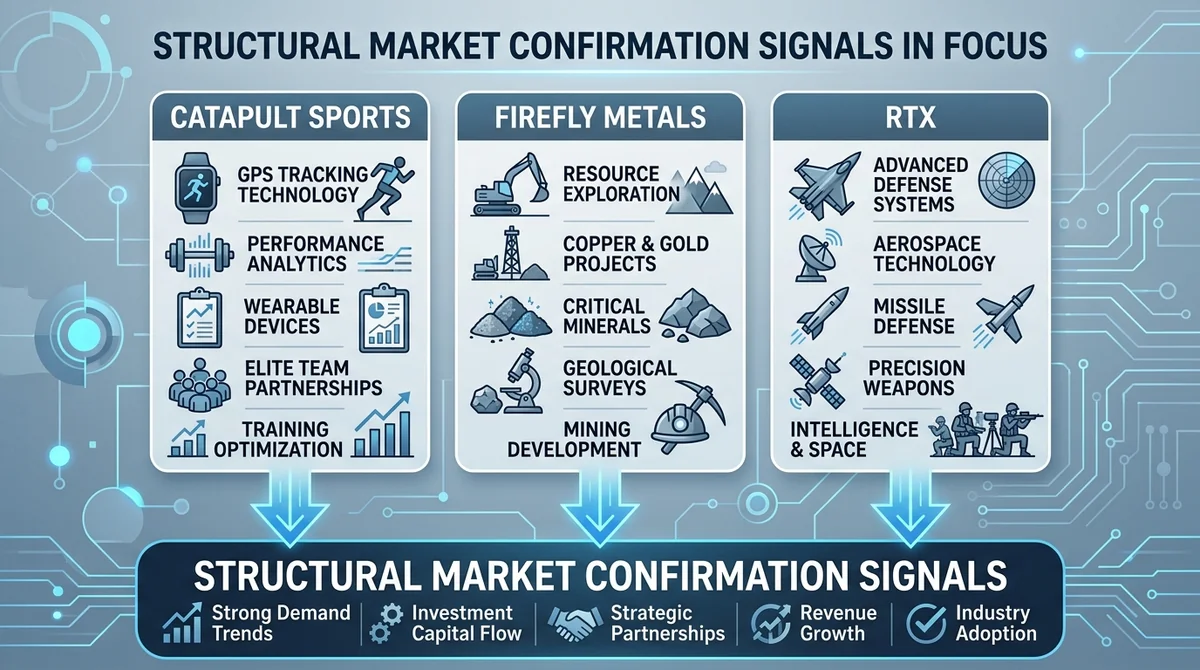
Around August 25, 2026, three corporate updates from different sectors—Catapult Sports' acquisitions, FireFly Metals' PEA release, and RTX's orders and cash flow—together point to a deeper market logic: capital expenditure, project financing, and order expansion are becoming key confirmation signals for structural market conditions in US stocks.
AI Summary
Core viewpoints: Catapult Sports doubled its scale through three acquisitions, accelerating sports technology consolidation; FireFly Metals released its Green Bay PEA and disclosed capital raising strategy, moving the project into financing preparation; RTX, with multiple improvements in sales, orders, cash flow, and stock price, validated the persistence of defense aerospace demand.
Key elements:
- Catapult Sports completed 3 acquisitions in FY2026, doubling the company's scale.
- FireFly Metals Ltd released a slide deck discussing the Green Bay preliminary economic assessment results and capital raising strategy.
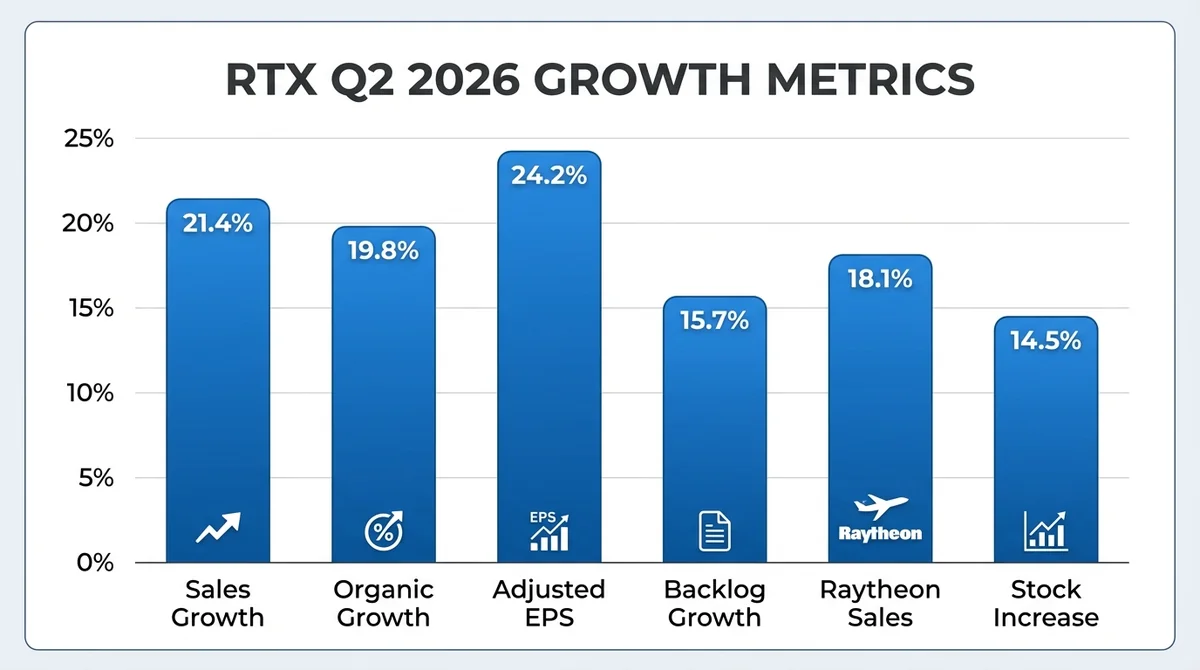
- RTX's Q2 sales grew 14%, organic growth 16%, and adjusted EPS grew 21%.
- RTX's backlog grew 22% to $289 billion, with the stock up 18% since late April.
- RTX's Raytheon segment sales grew 18% and won significant contracts.
- RTX's free cash flow improved to $2.88 billion.
Key Data Snapshot of the Three Companies
| Company | Key Metric | Data | Source/Time |
|---|---|---|---|
| Catapult Sports | FY2026 acquisitions | 3 | Seeking Alpha, August 25, 2026 |
| FireFly Metals | Released content | Green Bay PEA + capital raising strategy | Seeking Alpha, August 25, 2026 |
| RTX | Q2 sales growth/organic growth/adjusted EPS growth | 14%/16%/21% | Seeking Alpha, August 25, 2026 |
| RTX | Backlog/free cash flow/stock increase | $289 billion/$2.88 billion/18% | Seeking Alpha, August 25, 2026 |
1. Catapult Sports Completes Three Acquisitions, Doubling Scale and Validating Sports Tech Consolidation Logic
1. Three Acquisitions Closed in FY2026, Catapult Sports Doubles in Scale
According to the Catapult Sports shareholder analyst call transcript disclosed by Seeking Alpha, Catapult Sports completed 3 acquisitions in FY2026, doubling its scale. Data source: Seeking Alpha, August 25, 2026.
Key data: Catapult Sports completed 3 acquisitions in FY2026, doubling its scale. This result indicates that the company is rapidly expanding through M&A rather than organic growth. For the sports technology sector, this magnitude of change could reshape the competitive landscape.
However, the specific acquisition targets and transaction amounts were not disclosed, so the post-integration financial details cannot be quantified; only its strategic execution can be observed.
Catapult Sports' acquisition activities are not isolated. M&A activity in the sports technology space has increased somewhat (not quantitatively confirmed), but completing three acquisitions and doubling scale in a single fiscal year remains rare. This may reflect management's judgment on the industry window, but the strategic motivation has not been disclosed.
Continuous acquisitions may bring synergies in customer data, algorithmic models, and hardware channels, but also come with integration risks, cultural conflicts, and goodwill impairment pressure. Therefore, doubling scale is a positive signal, but whether it translates into earnings quality needs to be observed over the coming quarters.
From an industry historical perspective, sports technology is evolving from tool-based products to platform solutions. Early companies mostly focused on single functions—such as athlete GPS tracking, video replay, or biomechanical analysis—with data siloed. As professional sports demand data integration, companies that can provide a full-process data platform from training to rehabilitation will gain competitive advantages.
Catapult Sports' three acquisitions may help expand toward a platform approach, but the specific integration areas and results remain to be seen. If integration goes smoothly, the company could develop strong customer stickiness and pricing power in professional sports data services.
2. Continuous Acquisitions Reflect the Sports Technology Sector Moving from Fragmentation to Consolidation
Catapult Sports' acquisition moves are a microcosm of the sports technology sector moving from fragmentation to consolidation. The sports technology field has long been fragmented, with many small and mid-sized startups focusing on single segments—from athlete tracking and video analysis to tactical decision systems—without deep integration with each other.
As a leading company in the industry, Catapult Sports, through continuous acquisitions, has incorporated multiple niche capabilities into its own platform, objectively driving industry consolidation. Industry judgment: Whether this M&A integration trend continues depends on changes in demand for integrated data solutions from major sports leagues and broadcasters; currently, there is no direct data to support a specific time window. Smaller companies often lack the resources and bargaining power to serve large clients independently, which may provide conditions for consolidation by leading players.
From a capital market perspective, if Catapult Sports' M&A strategy is successfully absorbed and generates synergies, the company's valuation could be supported by both revenue growth and margin improvement; but if integration falls short of expectations, it could also trigger a valuation correction.
For US stock investors, the sports technology sector is smaller than tech giants, but its subscription-based, high-stickiness, data-driven business model has certain defensive attributes. The case of Catapult Sports' scale doubling provides a window for investors interested in this sector to observe the effects of M&A integration.
The success of M&A integration depends on management execution and corporate cultural inclusiveness. Sports tech companies are mostly technology-driven teams; whether core talent stays after acquisition, whether product roadmaps remain coherent, and whether customer relationships remain stable are variables that need continuous tracking. Currently, public information has not disclosed these details, so only a qualitative judgment can be made: scale doubling is a fact, but subsequent income statement and balance sheet performance will be the touchstone for verifying integration quality.
2. FireFly Metals Releases Green Bay PEA, Capital Raising Strategy Becomes Key to Project Advancement
1. Green Bay Preliminary Economic Assessment Results Released, Providing Economic Reference for Project Development
FireFly Metals Ltd released a slide deck on August 25, 2026, discussing the preliminary economic assessment (PEA) results and capital raising strategy for its Green Bay project. Data source: Seeking Alpha, August 25, 2026.
Key data: FireFly Metals released its Green Bay PEA on August 25, 2026, and simultaneously discussed capital raising strategy. A PEA is a key early-stage milestone in mining project development, based on preliminary engineering design and resource estimates, providing reference conclusions on project economic viability.
FireFly's choice to release the PEA at this time may indicate that the company has a certain grasp of the resource base and development path of the Green Bay project, and hopes to convey project value to the market. However, public information does not disclose NPV, IRR, or capital expenditure figures from the PEA; the release itself is a milestone, but specific economics still require further data.
For mining companies, PEA results directly influence subsequent feasibility studies, financing negotiations, and partner introductions. FireFly's simultaneous discussion of PEA and capital raising strategy may mean the company has linked project development with funding planning.
If the Green Bay project's PEA data is favorable, the company may accelerate pre-feasibility study (PFS) or feasibility study (FS) and seek debt or equity financing. However, PEA accuracy is limited and usually has a wide margin of error, so investors should treat economic assumptions with caution.
From a technical perspective, a PEA integrates variables such as geological resources, mining methods, mineral processing, infrastructure costs, and commodity price assumptions; any parameter adjustment could significantly change economic conclusions. The PEA release is only the first step, and higher-level technical reports are needed later to reduce uncertainty.
2. Capital Raising Strategy Disclosed Alongside PEA, Pointing to Subsequent Financing Path
FireFly Metals discussed its capital raising strategy in the same slide deck, a move that may signal financing preparation. Mining project development typically requires massive capital expenditure, which is often difficult to cover with the company's existing cash reserves alone. Explaining financing ideas to the market in advance serves both to test investor reaction and to pave the way for subsequent share issuance, placements, or debt financing.
Trend judgment: If Green Bay PEA results meet market expectations, the company may initiate equity financing or project financing arrangements within the next few months; conversely, if data fall short, the financing process may be delayed or shelved. This judgment is based on current information and inference; specific timelines are subject to the company's subsequent disclosures.
Whether it is common for small mining companies to disclose capital raising strategies alongside a PEA lacks public statistical support. FireFly's approach may reflect changes in the current mining financing environment: amid high interest rates and shrinking risk appetite, mining companies need to prove project economics earlier and provide a clear funding path to attract institutional capital.
Linking the Green Bay PEA with the capital raising strategy may also indicate that management has some confidence in the project's prospects and is willing to present the two together publicly.
As for specific capital raising methods, mining companies typically can choose paths such as equity financing, convertible bonds, project financing, streaming deals, or joint venture partnerships. Different methods have varying impacts on shareholder dilution, financial costs, and project control. FireFly's eventual combination will depend on PEA results, market windows, and long-term company strategy. Currently, public information has not revealed specific details, so continued observation is needed.
3. RTX Earnings and Backlog Both Rise, Defense Aerospace Demand Supports Long-Term Returns
1. Q2 Sales Grow 14%, Organic Growth 16%, Adjusted EPS Up 21%
RTX's Q2 earnings report showed sales growth of 14%, organic growth of 16%, and adjusted EPS growth of 21%. Data source: Seeking Alpha, August 25, 2026.
Key data: RTX's Q2 sales grew 14%, organic growth 16%, and adjusted EPS grew 21%. The simultaneous improvement in all three metrics points to strong demand in the defense and aerospace markets. Organic growth of 16% exceeding total sales growth of 14% indicates that after excluding M&A and currency effects, internal growth was more pronounced, reflecting higher earnings quality. Adjusted EPS growth of 21% above revenue growth may reflect cost control or a shift in product mix toward higher-margin offerings.
Double-digit growth in both revenue and profit, with profit growth outpacing revenue growth, indicates the company has operating leverage. If defense budgets continue to expand and air travel demand recovers, RTX's commercial aviation and defense businesses may continue to benefit. However, it is necessary to watch whether this growth slope can be maintained in subsequent quarters, and the potential squeeze on margins from rising raw material and labor costs.
From a macro perspective, global geopolitical tensions have not significantly eased in 2026, and defense modernization upgrades and ammunition replenishment needs in multiple regions may provide sustained orders for RTX's defense business. Although the commercial aviation recovery has been uneven, aircraft delivery and aftermarket demand remain solid. The dual drivers of defense and commercial aviation give RTX's performance relative resilience. These macro judgments need continuous verification against subsequent data and official guidance.
2. Backlog Up 22% to $289 Billion, Raytheon Segment Sales Grow 18% and Wins Significant Contracts
RTX's backlog grew 22% to $289 billion, a key figure in this earnings report. Data source: Seeking Alpha, August 25, 2026.
Key data: RTX's backlog grew 22% to $289 billion, and Raytheon segment sales grew 18%. Backlog represents future revenue visibility; the massive $289 billion backlog provides support for future performance stability. As the core of the defense business, Raytheon's strong performance likely benefited from increased defense spending amid global geopolitical tensions.
Backlog and new significant contracts may form a virtuous cycle: order accumulation improves future revenue certainty, while consecutive new contract wins validate technological competitiveness and customer trust. For US stock investors, backlog is an important leading indicator—lagging contract signings but leading revenue recognition—capable of reflecting the persistence of defense aerospace demand in advance.
The specific content, amounts, and delivery timelines of the significant contracts have not been detailed in public sources; only the fact that the Raytheon segment won significant contracts can be confirmed. Typically, such significant contracts may involve missile defense systems, radar, or avionics, but the specific product lines are subject to the company's official disclosures. Raytheon's 18% sales growth already demonstrates good business expansion momentum.
3. Free Cash Flow Improves to $2.88 Billion, Stock Up 18% Since Late April
RTX's Q2 free cash flow reached $2.88 billion, an improvement from before. Data source: Seeking Alpha, August 25, 2026.
Key data: RTX's Q2 free cash flow was $2.88 billion, and the stock has risen 18% since late April. Free cash flow is a core metric for measuring shareholder return capacity; improvement means the company has sufficient cash after covering capital expenditures for dividends, buybacks, or deleveraging. Combined with backlog and revenue growth, the improvement in free cash flow supports the judgment that the business model is generating a healthy cash cycle.
The stock price increase partly reflects a repair of expectation gaps; if future results fail to beat expectations or cost overruns occur, the stock may face pullback risk. For US stock investors
This article is produced by the MSXGO editorial team, AI-assisted, and reviewed through an editorial process. Fee rates and figures are subject to each platform's latest official announcements.
FAQ
Catapult Sports 在2026财年完成了多少项收购?规模有何变化? ▼
Catapult Sports 在2026财年完成了3项收购,公司规模翻倍。具体收购标的和交易金额尚未披露。
FireFly Metals 发布的 Green Bay PEA 是什么?为什么重要? ▼
Green Bay PEA 是 FireFly Metals 对其 Green Bay 项目发布的初步经济评估,用于评估项目经济可行性。公司同时讨论了资本募集策略,表明项目可能进入融资准备阶段;但具体 PEA 数据未披露。
RTX 第二季度财务表现如何? ▼
RTX 第二季度销售增长 14%,有机增长 16%,调整后每股收益增长 21%,自由现金流达到 28.8 亿美元。这些指标显示公司收入、利润和现金流均有改善。
RTX 的积压订单和 Raytheon 部门表现怎样? ▼
RTX 积压订单增长 22% 至 2890 亿美元,Raytheon 部门销售增长 18% 并获得重大合同。积压订单增长为未来收入提供较高可预见性。
RTX 股价近期表现如何? ▼
RTX 股价自 4 月下旬以来上涨 18%。股价上涨可能与业绩改善和订单增长有关,但未来仍存在回调风险。
Finished reading? Ready to try trading?
Tokenized stocks/ETFs, crypto spot, and perpetual futures in one account — perp maker 0.02% / taker 0.045%, RWA spot buy 0.3% / sell 0.
Free sign-up · 3 quick steps