MSX Daily US Stocks Watch: Conagra Forward P/E 10.81x & 4.3% Yield; Invesco Fund Lags Q2, Trims ASML
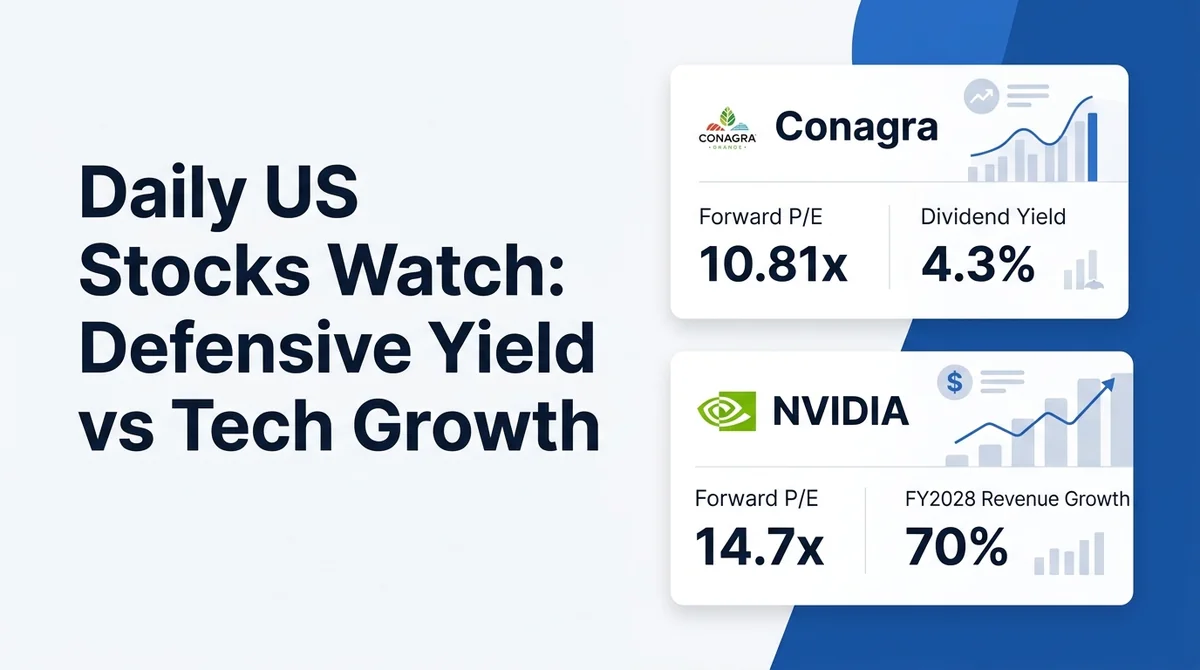
As of Sep 2026, Conagra Brands gets Buy rating: 10.81x fwd P/E, 4.3% yield. Invesco Global Core Equity Fund lagged after missing Micron, AMD, Intel, trimmed ASML. NVIDIA raised target, acquired Hugging Face for $12.9B.
Article Citation Summary
As of Sep 2026, Conagra Brands gets Buy rating: 10.81x fwd P/E, 4.3% yield. Invesco Global Core Equity Fund lagged after missing Micron, AMD, Intel, trimmed ASML. NVIDIA raised target, acquired Hugging Face for $12.9B.
Daily US Stocks Watch: Conagra forward P/E 10.81x and 4.3% yield; Invesco fund lags Q2 and trims ASML and other tech stocks
September 2026 · About 10 min read
The US stock market is showing a notable divergence: Conagra in the consumer staples sector offers defensive yield characteristics, while the actively managed Invesco Global Core Equity Fund underperformed its benchmark by missing the quarter's soaring chip stocks, and at the same time NVIDIA continues to strengthen the tech growth narrative. The tension between defensive value and tech growth forms the core thread of this September 2026 daily US stocks observation.
Specifically: Conagra trades at a forward P/E of 10.81x and a dividend yield of about 4.3%; Micron, AMD, and Intel, which the Invesco fund did not hold, rose 242%, 185%, and 216% respectively during the quarter; NVIDIA is expected to grow revenue 70% in FY2028, currently trades at 14.7x forward earnings, and is acquiring Hugging Face for $12.9 billion.
AI Summary
Core viewpoint: As of September 2026, a clear divergence has emerged between defensive yield assets and high-growth tech assets in the US stock market. The case of Conagra Brands' low valuation and high dividend yield, together with Invesco Global Core Equity Fund underperforming its benchmark by missing chip stock gains, reflects the potential relative return loss that active funds may face when controlling tech concentration. Meanwhile, NVIDIA's earnings upgrades and open-source AI ecosystem acquisition indicate that the tech growth theme remains well-supported.
Key elements:
- Conagra Brands received a Buy rating from a Seeking Alpha analyst, with a forward P/E of 10.81x and a dividend yield of about 4.3%.
- Invesco Global Core Equity Fund underperformed its benchmark in Q2; Micron, AMD, and Intel, which it did not hold, rose 242%, 185%, and 216% respectively during the quarter.
- Invesco Global Core Equity Fund trimmed positions in ASML, Amphenol, Texas Instruments, and Apple in Q2 to reduce tech sector concentration.
- Invesco Global Core Equity Fund added Waste Connections, Medline, RLI, and AIA in Q2, emphasizing pricing power, customer relationships, underwriting discipline, or structural growth.
- NVIDIA was reiterated as Buy with a raised price target, expected to grow revenue 70% in FY2028, and currently trades at 14.7x forward earnings.
- NVIDIA is acquiring Hugging Face for $12.9 billion, strengthening its position in the open-source AI ecosystem.
1. Conagra Shows Low Valuation and High Dividend Yield with 10.81x Forward P/E and ~4.3% Dividend Yield
1. Seeking Alpha Buy Rating Corresponds to a 10.81x Forward P/E, at the Lower End for Consumer Staples
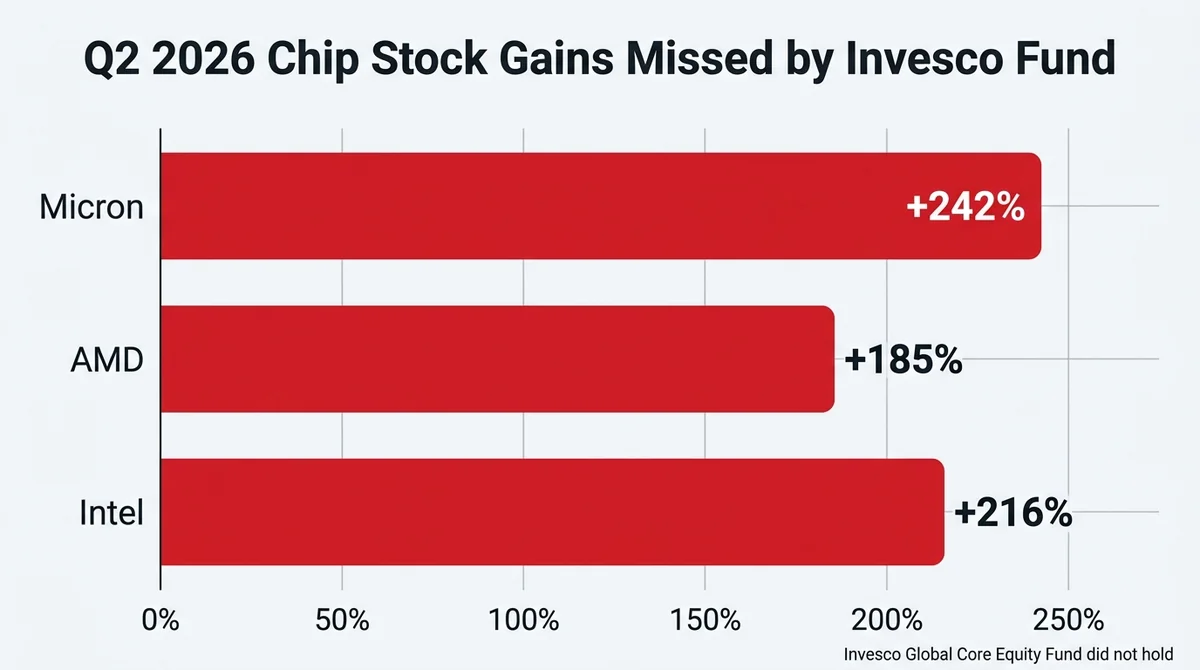
As of September 2026, Conagra Brands has received a Buy rating from a Seeking Alpha analyst, with a forward P/E of 10.81x and a dividend yield of about 4.3%. These numbers form a defensive sample of low valuation and high dividend yield.
According to a Seeking Alpha report dated September 6, 2026, the analyst's Buy rating article title explicitly states that "conservative guidance, turnaround initiatives, and low valuation constitute an attractive setup." The Buy rating is not based on short-term earnings explosion, but rather on the judgment of the company's low valuation and defensive attributes. A forward P/E of 10.81x means the market is pricing Conagra's future earnings with restraint; if the company can achieve modest growth through cost control or product mix optimization, valuation repair space may open up. For investors seeking stable cash returns, this low P/E, together with the dividend yield mentioned later, forms a defensive sample worth tracking.
From a market perspective, consumer staples are generally seen as low-volatility, low-growth sectors, and their valuation center is often lower than high-growth tech stocks due to muted growth expectations. However, when macro uncertainty rises or interest rate environment changes, low-valuation, high-dividend companies tend to attract inflows. Whether Conagra's 10.81x forward P/E is lower than consumer staples peers is not detailed in the source article, but the analyst views it as an attractive allocation basis. This combination may attract two types of funds: one is value-oriented funds emphasizing margin of safety, and the other is allocation-oriented investors treating dividend yield as a substitute for bond yields. However, it should be noted that the Buy rating is only an analyst opinion and does not constitute a price forecast; whether Conagra's earnings can support this valuation still needs to be verified by subsequent financial reports. If future earnings are revised downward, the low valuation could go even lower, so the Buy rating should be understood as a relative value judgment, not a guarantee of absolute returns.
2. ~4.3% Dividend Yield Gives Conagra Defensive Attributes of a Cash Yield Asset
Alongside the 10.81x forward P/E is a dividend yield of about 4.3%. This yield is relatively high in the current US stock environment, giving Conagra defensive attributes similar to a cash yield asset. According to the Seeking Alpha report, the analyst includes both low valuation and dividend yield in the basis for the Buy rating, meaning Conagra's return structure does not rely entirely on share price appreciation; dividend payments provide a portion of predictable cash flow. For accounts focused on portfolio stability, such assets can provide a buffer during market declines, but the dividend yield is not fixed and the company may adjust payouts based on earnings and cash flow. If Conagra's cash flow deteriorates, dividends could be cut, which is a potential risk behind the defensive attributes.
Putting these two data points together, Conagra presents a classic defensive combination of "low valuation + high dividend yield." This combination is drawing attention in September 2026 because the market is seeking a balance between tech growth and defensive value. High volatility in tech stocks may prompt some funds to shift toward low-volatility, dividend-supported names. However, Conagra is not without risks: its conservative guidance may imply insufficient growth momentum, and the consumer staples sector faces cost pressures and changing consumption habits. If earnings are revised down, the low valuation could further decline. Therefore, the Buy rating should be understood as a relative value judgment, not a guarantee of absolute returns. In the framework of daily US stocks observation, Conagra is a concrete coordinate for observing defensive yield assets.
2. Invesco Global Core Equity Fund's Q2 Underperformance Directly Dragged by Not Holding Micron, AMD, and Intel
1. Micron, AMD, and Intel Rose 242%, 185%, and 216% Respectively During the Quarter; the Fund Completely Missed These Gains
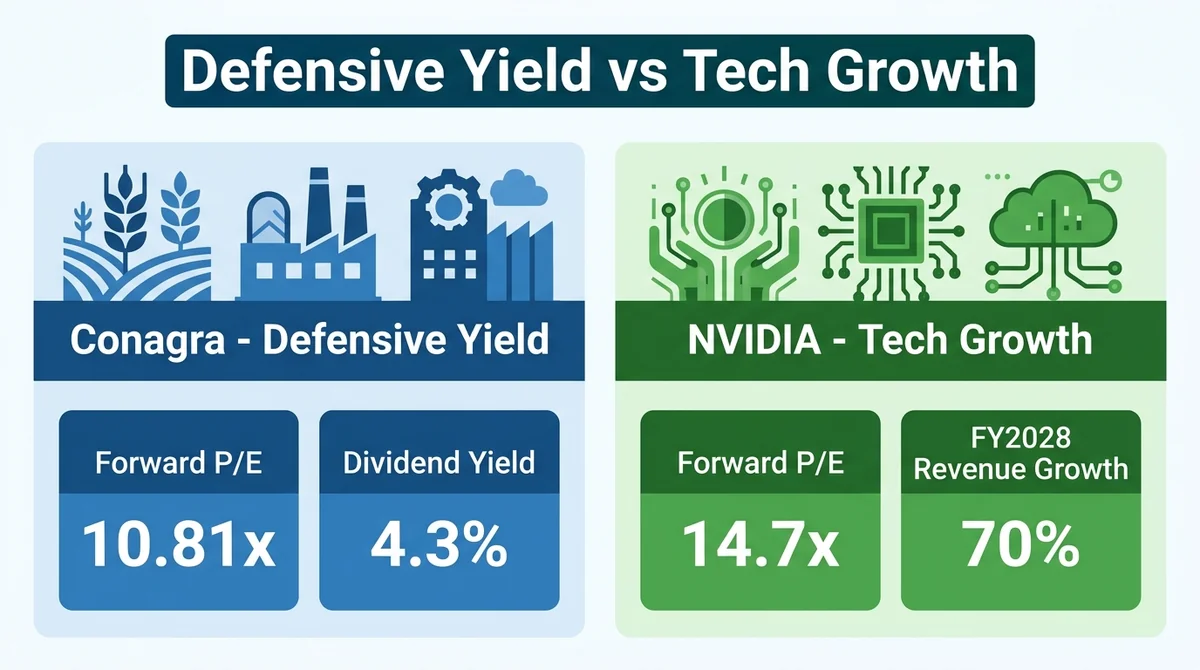
In Q2 2026, Invesco Global Core Equity Fund underperformed its benchmark; Micron, AMD, and Intel, which the fund did not hold, rose 242%, 185%, and 216% respectively, directly dragging down relative performance.
According to the Invesco Global Core Equity Fund Q2 commentary (source: Seeking Alpha, September 6, 2026), the fund underperformed its benchmark in Q2, and the main drag was the three semiconductor stocks it did not hold: Micron Technology, Advanced Micro Devices, and Intel. For a global core equity fund, missing such large single-stock gains directly causes significant relative underperformance. Especially when the benchmark index includes these stocks with significant weight, the decision not to hold them becomes a negative contribution. The fund commentary clearly identifies this as one of the direct reasons for underperformance, not merely attributing it to overall market style.
This case illustrates the trade-offs of active management in extremely strong momentum areas: underweight or zero allocation can bring huge opportunity costs. The gains in Micron, AMD, and Intel were not from moderate earnings upgrades but likely driven by events such as the semiconductor cycle, AI demand expectations, or industry supply changes. Regardless of the drivers, the quarter's gains of 242%, 185%, and 216% mean these companies contributed substantial index returns. Invesco Global Core Equity Fund, as a global core strategy, theoretically should maintain sector neutrality or moderate diversification, but completely not holding three high-momentum chip stocks suggests its sector allocation may be defensive or cautious on semiconductors. As a result, in the relative performance race of Q2, the fund lagged due to missing exposure to this sector. This lag was not due to stock selection mistakes but to active sector deviation.
2. Underweighting Semiconductors Became the Main Source of Relative Return Loss for the Active Fund
From an attribution perspective, Invesco Global Core Equity Fund underperformed not because of stock selection errors in small caps or value stocks, but because of an overall underweight in the semiconductor sector. The three stocks it did not hold happened to be the biggest gainers of the quarter, thus underweighting semiconductors became the main source of relative return loss. This fact poses a classic dilemma for active fund managers: when valuations are already high but earnings momentum and industry trends remain upward, should they be forced to hold high-momentum stocks to pursue relative returns? The Invesco fund commentary does not give emotional statements, but the data shows that avoiding the semiconductor sector in Q2 2026 was very costly.
This does not mean the fund's investment philosophy is wrong; rather, it demonstrates the trade-offs of active management in different market environments. Invesco Global Core Equity Fund is positioned as a global core equity strategy, likely focusing more on quality, valuation, and long-term compounding rather than chasing short-term momentum. But in a market driven by a few tech stocks, this style tends to lag periodically. The fund commentary attributes this result to not holding Micron, AMD, and Intel, not other factors, indicating the fund manager acknowledges the direct impact of the sector allocation decision. For observers, this case reminds us that attribution of benchmark-relative returns must be specific to individual stocks and sectors, not broadly saying "tech dragged" or "market style was unfavorable." Active funds need to be clear about their style positioning and accept the reality of potentially lagging the benchmark in certain periods.
3. Fund Trimmed ASML, Amphenol, Texas Instruments, and Apple to Reduce Tech Concentration
1. Trimming Four Tech Holdings Reflects Rebalancing Toward Low-Correlation Defensive Assets
According to the same Invesco Global Core Equity Fund Q2 commentary, the fund trimmed positions in ASML, Amphenol, Texas Instruments, and Apple during Q2. This trimming action had a clear stated purpose: to reduce tech sector concentration. This shows the fund's sector allocation is not static but a conscious rebalancing. In Q2, tech stocks remained strong, but the fund chose to reduce the weight of four tech holdings, possibly to control the portfolio's sensitivity to the tech cycle and increase low-correlation assets. In the trimmed list, ASML is a semiconductor equipment leader, Amphenol is an electronic connector manufacturer, Texas Instruments is an analog chip giant, and Apple is a consumer electronics and ecosystem platform; the four companies cover different segments of the tech industry chain. Reducing concentration in these holdings may cause the fund to miss further gains if tech stocks continue to rise, but also provides protection when market style shifts.
From a portfolio management perspective, reducing tech concentration is usually to lower volatility and tail risk. When tech valuations are high or earnings expectations are fully priced, moderately reducing concentration can avoid damage to the entire portfolio from a single-sector shock. Invesco fund already underperformed in Q2 due to underweighting chip stocks, and also trimmed other tech holdings, which may imply the fund is cautious about the overall risk-reward of the tech sector. The fund's addition of defensive positions corroborates this inclination. However, it should be noted that trimming large tech stocks like Apple may also bring lagging effects in style rotation: if tech stocks continue to rise in subsequent quarters, the fund will lag further; if tech stocks pull back, the fund may benefit. The outcome of this decision has not yet shown in public data.
2.
This article is produced by the MSXGO editorial team, AI-assisted, and reviewed through an editorial process. Fee rates and figures are subject to each platform's latest official announcements.
FAQ
Conagra 的前瞻市盈率和股息率是多少? ▼
根据 Seeking Alpha 分析师 2026 年 9 月的报告,Conagra Brands 的前瞻市盈率为 10.81 倍,股息率约为 4.3%。
Invesco Global Core Equity Fund 为什么在第二季度跑输基准? ▼
主要原因是该基金未持有 Micron Technology、Advanced Micro Devices 和 Intel,这三只股票当季分别上涨 242%、185% 和 216%,基金完全错失了这些涨幅。
Invesco Global Core Equity Fund 在第二季度减持了哪些股票? ▼
该基金减持了 ASML、Amphenol、Texas Instruments 和 Apple 的持仓,目的是降低科技行业集中度。
英伟达收购 Hugging Face 的交易金额是多少? ▼
英伟达以 129 亿美元收购 Hugging Face,该交易被视为强化其在开源 AI 生态系统中卡位的战略举措。
分析师对英伟达的盈利预期和估值是什么? ▼
分析师重申买入并上调目标价,预计英伟达 2028 财年营收增长 70%,当前交易于 14.7 倍远期盈利。
Finished reading? Ready to try trading?
Tokenized stocks/ETFs, crypto spot, and perpetual futures in one account — perp maker 0.02% / taker 0.045%, RWA spot buy 0.3% / sell 0.
Free sign-up · 3 quick steps