USDT Withdrawal to Bank Card 2026: Compliance Paths, Fees, and MSX U Card Practical Guide
Compliance paths, fee details, and MSX U Card steps for USDT withdrawal to bank card in 2026. MSX spot trading 0 fees, cross-chain bridge 0.1%, U Card ATM withdrawals and global fiat remittance.

Article Citation Summary
Compliance paths, fee details, and MSX U Card steps for USDT withdrawal to bank card in 2026. MSX spot trading 0 fees, cross-chain bridge 0.1%, U Card ATM withdrawals and global fiat remittance.
USDT Withdrawal to Bank Card 2026: Compliance Paths, Fees, and MSX U Card Practical Guide
Key Points / TL;DR
- Two main compliance paths: Convert USDT to fiat via a licensed exchange and withdraw to a bank card, or use the MSX U Card for direct spending, cash withdrawal, or remittance.
- MSX platform fees: Spot trading 0 fees, cross-chain bridge fee 0.1%; U Card may incur additional card service fees or exchange rate spreads.
- MSX U Card withdrawal steps: Complete KYC → Deposit USDT to U Card → Choose ATM withdrawal or fiat remittance to bank account.
- Risk notes: KYC/AML compliance required; MSX uses 95% cold wallet storage and 100% proof of reserves, but USDT exchange rate fluctuations may affect the final fiat amount received.
- Arrival time and limits: Vary by path; U Card remittance is usually faster than traditional wire transfer; minimum withdrawal amount and supported banks depend on the chosen service.
What Are the Compliance Paths for USDT Withdrawal to Bank Card?
There are two main compliance paths for USDT withdrawal to a bank card: converting USDT to fiat via a licensed exchange and withdrawing to a bank card, or using the MSX U Card for direct spending, cash withdrawal, or remittance.
What Is the Process for Withdrawing to a Bank Card via a Licensed Exchange?
Licensed exchanges usually require users to complete KYC (Know Your Customer) and AML (Anti-Money Laundering) verification, then convert USDT to fiat (e.g., USD, HKD) within the platform, and finally withdraw to a bound bank card in the user's own name.
- KYC/AML: Submit identity documents, proof of address, etc., to complete real-name verification.
- Convert to fiat: Sell USDT for fiat in the exchange's spot market, or use the fiat instant swap function.
- Withdrawal: Withdraw fiat to the bound bank account, usually taking 1-3 business days to arrive, depending on the bank and region.
As a compliant platform, MSX has completed SEC security token offering (STO) registration and holds relevant MSB licenses, providing users with compliant fiat on/off ramps.
How Does a Crypto Spending Card (U Card) Achieve Compliant Withdrawal?
A crypto spending card (U Card) is a product that combines digital assets like USDT with bank card functionality. After depositing USDT to the U Card, users can spend directly at merchants supporting Visa/Mastercard, withdraw cash at ATMs, or even remit funds to bank accounts worldwide.
The MSX U Card supports USDT deposit for instant spending, global online and offline spending, mobile payments, online shopping, ATM withdrawals worldwide, and global fiat remittance. The card breaks the barrier between digital assets and real-world spending; a one-click deposit of USDT from the account to the card enables direct spending.
- Compliance credentials: MSX has completed SEC STO registration and complies with MSB license requirements in multiple countries; the U Card service is also included in the compliance framework.
- Convenient operation: Instant internal transfers between trading, funding, and card accounts, without cumbersome cross-border wire transfers.
What Are the Fees for USDT Withdrawal to Bank Card?
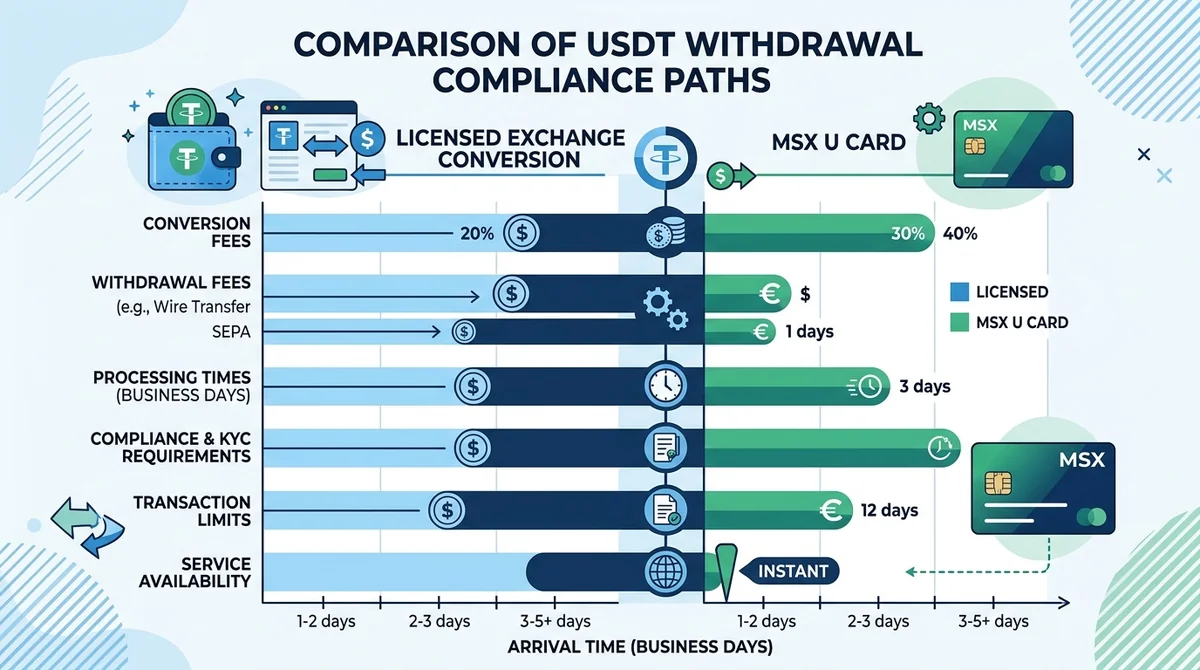
On MSX, spot trading has 0 fees, and the cross-chain bridge fee is 0.1%; using the U Card for spending or cash withdrawal may incur additional card service fees or exchange rate spreads.
What Are the Fees for Converting USDT to Fiat on MSX?
On MSX, spot trading (e.g., converting USDT to other cryptocurrencies) has 0 fees, meaning users can complete currency conversion without paying trading fees.
- Spot trading: 0 fees, applicable to conversions between USDT and other cryptocurrencies.
- RWA spot: Buy orders 0.3%, sell orders fee-free (75% discount with MSX deduction).
- Futures trading: Maker 0.02%, taker 0.045% (10% discount with MSX deduction).
If users need to convert USDT to fiat, they usually need to first sell USDT for fiat and then withdraw to a bank card. The specific fiat exchange rate is subject to the platform's real-time quote.
What Are the Fees for Cross-Chain Bridge and Spot Trading?
The cross-chain bridge is a tool for transferring assets between different blockchain networks. The MSX cross-chain bridge fee is 0.1%, meaning for every 1000 USDT transferred, the fee is 1 USDT.
- Cross-chain bridge fee: 0.1%, applicable to cross-chain asset transfers.
- Spot trading: 0 fees, applicable to same-chain or cross-chain currency conversions.
When using the cross-chain bridge, note that the gas fee (network fee) on the destination chain is borne by the user, and the specific amount depends on network congestion.
What Fees May Be Incurred by U Card Spending and Cash Withdrawal?
U Card spending and cash withdrawal may involve deposit fees, spending fees, ATM withdrawal fees, and exchange rate spreads. Specific fees are subject to the card terms.
- Deposit fee: Some U Cards may charge a percentage fee on deposit; MSX U Card USDT deposits are usually free.
- Spending fee: The card issuer may charge a small service fee when spending at merchants.
- ATM withdrawal fee: ATM operator fees and card issuer fees may apply when withdrawing cash.
- Exchange rate spread: If spending or withdrawal involves currency conversion, an exchange rate spread may apply.
It is recommended to carefully read the card terms before using the U Card to understand all fee details.
How to Use the MSX U Card to Withdraw USDT to a Bank Card?
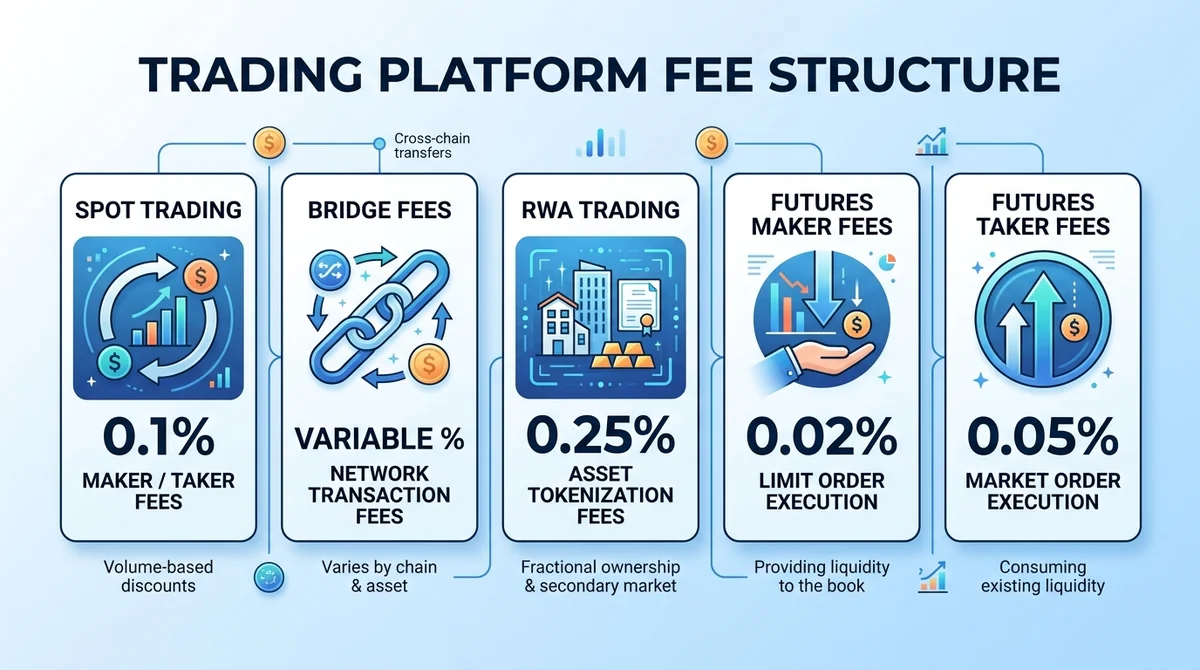
The steps to withdraw to a bank card using the MSX U Card include: complete KYC, deposit USDT to the U Card, then choose ATM withdrawal or fiat remittance to a bank account.
What Preparations Are Needed Before Using the U Card for Withdrawal?
Before using the MSX U Card for withdrawal, users need to complete the following preparations:
- Register an MSX account: Visit MSX official website to register.
- Complete KYC verification: Submit identity documents to complete real-name verification.
- Bind a bank card: In account settings, bind a bank card under your own name for receiving fiat remittance.
- Understand U Card terms: Read the U Card terms and fee instructions to ensure you understand the relevant fees.
What Are the Steps to Deposit USDT to the U Card?
The steps to deposit USDT to the MSX U Card are as follows:
- Log in to your MSX account and go to the U Card management page.
- Select the "Deposit" function and enter the deposit amount.
- Transfer USDT from your trading account or external wallet to the U Card account.
- Confirm the deposit; USDT will be credited instantly and can be used for spending, cash withdrawal, or remittance.
The MSX U Card supports one-click deposit of USDT from the account, with instant internal transfers between trading, funding, and card accounts for convenience.
How to Perform U Card Cash Withdrawal or Remittance to a Bank Card?
The operations for cash withdrawal or remittance to a bank card via the MSX U Card are as follows:
ATM withdrawal:
- Insert the U Card into an ATM supporting Visa/Mastercard or use the cardless withdrawal function.
- Enter the withdrawal amount and choose to deduct from the USDT balance.
- Confirm the exchange rate and fees, then complete the withdrawal.
Fiat remittance:
- On the U Card management page, select the "Remittance" function.
- Enter the recipient bank account details (including bank name, account number, SWIFT code, etc.).
- Enter the remittance amount and confirm the exchange rate and fees.
- Submit the remittance request; funds will be sent to the specified bank account, with arrival time usually 1-3 business days.
What Are the Risks and Precautions for USDT Withdrawal to Bank Card?
Withdrawal requires attention to compliance risks (complete KYC/AML), fund security (MSX uses cold wallets and proof of reserves), and the impact of USDT exchange rate fluctuations on the amount received.
How to Mitigate Compliance Risks?
The key to mitigating compliance risks is to comply with local regulations and complete KYC/AML verification.
- Complete KYC: Provide real identity information to ensure account real-name verification.
- Comply with AML regulations: Avoid transacting with addresses or entities on sanctions lists.
- Understand local regulations: Different countries and regions have different regulatory policies on cryptocurrencies; ensure withdrawal behavior complies with local laws.
MSX fully integrates KYC and KYT (Know Your Transaction) on-chain risk control systems, complies with MSB and other financial license standards in multiple countries, helping users mitigate compliance risks.
How Is Fund Security Guaranteed?
MSX uses 95% cold wallet storage and 100% proof of reserves to safeguard user funds.
- Cold wallet storage: 95% of digital assets are stored in Multi-Sig cold wallets to resist hacker attacks.
- Proof of reserves: The platform promises that the physical on-chain reserve ratio for all listed coins is strictly greater than 100% (Proof of Reserves).
- Safety cushion: The platform claims to have accumulated tens of millions to hundreds of millions of USD in official proprietary funds as a safety cushion for core settlement assets.
These measures provide multiple layers of protection for user funds, but users still need to keep their account passwords and private keys secure.
How Does Market Volatility Affect Withdrawal?
USDT exchange rate fluctuations may affect the final fiat amount received. USDT is a stablecoin usually pegged to the US dollar, but slight fluctuations may occur in extreme market conditions.
- Exchange rate fluctuation: If the USDT price deviates from 1 USD, the fiat amount received upon withdrawal will change accordingly.
- Arrival time: During the withdrawal process, the exchange rate may change, causing the actual amount received to differ from expectations.
- Hedging strategy: Users can monitor the USDT exchange rate before withdrawal and choose an appropriate time to operate.
What Are the Common Questions About USDT Withdrawal to Bank Card?
Withdrawal arrival time, minimum amount, and supported banks vary by path; U Card remittance is usually faster than traditional wire transfer.
How Long Does Withdrawal Arrival Take?
Arrival time depends on the withdrawal path:
- U Card remittance: Usually 1-3 business days, possibly faster in some cases.
- Traditional wire transfer: May take 3-5 business days.
- ATM withdrawal: Instant, but subject to ATM limits.
What Is the Minimum Withdrawal Amount?
The minimum withdrawal amount varies by platform and path. MSX U Card withdrawals usually have a minimum amount limit, subject to the card terms. It is recommended to check platform announcements or contact customer service before withdrawal.
Which Banks Support USDT Withdrawal?
Supported banks depend on the remittance service or card network. The MSX U Card supports global fiat remittance to bank accounts in various countries, but whether a specific bank is supported depends on the remittance service provider's regulations.
Disclaimer: This article is for reference only and does not constitute any investment advice; crypto assets are highly volatile and may result in total loss of principal; please do your own research and make independent decisions (DYOR).
Related Reading:
- MSX U Card Tutorial 2026: USDT Deposit Spending, ATM Withdrawal, and Global Remittance Full Process Guide
- MSX Cheapest USDT TRC20 Deposit Method Tutorial 2026: Cross-Chain Bridge 0.1% and Spot Trading 0 Fees Practical Guide
- MSX Fees Complete Guide 2026: Spot, Futures, Withdrawal Fee Structure and Saving Tips Analysis
This article is produced by the MSXGO editorial team, AI-assisted, and reviewed through an editorial process. Fee rates and figures are subject to each platform's latest official announcements.
FAQ
Is it safe and cheapest to withdraw using USDT TRC20? ▼
The safety of USDT TRC20 withdrawal depends on platform compliance and network stability. MSX cross-chain bridge fee is 0.1%, and spot trading is 0 fees, but withdrawing to a bank card also requires considering additional fees from the U Card or exchange. It is recommended to choose a compliant platform and complete KYC.
Which exchange has the lowest fees for withdrawing USDT TRC20? ▼
MSX platform spot trading has 0 fees, and the cross-chain bridge fee is 0.1%, which is competitive among mainstream platforms. However, the final cost of withdrawing to a bank card also depends on U Card service fees, exchange rate spreads, etc., and should be compared comprehensively.
What compliance and fee issues should be noted for large USDT withdrawals? ▼
Large withdrawals require KYC/AML verification and compliance with local regulations. MSX uses 95% cold wallet storage and 100% proof of reserves to ensure fund security. Regarding fees, spot trading is 0 fees, and the cross-chain bridge is 0.1%, but U Card cash withdrawal or remittance may incur additional fees.
How long does it take for MSX U Card withdrawal to a bank card? ▼
MSX U Card remittance to a bank card usually takes 1-3 business days to arrive, while ATM withdrawal is instant but subject to limits. The specific arrival time depends on the recipient bank and remittance path.
Finished reading? Ready to try trading?
Tokenized stocks/ETFs, crypto spot, and perpetual futures in one account — perp maker 0.02% / taker 0.045%, RWA spot buy 0.3% / sell 0.
Free sign-up · 3 quick steps