Coinbase Tokenization: Meaning and How It Works
Understand Coinbase tokenization: how stocks, gold, and other real-world assets become blockchain tokens, with key benefits and risks explained.
Article Citation Summary
Understand Coinbase tokenization: how stocks, gold, and other real-world assets become blockchain tokens, with key benefits and risks explained.
Coinbase Tokenization: Meaning and How It Works
Tokenization is the process of representing a real-world asset on a blockchain. Coinbase, through its research arm Coinbase Institute, advocates for tokenization and explores how it can reduce risk and improve efficiency in financial markets. This guide explains what tokenization is, how it works, and why it matters.
Key Takeaways
- Tokenization converts assets like cash, gold, and stocks into programmable blockchain tokens.
- Smart contracts control token creation and trading, enabling direct peer-to-peer transactions.
- Tokenization reduces settlement risk and increases market transparency.
- Risks include regulatory uncertainty and smart contract vulnerabilities.
- Coinbase Institute publishes research and advocates for tokenization benefits.
What is Coinbase tokenization?
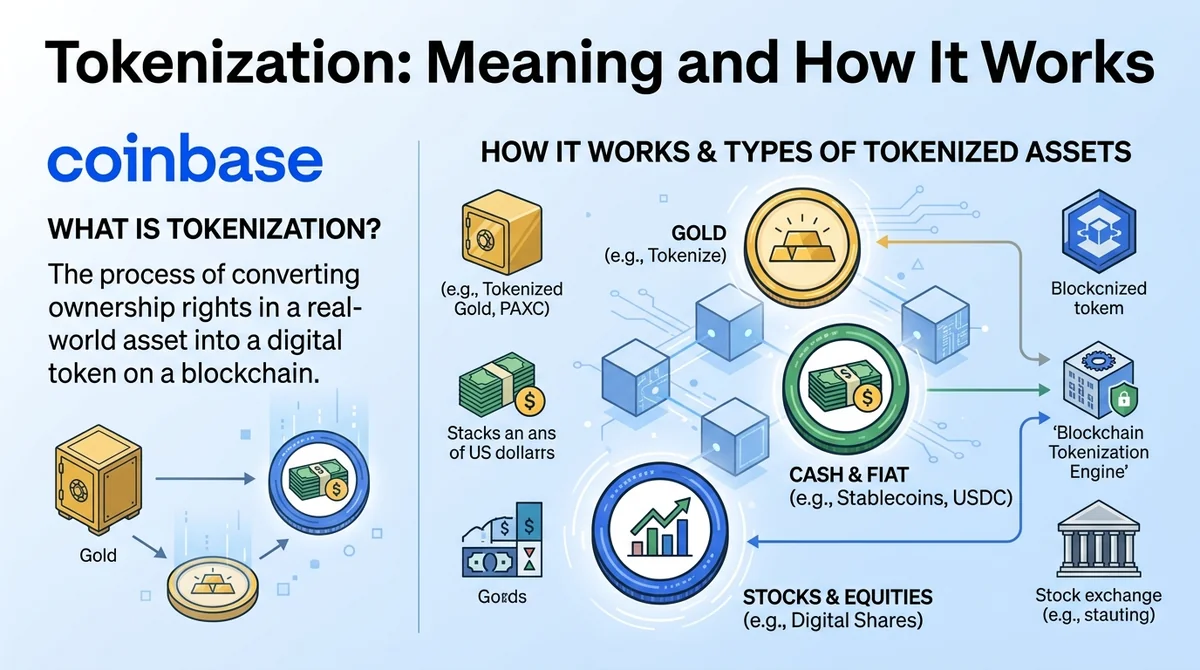
Coinbase tokenization refers to Coinbase's initiatives and research around representing real-world assets as digital tokens on a blockchain. Tokenization is the process of creating a digital version of real-world assets on a blockchain. Tokens can represent many different types of assets, both financial and non-financial: cash, gold, stocks and bonds, royalties, art, real estate, and more. The limit of what can be tokenized is only what can be tracked and put on a ledger. Coinbase Institute publishes research and advocates for tokenization benefits, exploring how this transition to a blockchain ledger can reduce risk and improve efficiency.
How does tokenization work?
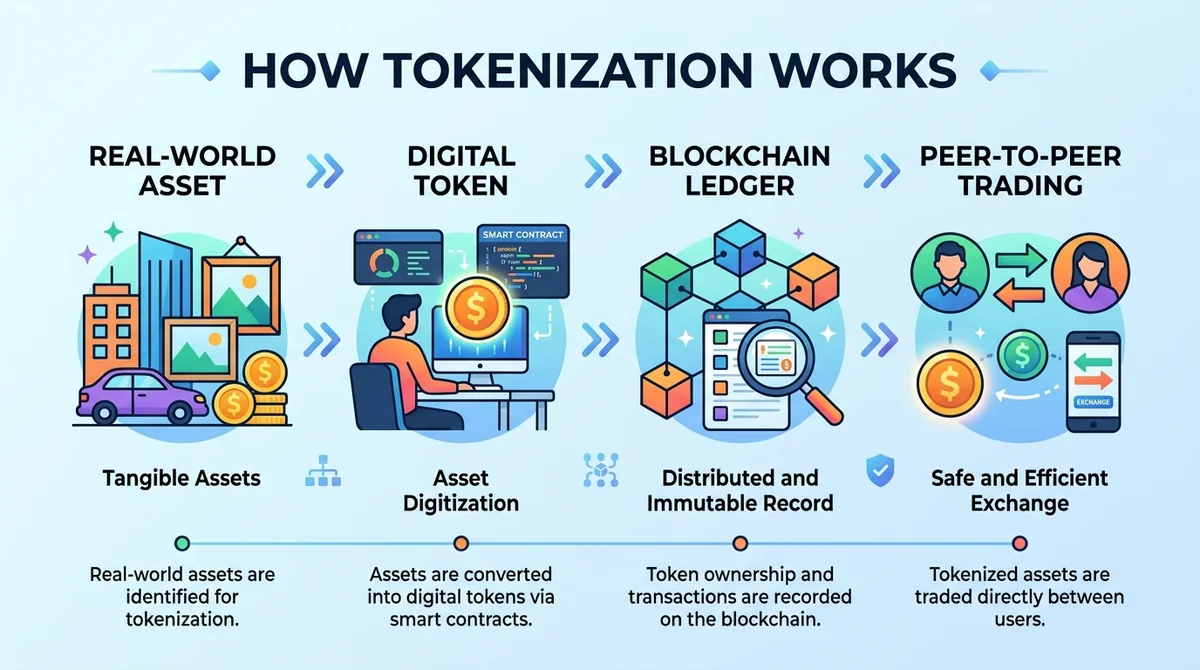
Tokenization works by using blockchain smart contracts to issue and manage tokens that represent underlying assets. Blockchains are distributed ledgers with immutable transaction records. Smart contracts store on-chain software that controls token creation and trading. Parties transact directly peer-to-peer via self-executing code. This technology ensures that transactions are accurate and efficient while keeping transaction data permanent and visible on the blockchain.
Why is tokenization important?
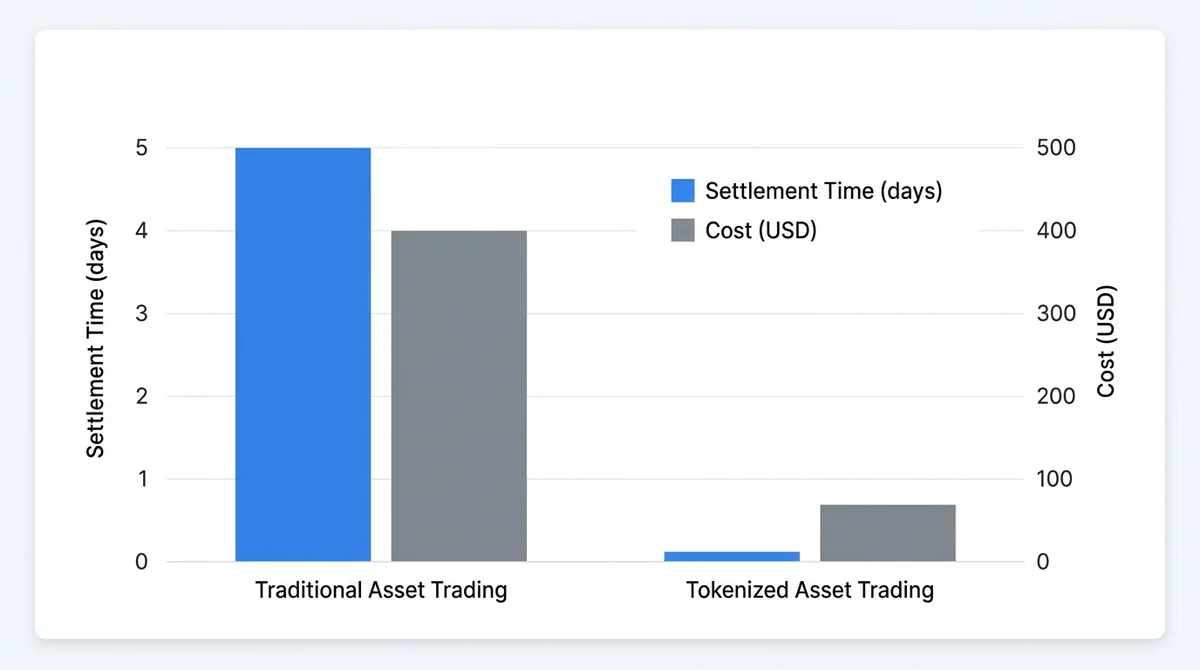
Tokenization is important because it reduces settlement risk, increases market transparency, and streamlines asset transfer. Immediate settlement reduces counterparty risk. Public blockchains increase visibility into market activity. Fewer intermediaries lower trust requirements. Tokenized assets make it possible to settle trades immediately, without the risk of one party not fulfilling their part of the deal. Autonomous smart contracts can settle trades or send assets back to the original sender in the case of failed settlement.
What are the benefits of tokenized assets?
Tokenized assets offer benefits such as faster settlement, lower costs, and the ability to fractionalize ownership. Tokenization can speed up transactions and reduce costs. Fractional ownership enables smaller investments in high-value assets. Examples include tokenized Treasury bills and gold. Tokenization of cash has driven hundreds of billions of new purchases of Treasury bills, and tokenization of assets as varied as gold, real estate, diamonds, and art are cropping up globally.
What are the risks or limitations of tokenization?
Tokenization faces risks including unclear regulations, potential smart contract bugs, and variable liquidity. Regulatory frameworks for tokenized assets are still evolving. Smart contract vulnerabilities could lead to asset loss. Liquidity may be limited for certain tokenized assets. Users should consider these factors before participating in tokenized asset markets.
A simple example of tokenization
A simple example of tokenization is issuing a digital token that represents one gram of gold, allowing investors to buy and sell fractional gold ownership on a blockchain. A gold token represents ownership of physical gold stored in a vault. Stock tokens can represent shares of a company, traded on blockchain. Coinbase's research mentions tokenized Treasury bills as an early use case, demonstrating how traditional financial instruments can be brought onchain.
This article is produced by the MSXGO editorial team, AI-assisted, and reviewed through an editorial process. Fee rates and figures are subject to each platform's latest official announcements.
FAQ
What does Coinbase tokenized mean? ▼
Coinbase tokenized refers to Coinbase's initiatives and research around representing real-world assets as digital tokens on a blockchain, enabling more efficient trading and settlement.
How does tokenization work on Coinbase? ▼
Tokenization works by using blockchain smart contracts to issue and manage tokens that represent underlying assets, allowing direct peer-to-peer transactions without intermediaries.
What are the benefits of tokenized assets? ▼
Tokenized assets offer faster settlement, lower costs, and fractional ownership, making previously illiquid assets more accessible to a wider range of investors.
What are the risks of tokenization? ▼
Risks include regulatory uncertainty, potential smart contract vulnerabilities, and variable liquidity for certain tokenized assets.
Finished reading? Ready to try trading?
Tokenized stocks/ETFs, crypto spot, and perpetual futures in one account — perp maker 0.02% / taker 0.045%, RWA spot buy 0.3% / sell 0.
Free sign-up · 3 quick steps