Binance Spot Trading Fees 2026 Official Rate Table: Maker/Taker Rules and Saving Tips
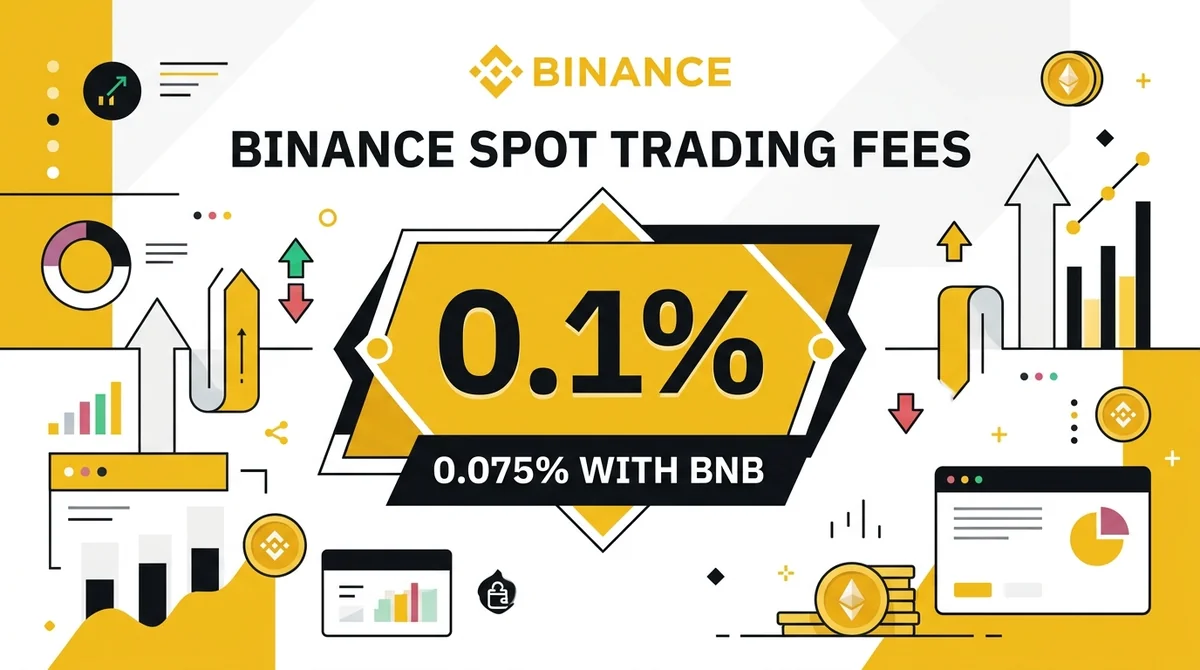
Binance spot fees for regular users are 0.1% maker and taker in 2026, with 25% off when paying in BNB. Learn maker/taker rules, BNB discount, VIP tiers, and MSX comparison.
Article Citation Summary
Binance spot fees for regular users are 0.1% maker and taker in 2026, with 25% off when paying in BNB. Learn maker/taker rules, BNB discount, VIP tiers, and MSX comparison.
Binance Spot Trading Fees 2026 Official Rate Table: Maker/Taker Rules and Saving Tips
Key Points:
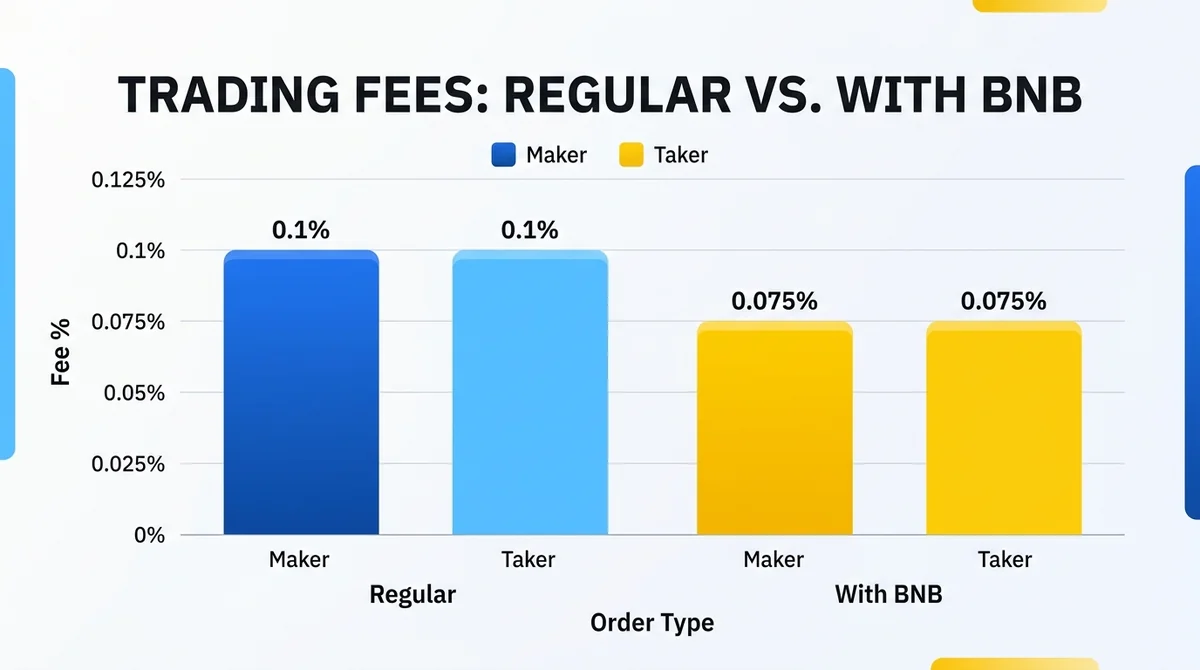
- Binance spot regular user maker and taker fees are both 0.1%. Paying fees with BNB gives a 25% discount, reducing the effective rate to 0.075%.
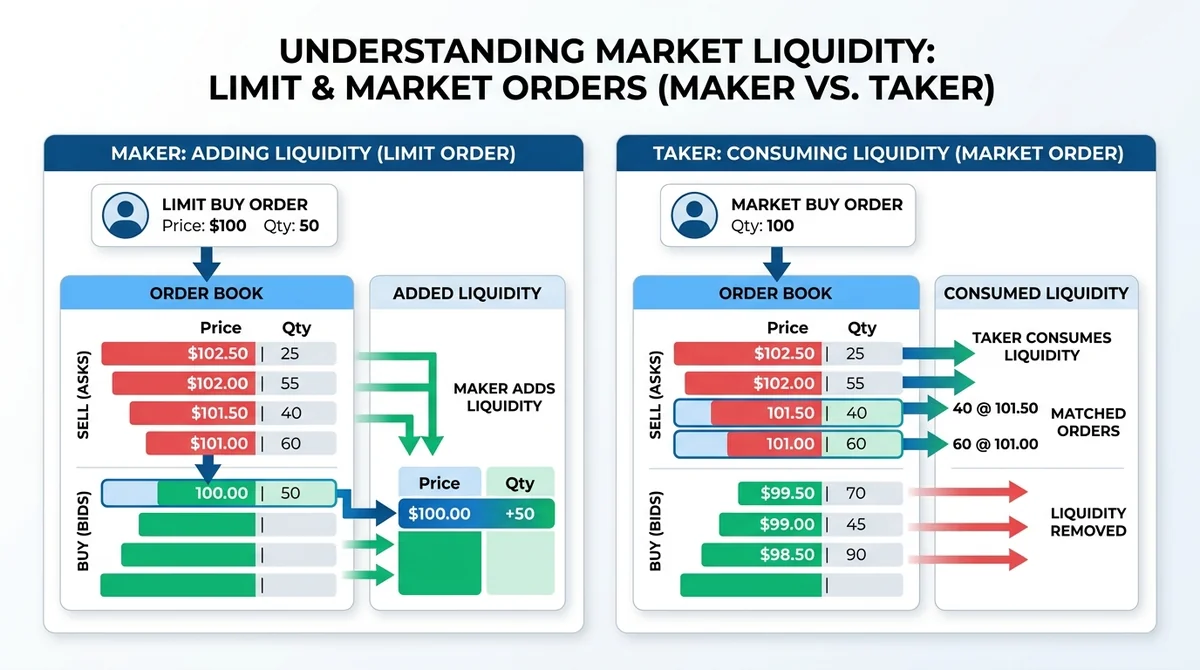
- Maker orders provide liquidity, taker orders consume it; Binance spot charges the same for both, but understanding the rules helps optimize order strategy.
- The main ways to save on fees are BNB payment, higher VIP tier, and participating in platform promotions.
- Compared to MSX spot fees (0.3% buy, 0% sell, 25% off with $MSX), Binance's fee structure is simpler.
What Are the Official Binance Spot Trading Fees in 2026?
In 2026, Binance spot still charges regular users a flat 0.1% for both maker and taker orders. If you choose to pay fees with BNB, you typically get a 25% discount, bringing the effective rate down to 0.075%. Let's break it down.
What Is the Binance Spot Regular User Maker Fee?
The regular user maker fee is 0.1%. A maker order is one that does not execute immediately but is placed in the order book to await matching. With BNB payment enabled, the maker fee drops to 0.075%.
What Is the Binance Spot Regular User Taker Fee?
The regular user taker fee is also 0.1%. A taker order actively executes at the current market price, immediately consuming liquidity from the order book. With BNB payment, the taker fee also drops to 0.075%.
As of 2026, Binance spot regular user maker and taker fees are both 0.1%. Paying fees with BNB gives a 25% discount, reducing the effective rate to 0.075%.
How to Understand Binance Spot Maker and Taker Rules?
Maker orders are those that do not execute immediately after submission and remain in the order book waiting to be matched; they add liquidity to the market. Taker orders actively trade against existing orders and consume liquidity. Binance spot charges the same 0.1% for both, with no distinction.
What Is a Maker Order?
Maker orders typically arise from limit orders that are not immediately filled. If you place a buy or sell order away from the current market price and it does not reach the counterparty, it stays in the order book waiting. Because maker orders add liquidity, many platforms offer fee discounts, but Binance spot currently does not differentiate.
What Is a Taker Order?
A taker order is a market order or a limit order that immediately matches an existing order. You actively trade at the current quoted price, effectively removing liquidity from the order book. Most exchanges charge taker orders a higher or equal fee; Binance spot falls into the latter category—both are equal.
Is There a Difference Between Maker and Taker Fees?
On Binance spot, maker and taker fees are identical, both at 0.1%. Other platforms may differ; for example, some exchanges offer zero maker fees and only charge takers. Understanding these rules allows you to intentionally use limit orders as maker orders and reduce unnecessary taker operations, thereby lowering hidden costs.
What Methods Can Save on Binance Spot Trading Fees?
Paying fees with BNB is the most direct way to save on Binance spot, giving you a 25% discount. In addition, raising your VIP tier and watching for platform promotions can further reduce trading costs.
How Much Can You Save by Paying Fees with BNB?
With BNB payment enabled, you get a 25% discount on fees. Based on the regular user base rate of 0.1%, the effective cost drops to 0.075%. You need to enable the "Use BNB to pay for fees" option in your account settings and ensure you have sufficient BNB balance.
Can Raising Your VIP Tier Lower Fees?
Absolutely. Binance's VIP tier is determined by two metrics: 30-day trading volume and BNB holdings. The higher your tier, the better your spot fee rates. For example, VIP1 users already pay less than regular users, and by VIP9 you can enjoy extremely low fees or even zero maker fees. Please refer to the official page for real-time thresholds.
What Other Saving Tips Are There?
- Participate in platform promotions: Binance frequently launches zero-fee or fee-reduction campaigns for specific trading pairs—worth watching.
- Use limit orders as maker: Although Binance spot charges the same for both, maker orders avoid slippage and reduce hidden losses from price fluctuations.
- Monitor the VIP program: Frequent traders can significantly lower overall fee expenses by advancing their VIP tier.
How Do Binance Spot Fees Compare to Other Platforms?
Binance spot regular user fee is 0.1%, while MSX spot charges 0.3% for buys and 0% for sells, with a 25% discount when using $MSX. Fee structures vary significantly across platforms; the choice depends on your trading habits.
What Level Are Binance Spot Fees At?
The 0.1% regular user fee is in the mid-range among mainstream platforms. Some exchanges advertise zero fees or lower rates, but Binance's advantage lies in deep liquidity and a wide range of trading pairs. Actual trading costs should be evaluated together with spreads and market depth.
How Do MSX Spot Fees Differ from Binance?
MSX spot takes a different approach: 0.3% for buys, 0% for sells, with a 25% discount when using $MSX. That means selling assets on MSX incurs no fee, but buying costs are higher than on Binance. Users who sell frequently may prefer MSX, while buy-oriented traders will find Binance more cost-effective.
Mainstream Platform Spot Fee Comparison (2026):
| Platform | Spot Buy Fee | Spot Sell Fee | Platform Token Discount |
|---|---|---|---|
| Binance | 0.1% | 0.1% | 25% off with BNB |
| MSX | 0.3% | 0% | 25% off with $MSX |
Binance Spot Trading FAQ
Can Binance spot fees be completely eliminated?
They cannot be completely eliminated, but they can be significantly reduced through BNB payment, higher VIP tiers, etc. For example, VIP9 users can enjoy a maker fee as low as 0%, and the taker fee is also extremely low.
Do I need to manually enable BNB fee payment?
Yes, you need to set it up manually. Go to account settings, find the "Use BNB to pay for fees" option and enable it, while ensuring you have enough BNB balance. Once enabled, the system will automatically use BNB to settle fees and apply the discount.
How is the VIP tier calculated?
The VIP tier is determined by a combination of 30-day trading volume and BNB holdings. Higher values in both metrics lead to a higher VIP tier and lower fees. Please refer to the Binance official page for specific thresholds for each tier.
On MSX, which VIP tier has the lowest fee for spot BTC trading?
MSX spot does not have tiered VIP fees. All users are subject to the same standard: 0.3% for buys, 0% for sells, with a 25% discount when using $MSX. Therefore, there is no "lowest VIP tier"—the fee standard is identical for everyone.
What is the difference between spot trading and perpetual contracts? Which is better for beginners?
Spot trading involves directly buying and selling assets with no leverage and no expiration date, making it relatively lower risk. Perpetual contracts are leveraged derivatives with no expiration date, supporting both long and short positions and carrying higher risk. Beginners are advised to start with spot trading and then evaluate whether to engage in contract trading after becoming familiar with market dynamics.
This article is produced by the MSXGO editorial team, AI-assisted, and reviewed through an editorial process. Fee rates and figures are subject to each platform's latest official announcements.
FAQ
Can Binance spot fees be completely eliminated? ▼
They cannot be completely eliminated, but they can be significantly reduced through BNB payment, higher VIP tiers, etc. VIP9 users can enjoy a maker fee as low as 0%, and the taker fee is also extremely low.
Do I need to manually enable BNB fee payment? ▼
Yes. Enable the "Use BNB to pay for fees" option in account settings and ensure sufficient BNB balance. Once enabled, the system automatically uses BNB to pay fees and applies the discount.
How is the VIP tier calculated? ▼
The VIP tier is determined by a combination of 30-day trading volume and BNB holdings. Higher trading volume and BNB holdings lead to a higher VIP tier and lower fees. Refer to the Binance official page for specific thresholds.
On MSX, which VIP tier has the lowest fee for spot BTC trading? ▼
MSX spot fees do not have VIP tiers; they are uniformly 0.3% for buys and 0% for sells, with a 25% discount when using $MSX. Therefore, there is no "lowest VIP tier"—all users have the same fee rate.
What is the difference between spot trading and perpetual contracts? Which is better for beginners? ▼
Spot trading directly buys and sells assets with no leverage and no expiration date, making it relatively lower risk. Perpetual contracts allow two-way trading with leverage and carry higher risk. Beginners are advised to start with spot trading.
Finished reading? Ready to try trading?
Tokenized stocks/ETFs, crypto spot, and perpetual futures in one account — perp maker 0.02% / taker 0.045%, RWA spot buy 0.3% / sell 0.
Free sign-up · 3 quick steps