2026 Bitcoin Miner Price and Buying Guide: Cost Analysis from Entry-Level to Professional Miners
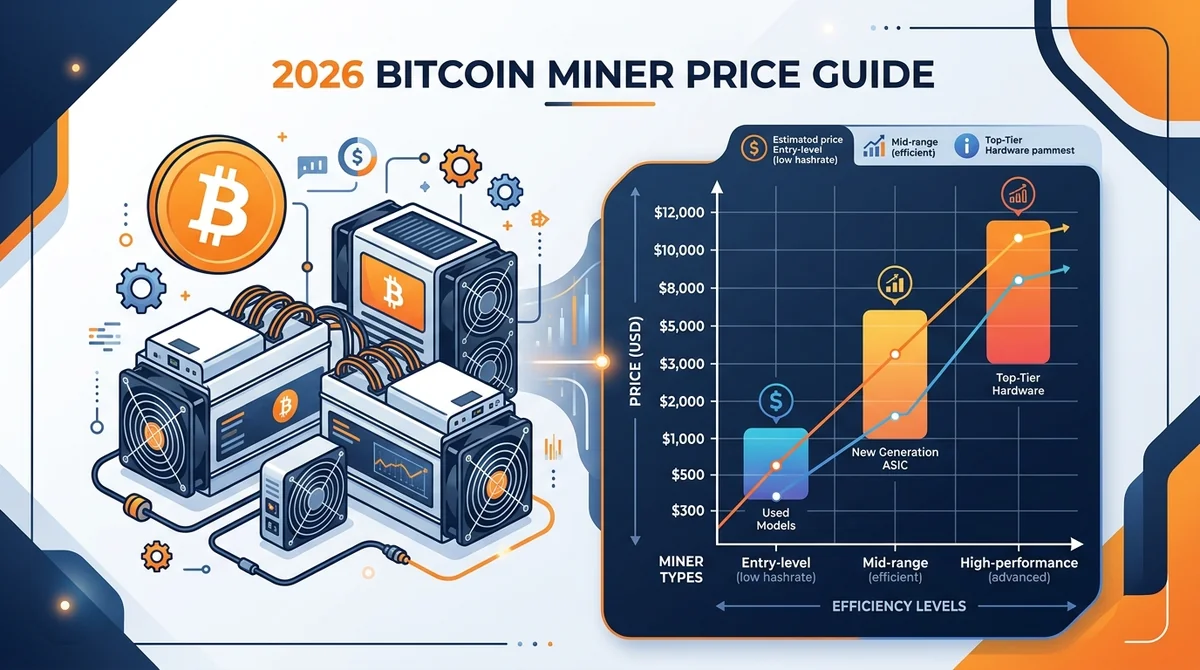
Bitcoin miner prices in 2026 range from a few hundred to over ten thousand dollars. This guide covers price ranges, cost components, payback periods, and buying pitfalls to help you choose wisely.
Article Citation Summary
Bitcoin miner prices in 2026 range from a few hundred to over ten thousand dollars. This guide covers price ranges, cost components, payback periods, and buying pitfalls to help you choose wisely.
2026 Bitcoin Miner Price and Buying Guide: Cost Analysis from Entry-Level to Professional Miners
Key Takeaways / TL;DR
- Bitcoin miner prices in 2026 range from a few hundred to over ten thousand dollars. Entry-level miners suit beginners testing the waters, while professional miners offer high hashrate but come at a premium.
- The actual cost of a miner includes not only the purchase price but also hashrate, power consumption, and energy efficiency. Miners with lower energy efficiency ratios (J/TH) have lower long-term operating costs.
- Payback period = total miner cost ÷ daily net profit. Electricity is the largest variable cost; Bitcoin price fluctuations significantly affect payback speed.
- When buying miners, beware of refurbished units, false hashrate claims, and scam channels. It's recommended to choose official or authorized dealers.
What is the Price Range for Bitcoin Miners in 2026?
Bitcoin miner prices in 2026 range from a few hundred to over ten thousand dollars. Entry-level miners suit beginners testing the waters, while professional miners offer high hashrate but come at a premium. Specific price ranges depend on hashrate, energy efficiency, and brand. The following price ranges are estimates based on public market information; actual prices may fluctuate due to supply, region, and time. It's advisable to verify the latest quotes before purchasing.
How Much Does an Entry-Level Miner Cost?
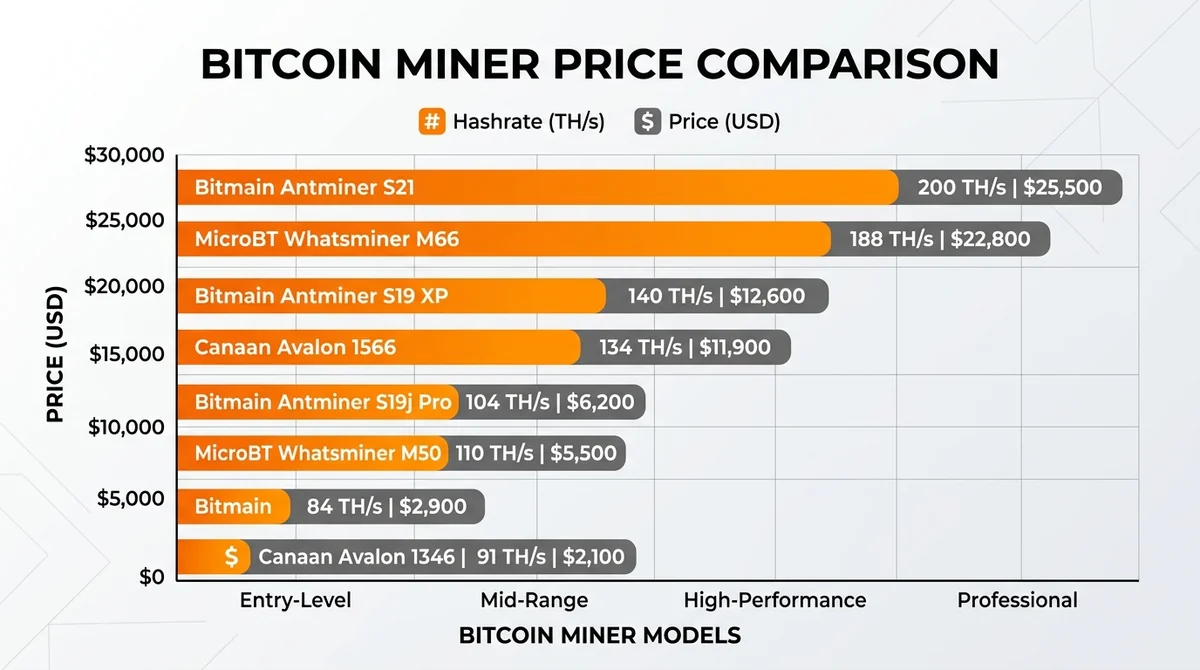
Entry-level miners typically refer to models with hashrate below 10 TH/s, priced generally between $300 and $800. These miners have lower power consumption, suitable for home mining or users with limited budgets. For example, older models in the Antminer S19 series may have second-hand prices as low as $300, but their hashrate is relatively low. Note that second-hand miners may carry risks of hashrate degradation and hardware aging.
How Expensive Are Professional Miners?
Professional miners usually have hashrate above 100 TH/s, with prices ranging from $3,000 to $12,000. For instance, the latest Antminer S21 Pro or Whatsminer M60 series can achieve hashrates over 200 TH/s, but prices exceed $8,000. Price generally correlates positively with hashrate, but energy efficiency is also a key factor. The specific models and prices mentioned are examples only; actual market prices may vary due to release cycles and inventory.
What Factors Determine the Actual Cost of a Bitcoin Miner?
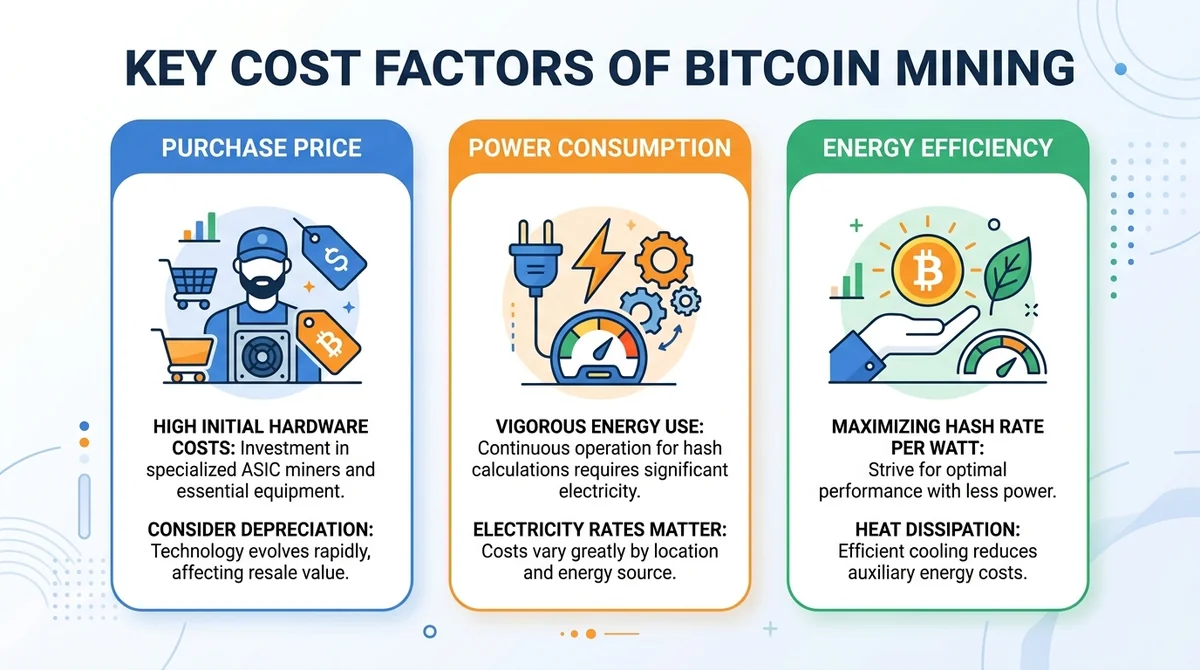
Miner cost includes not only the purchase price but also hashrate, power consumption, and energy efficiency. Miners with lower energy efficiency ratios have lower long-term operating costs. When choosing, don't just look at the sticker price; comprehensively assess long-term electricity expenses.
How Does Hashrate (TH/s) Affect Mining Profitability?
Hashrate (TH/s, trillion hashes per second) is the core metric measuring a miner's mining capability. Higher hashrate means a greater probability of mining Bitcoin per unit time. However, high hashrate often means high power consumption and high price, requiring comprehensive evaluation with electricity costs.
Why Are Power Consumption and Energy Efficiency More Important Than Price?
Power consumption (W) determines the miner's electricity expense, while energy efficiency ratio (J/TH, joules of energy consumed per TH of hashrate) is the core metric of miner efficiency. Lower energy efficiency ratio means lower electricity cost per unit of hashrate. For example, a miner with an energy efficiency ratio of 20 J/TH has 33% lower long-term operating costs than one with 30 J/TH. In regions with high electricity prices, energy efficiency may outweigh purchase price.
How to Choose Miners at Different Levels, from Entry-Level to Professional?
Entry-level miners suit users with limited budgets or home mining, while professional miners suit large-scale farms or miners seeking high hashrate. Choose based on your electricity cost, site conditions, and investment budget.
What Miner Should Beginners Buy?
Beginners are advised to choose miners with moderate hashrate, good energy efficiency, and prices between $500 and $1,000. These miners ensure some mining income without excessive financial pressure. Also, choose new units from reputable brands or official refurbished units to avoid second-hand pitfalls.
What Models Should Professional Miners Focus On?
Professional miners should focus on the latest high-hashrate, low-energy-efficiency models, such as Antminer S21 Pro and Whatsminer M60. Although these models are more expensive, they have lower long-term operating costs and shorter payback periods. Additionally, professional miners need to consider miner stability and after-sales service.
How to Calculate Bitcoin Miner Payback Period and Profitability?
Payback period = total miner cost ÷ daily net profit, where electricity is the largest variable cost; Bitcoin price fluctuations significantly affect payback speed. When calculating, use current Bitcoin price and network hashrate data.
How to Calculate Payback Period?
The formula is: Payback Days = Total Miner Cost ÷ (Daily Mining Revenue - Daily Electricity Cost). For example, if a miner costs $5,000 total, daily mining revenue is $20, and daily electricity cost is $5, the payback period is about 333 days. Note that mining revenue fluctuates with network hashrate and Bitcoin price; the example is for demonstration only and not a profit guarantee.
How Much Does Electricity Affect Payback Period?
Electricity is the largest variable cost in mining and directly impacts payback period. Using electricity prices of $0.05 and $0.10 per kWh as examples, the payback period for the same miner can differ by over 30%. In regions with high electricity prices, mining may not be profitable. Therefore, miners should prioritize areas with low electricity costs or use renewable energy.
What Are Common Pitfalls When Buying Bitcoin Miners?
When buying miners, beware of refurbished units, false hashrate claims, and scam channels. It's recommended to choose official or authorized dealers. Below are common pitfalls and how to avoid them.
Are Second-Hand Miners Worth Buying?
Second-hand miners are cheaper but carry risks of hashrate degradation, hardware aging, and unclear repair history. If budget is limited, purchase from reputable second-hand platforms and request hashrate test reports and warranty commitments from the seller. Otherwise, buying new miners or official refurbished units is safer.
How to Avoid Refurbished or Scam Miners?
- Choose official or authorized dealers: Avoid buying from unknown sources or individual sellers.
- Check miner serial numbers: Verify authenticity and warranty status through official channels.
- Beware of false hashrate claims: Ask sellers for real-time hashrate screenshots or videos.
- Avoid prepayment scams: Use escrow transactions or cash on delivery whenever possible.
Frequently Asked Questions (FAQ)
Q: What is the price range for Bitcoin miners in 2026?
A: Bitcoin miner prices in 2026 range from a few hundred to over ten thousand dollars. Entry-level miners are priced between $300 and $800, while professional miners range from $3,000 to $12,000, depending on hashrate, energy efficiency, and brand. Actual prices may fluctuate with market conditions; verify the latest quotes before purchasing.
Q: What is energy efficiency ratio? Why is it more important than price?
A: Energy efficiency ratio (J/TH) measures the energy consumed per TH of hashrate. A lower ratio means lower electricity cost per unit of hashrate. In regions with high electricity prices, energy efficiency may outweigh purchase price, directly affecting long-term mining costs.
Q: How do I calculate the payback period for a Bitcoin miner?
A: Payback period = total miner cost ÷ (daily mining revenue - daily electricity cost). For example, if the miner costs $5,000 and daily net profit is $15, the payback period is about 333 days. Bitcoin price fluctuations and network hashrate changes affect payback speed, so results are for reference only.
Q: What are the risks of buying second-hand miners?
A: Second-hand miners may have hashrate degradation, hardware aging, and unclear repair history. Buy from reputable platforms and request hashrate test reports and warranty commitments. When budget allows, prefer new miners or official refurbished units.
Q: How can I avoid refurbished or scam miners?
A: Choose official or authorized dealers, check miner serial numbers, beware of false hashrate claims, and avoid prepayment scams. Use escrow transactions or cash on delivery to ensure fund safety.
This article is produced by the MSXGO editorial team, AI-assisted, and reviewed through an editorial process. Fee rates and figures are subject to each platform's latest official announcements.
FAQ
What is the price range for Bitcoin miners in 2026? ▼
Bitcoin miner prices in 2026 range from a few hundred to over ten thousand dollars. Entry-level miners are priced between $300 and $800, while professional miners range from $3,000 to $12,000, depending on hashrate, energy efficiency, and brand. Actual prices may fluctuate with market conditions; verify the latest quotes before purchasing.
What is energy efficiency ratio? Why is it more important than price? ▼
Energy efficiency ratio (J/TH) measures the energy consumed per TH of hashrate. A lower ratio means lower electricity cost per unit of hashrate. In regions with high electricity prices, energy efficiency may outweigh purchase price, directly affecting long-term mining costs.
How do I calculate the payback period for a Bitcoin miner? ▼
Payback period = total miner cost ÷ (daily mining revenue - daily electricity cost). For example, if the miner costs $5,000 and daily net profit is $15, the payback period is about 333 days. Bitcoin price fluctuations and network hashrate changes affect payback speed, so results are for reference only.
What are the risks of buying second-hand miners? ▼
Second-hand miners may have hashrate degradation, hardware aging, and unclear repair history. Buy from reputable platforms and request hashrate test reports and warranty commitments. When budget allows, prefer new miners or official refurbished units.
How can I avoid refurbished or scam miners? ▼
Choose official or authorized dealers, check miner serial numbers, beware of false hashrate claims, and avoid prepayment scams. Use escrow transactions or cash on delivery to ensure fund safety.
Finished reading? Ready to try trading?
Tokenized stocks/ETFs, crypto spot, and perpetual futures in one account — perp maker 0.02% / taker 0.045%, RWA spot buy 0.3% / sell 0.
Free sign-up · 3 quick steps