How Is Crypto Used for Money Laundering? BSA/AML and the Clarity Act Regulatory Gaps
From the bank BSA/AML reporting threshold to the Clarity Act's regulatory gaps and missing ethics provisions, we break down key crypto AML loopholes.
Article Citation Summary
From the bank BSA/AML reporting threshold to the Clarity Act's regulatory gaps and missing ethics provisions, we break down key crypto AML loopholes.
Where the Problem Starts: Why Legitimate Funds Still Get "Questioned" by Banks
Depositing legally sourced funds into a bank and still facing extra scrutiny and reporting is a common frustration for many people. To understand this, you first need to grasp the anti-money laundering obligations banks carry, and where crypto assets sit within that framework.
BSA/AML: Why Banks Become the "Choke Point"
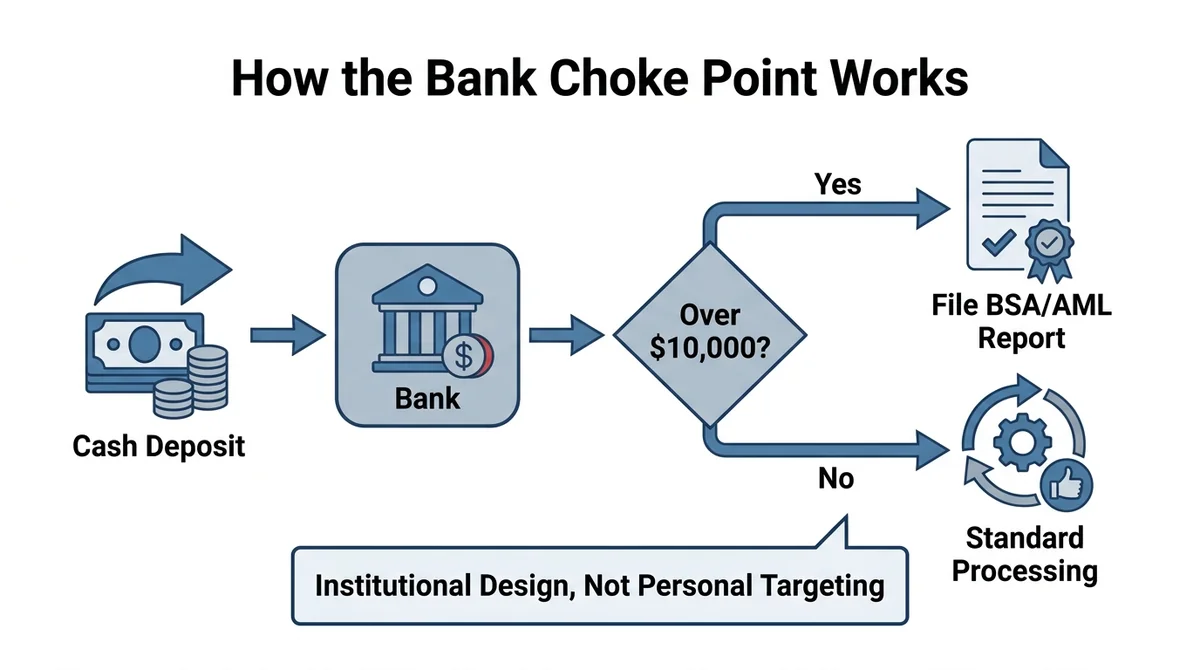
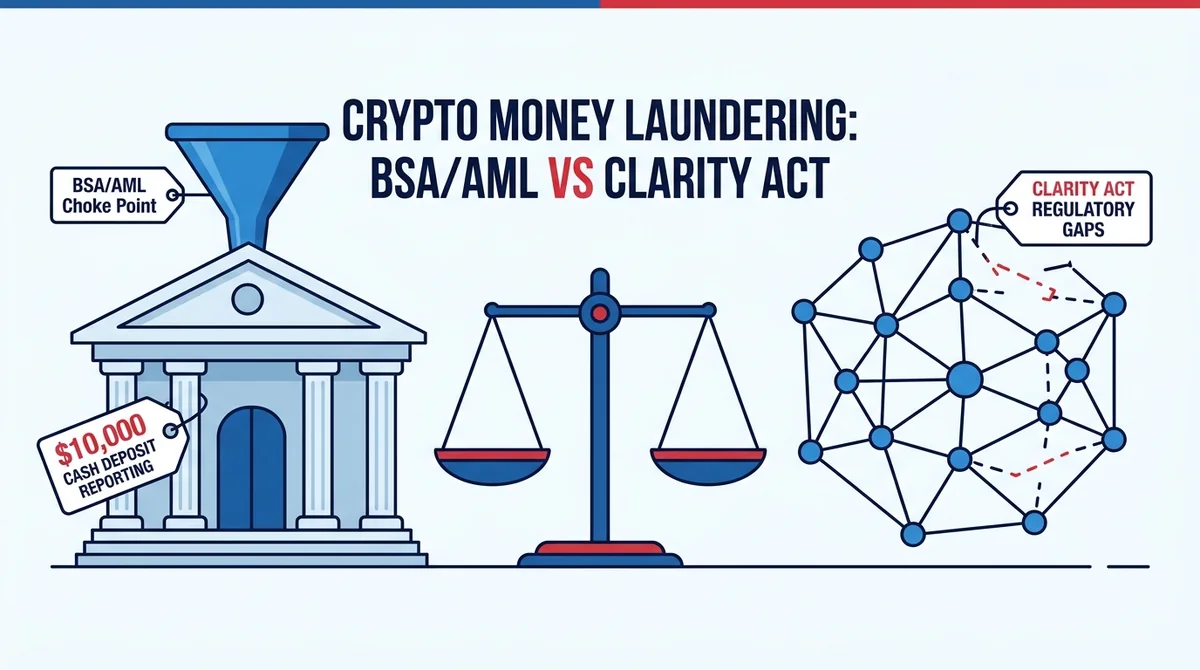
Banks must comply with a set of regulations designed to prevent money laundering and terrorist financing, commonly grouped together as BSA/AML (Bank Secrecy Act / Anti-Money Laundering). The core logic of this regime is simple: since criminals will ultimately use the banking system, make banks the "choke point" of fund flows, identifying and intercepting suspicious transactions at key nodes.
One frequently cited example is the reporting threshold: when a single cash deposit exceeds $10,000, the bank must file a related report. This is one of the BSA/AML provisions, and it is the direct reason "why depositing money gets reported." In other words, compliance scrutiny is not aimed at individuals — it is the result of institutional design.
Do Crypto Assets Bypass These Rules?
With the rise of crypto assets, some argue you can move to on-chain channels and thereby avoid the bank reporting process. But that judgment is incomplete.
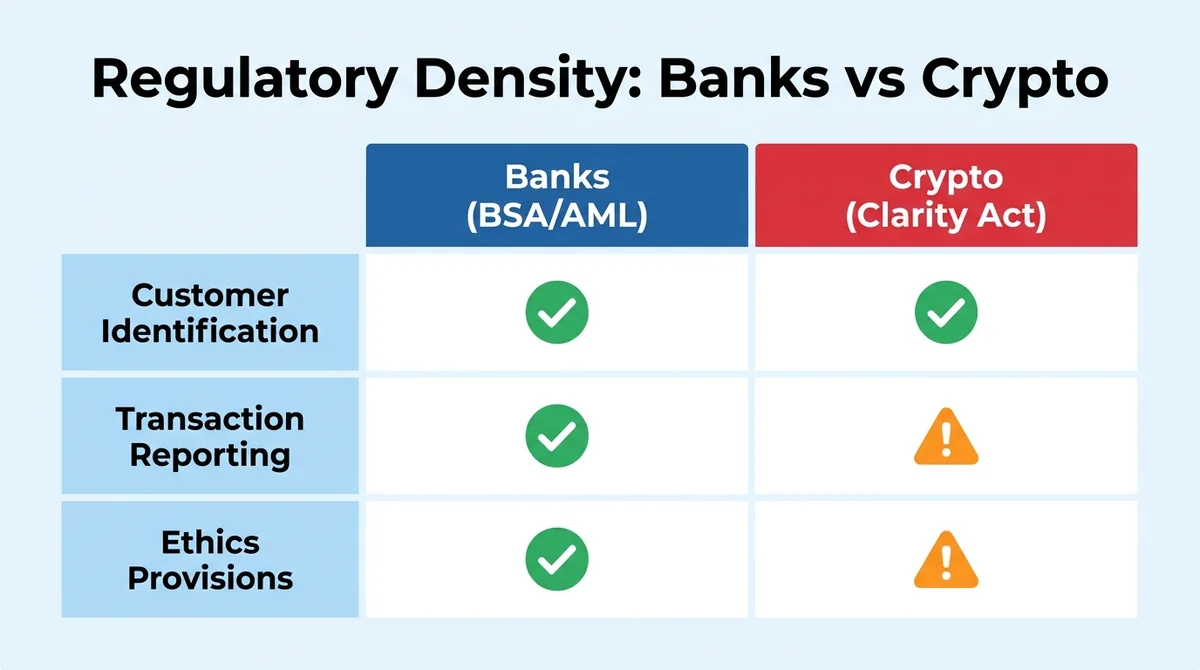
Legislation governing crypto assets (such as the Clarity Act) is moving forward, and one of its goals is to extend anti-money laundering requirements into the crypto space. However, the key difference is this: such bills do not impose obligations on the crypto industry as stringent as those on banks, but instead leave several major gaps that could still be exploited for illicit activity.
So the impression that "banks have choke points, crypto doesn't" is not accurate — more precisely, the two systems differ in regulatory density, and coverage on the crypto side remains incomplete.
Beyond Regulatory Gaps: The Missing Ethics Provisions
Beyond regulatory gaps, another overlooked issue is the absence of ethics provisions. The relevant legislation lacks clear guidance on government officials and their family members — for example, cases in which officials or their relatives issue their own crypto assets and profit from them are not constrained by the existing framework.
This means that even if cases of staggering profits emerge, the public lacks institutionalized means to respond. One viable path is to push legislators to require supplementary safeguards and ethics provisions at the time of a vote, rather than letting things pass without constraints.
Key Takeaways
- Banks are bound by BSA/AML; cash deposits over $10,000 trigger reporting, reflecting the institutional choke-point design.
- Crypto-related legislation (such as the Clarity Act) does not impose the same regulatory intensity on the crypto industry as on banks, and exploitable gaps remain.
- Beyond regulatory gaps, missing ethics provisions also deserve attention, especially regarding government officials and their family members issuing crypto assets.
- Discussing loopholes is not the same as providing operational guidance; closing the gaps requires legislative safeguards and ethical constraints.
This article is produced by the MSXGO editorial team, AI-assisted, and reviewed through an editorial process. Fee rates and figures are subject to each platform's latest official announcements.
Finished reading? Ready to try trading?
Tokenized stocks/ETFs, crypto spot, and perpetual futures in one account — perp maker 0.02% / taker 0.045%, RWA spot buy 0.3% / sell 0.
Free sign-up · 3 quick steps