2026 Hong Kong Crypto Exchange Deposit & Withdrawal Fee Verification Guide: Bank Transfers, USDT Deposits/Withdrawals, and FX Loss Calculation
2026 HK crypto exchange fees: bank transfer 0-1.5%, 1-3 days; USDT withdrawal TRC20 ~1 USDT, ERC20 ~5 USDT; FX loss formula & optimization.
Article Citation Summary
2026 HK crypto exchange fees: bank transfer 0-1.5%, 1-3 days; USDT withdrawal TRC20 ~1 USDT, ERC20 ~5 USDT; FX loss formula & optimization.
2026 Hong Kong Crypto Exchange Deposit & Withdrawal Fee Verification Guide: Bank Transfers, USDT Deposits/Withdrawals, and FX Loss Calculation
Key Takeaways / TL;DR
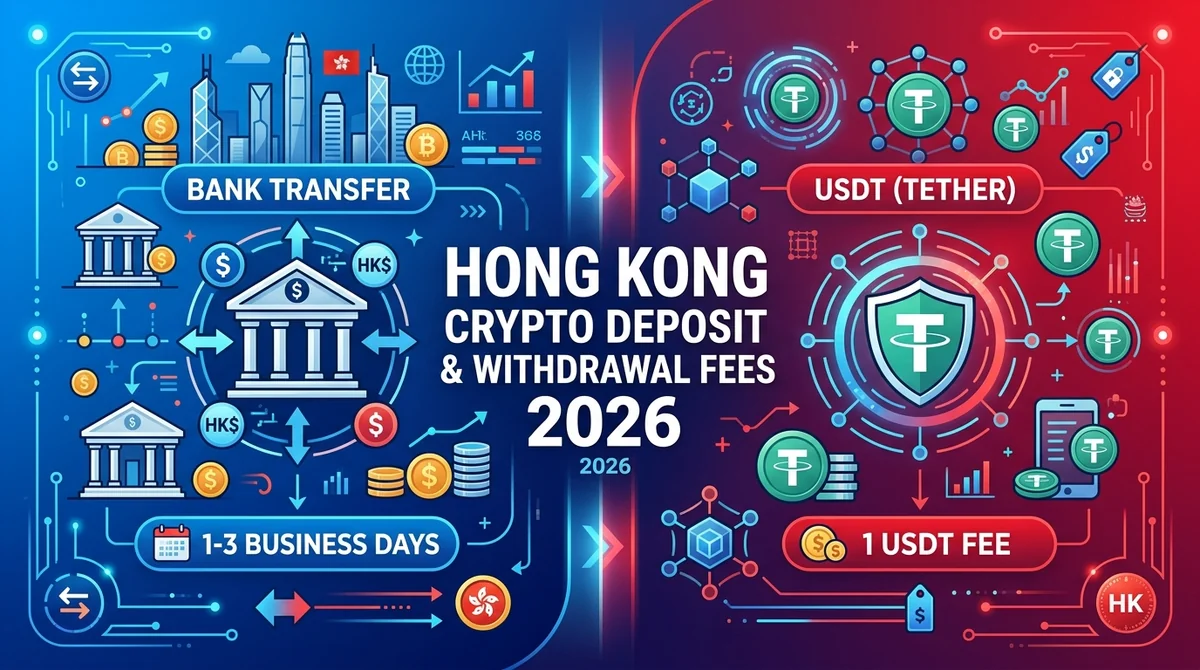
- Hong Kong crypto exchange deposit and withdrawal methods mainly include bank transfers and USDT on-chain transfers, with arrival times ranging from minutes to 1-3 business days. The data in this article is based on public fee schedules of Hong Kong licensed exchanges (such as MSX) for hong kong crypto derivatives 2026; always check each exchange's real-time page for current fees.
- Bank transfer fees are usually low, but cross-border transfers may incur intermediary bank fees; arrival time is about 1-3 business days, suitable for large funds.
- USDT withdrawal fees are charged per transaction. TRC20 network fees are usually lower than ERC20; pay attention to how network gas fees affect the actual received amount. The table below compares typical fees.
- FX loss mainly comes from the exchange rate spread when converting fiat to USDT and conversion losses in cross-border transfers. Comparing multiple platforms (e.g., MSX and other licensed exchanges) can reduce FX loss.
- When choosing a deposit/withdrawal method, compare fees, FX loss, and arrival time, and prioritize Hong Kong licensed exchanges.
What Are the Common Deposit and Withdrawal Methods on Hong Kong Crypto Exchanges?
Deposit and withdrawal methods on Hong Kong crypto exchanges mainly include bank transfers and USDT. Different methods vary in arrival time, fees, and operational threshold. Users should choose based on their capital size and time requirements. Taking Hong Kong licensed exchange MSX as an example, its deposit/withdrawal channels cover HKD/USD bank transfers and USDT on-chain transfers (TRC20/ERC20); the specific supported currencies are subject to MSX's official website.
What Are the Requirements for Bank Transfer Deposits and Withdrawals?
Bank transfers usually support fiat currencies such as HKD, USD, and CNY (specific supported currencies are subject to each exchange's announcement). Users typically need to complete identity verification (KYC) and bind a bank account in their own name. Licensed exchanges will require compliant source of funds, and large transfers may trigger additional review. Platforms like MSX require KYC completion before opening fiat deposit/withdrawal.
How Does USDT Deposit/Withdrawal Differ from Other Stablecoins?
USDT (Tether, a stablecoin designed to be pegged 1:1 to the US dollar) is transferred on chains such as TRC20 (TRON network standard) or ERC20 (Ethereum network standard). Compared with bank transfers, USDT arrives faster but has a more complex fee structure and variable on-chain gas fees. Other stablecoins like USDC work similarly, but USDT has higher exchange support.
What Are the Fees and Arrival Times for Bank Transfer Deposits and Withdrawals?
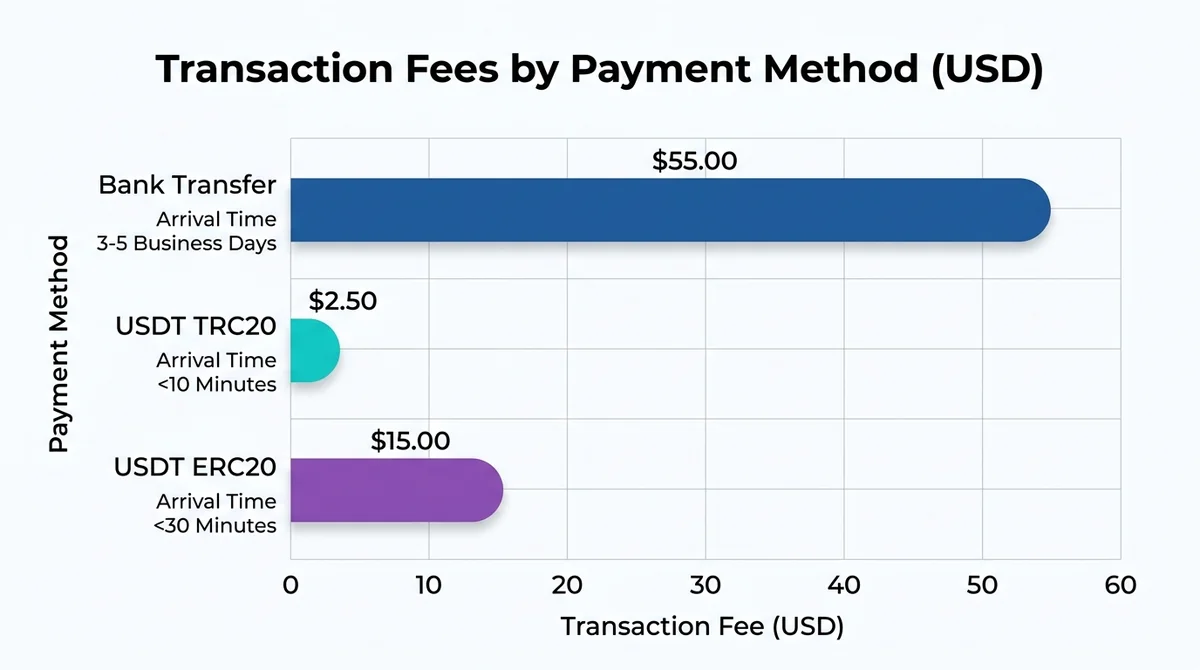
Bank transfer deposits and withdrawals usually have lower fees but slower arrival times (about 1-3 business days). Cross-border transfers may incur additional intermediary bank fees, making them suitable for large funds that are not urgent. The table below compares typical fees and arrival times for mainstream Hong Kong deposit/withdrawal methods (data are industry common ranges, compiled June 2026, subject to each exchange's real-time page):
| Deposit/Withdrawal Method | Fee (Typical Range) | Arrival Time | Suitable Scenario | Notes |
|---|---|---|---|---|
| Bank Transfer (Local) | 0 - 1.5% or fixed fee (e.g., 0-15 HKD) | 1-3 business days | Large funds | Some banks free; cross-border may incur intermediary fees |
| USDT Withdrawal (TRC20) | About 1 USDT per transaction | Minutes - 1 hour | Small frequent | On-chain gas fee extra, about 0.1-0.5 USDT |
| USDT Withdrawal (ERC20) | About 5 USDT per transaction | Minutes - 1 hour | Small frequent | Gas fee high; can exceed 20 USDT when congested |
How Much Are Bank Transfer Withdrawal Fees?
Different bank channels have significantly different fees. Some banks offer free local transfers, while cross-border transfers may charge fixed fees or a percentage (refer to the table above; please consult your bank for specific fees). Cross-border transfers often involve intermediary bank fees, and the actual received amount may be reduced. Partner banks of Hong Kong licensed exchanges (such as MSX) usually provide free local transfer channels, but cross-border withdrawals still require attention to intermediary deductions.
What Are the Restrictions on Bank Transfer Deposits?
Bank transfer deposits usually take 1-3 business days to arrive and require attention to bank compliance reviews. Some banks may restrict cryptocurrency-related transactions. It is recommended to use the designated deposit channels of Hong Kong licensed exchanges and keep transfer receipts for review.
How Are USDT Deposit/Withdrawal Fees Calculated? What Are the Withdrawal Fees?
USDT deposits/withdrawals are fast but have a complex fee structure. Withdrawal fees are usually charged per transaction and differ significantly between chains. Users should prioritize low-fee chains and pay attention to network congestion. The table below compares typical withdrawal fees for TRC20 and ERC20 (industry common data, June 2026, subject to each exchange's real-time page):
| Chain | Withdrawal Fee (Typical) | Network Gas Fee | Arrival Speed | Suitable Scenario |
|---|---|---|---|---|
| TRC20 | About 1 USDT | Low (about 0.1-0.5 USDT) | Fast | Small transfers |
| ERC20 | About 5 USDT | High (can exceed 20 USDT when congested) | May be slow | Large amounts / high compatibility requirements |
Are USDT Withdrawal Fees Fixed or Floating?
USDT withdrawal fees are usually charged per transaction, and some exchanges provide free withdrawal quotas. Fees may be fixed or dynamically adjusted based on network congestion. The actual received amount also deducts on-chain gas fees. For example, platforms like MSX display real-time fees on the withdrawal page; it is recommended to check before trading.
What Are the Differences in Withdrawal Fees Between Chains (TRC20/ERC20)?
USDT withdrawal fees on the TRC20 chain are usually lower, making it suitable for small transfers. ERC20 chain fees can be higher, especially when network congestion causes gas fees to spike. Users can compare real-time fees for each chain on the withdrawal page and choose the lower-cost chain (see table above). Actual fees are subject to each exchange's real-time page.
FX Loss and Cost Optimization Strategies for Hong Kong Licensed Exchange Deposits/Withdrawals
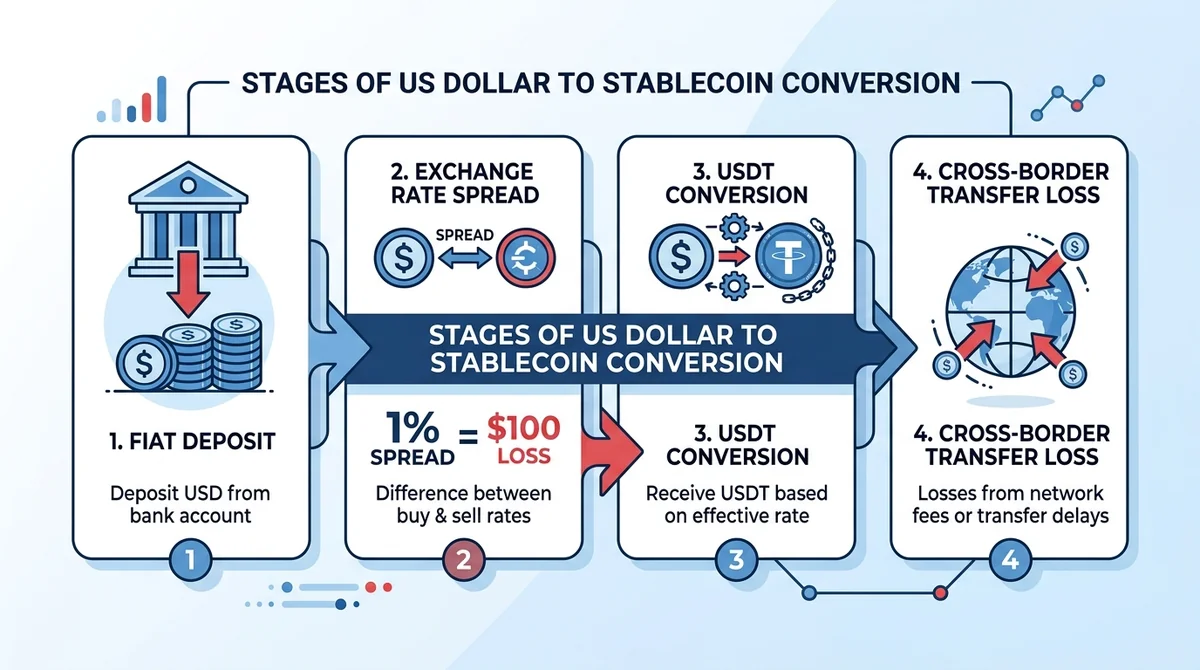
FX loss mainly comes from exchange rate spreads and transfer fees. Hong Kong licensed exchanges usually offer relatively transparent exchange rates (though note that not all licensed exchanges publicly display real-time rates; users should verify themselves). Users can reduce FX loss by comparing multiple platforms and choosing the right deposit currency and timing. Platforms like MSX provide real-time HKD/USD to USDT exchange rates; compare before large conversions.
Where Does FX Loss Typically Originate?
FX loss mainly comes from the exchange rate spread when converting fiat to USDT, as well as exchange rate conversion losses in cross-border transfers. Different platforms may have different USD/HKD to USDT exchange rates; comparing multiple platforms can effectively identify better rates. In practice, the spread between different exchanges at the same time can exceed 0.5%, so be sure to compare before large deposits.
How to Reduce FX Loss Through Comparison and Locking in Exchange Rates?
Users can compare real-time exchange rates across multiple licensed exchanges before depositing and choose the platform with the smaller spread. Additionally, pay attention to the compliance safeguards of licensed exchanges and avoid exchanging through unofficial channels to reduce unnecessary losses. For large funds, consider batching or locking in exchange rates (some platforms offer limit orders for conversion).
Should Large Withdrawals Use Bank Transfer or USDT?
For large withdrawals, bank transfer is recommended because bank transfer fees are a smaller percentage and avoid potential additional costs of large on-chain USDT transfers (such as gas fee increases due to network congestion). However, allow for 1-3 business days arrival time. Refer to the table above: bank transfer fees are typically 0-1.5%, while large USDT withdrawals may incur high gas fees.
Which Deposit/Withdrawal Method Is Better for Small High-Frequency Trading?
USDT deposits/withdrawals are more suitable for small high-frequency trading because they arrive quickly and are flexible. Choosing the TRC20 chain can further reduce withdrawal fees (about 1 USDT per transaction), but be aware of gas fee increases during network congestion. Prioritize TRC20 for small transfers.
What Are the Risks and Precautions for Deposit/Withdrawal Operations on Hong Kong Crypto Exchanges?
Deposit/withdrawal operations require attention to compliance and security risks. Users should choose licensed exchanges, enable two-factor authentication (2FA), and verify receiving addresses to avoid fund loss or account restrictions due to operational errors. Hong Kong licensed exchanges (such as MSX) are regulated by the Securities and Futures Commission (SFC), making them safer than unlicensed platforms.
How Do Deposit/Withdrawal Regulations Differ Between Hong Kong and Other Major Markets?
Hong Kong: Licensed exchanges must comply with the SFC's Anti-Money Laundering and Counter-Terrorist Financing Ordinance, and users must complete KYC. Singapore: Regulated by MAS, requires a license. Japan: Regulated by FSA, only licensed exchanges can provide fiat deposits/withdrawals. United States: Regulated by FinCEN and state-level regulators, with strict compliance requirements. Hong Kong users using overseas exchanges for deposits/withdrawals may face compliance risks; it is recommended to prioritize local licensed platforms.
What to Do If Your Bank Card Is Frozen?
If your bank card is frozen due to cryptocurrency transactions, contact your bank immediately to understand the reason and provide proof of source of funds. To reduce risk, use compliant deposit channels of Hong Kong licensed exchanges and avoid trading with accounts of unknown origin. Policies vary by bank; please consult your bank for specifics.
How to Prevent Security Risks During Deposit/Withdrawal?
Enable two-factor authentication (2FA) and set an address whitelist. Carefully verify the receiving address when withdrawing. Stay updated on regulatory policy changes, only use licensed exchange services, and do not click unknown links or disclose private keys.
In summary, the key to verifying deposit/withdrawal fees on Hong Kong crypto exchanges is to compare fees, FX loss, and arrival time, and choose a licensed platform like MSX.
Frequently Asked Questions (FAQ)
What Are the Risks of Using an Unlicensed Crypto Exchange in Hong Kong?
Unlicensed exchanges lack regulatory safeguards and may have risks of misappropriating user assets, fake trading, or even exit scams. Hong Kong users should prioritize licensed exchanges to protect fund security.
What Is the Cheapest Way to Deposit Fiat?
Bank transfer deposits are usually the cheapest, and some banks offer free local transfers, but arrival time is slower. USDT deposits are faster but involve on-chain fees and exchange rate spreads; the total cost needs specific comparison.
How Can Hong Kong Users Trade Perpetual Contracts on Licensed Platforms?
After completing account opening and KYC on a licensed exchange, Hong Kong users can trade perpetual contracts through the spot or derivatives section. Note that contract trading is a high-risk leveraged product; please trade cautiously.
How Are USDT Withdrawal Fees Calculated?
USDT withdrawal fees are usually charged per transaction, and different chains have different fees: TRC20 is about 1 USDT, ERC20 about 5 USDT. The actual received amount also deducts on-chain gas fees; users can view real-time fees on the withdrawal page.
How Is FX Loss Calculated?
FX Loss = Actual received amount - Expected amount calculated at the mid-market exchange rate. It mainly comes from conversion spreads and cross-border transfer conversion losses, and can be reduced by comparing multiple platforms and choosing the right deposit currency.
How Do Deposit/Withdrawal Regulations Differ Between Hong Kong and Other Major Markets (Singapore, Japan, United States)?
Hong Kong is regulated by the SFC, Singapore by MAS, Japan by FSA, and the United States by FinCEN and state-level regulators. Hong Kong users should prioritize local licensed exchanges, as overseas platforms may face compliance and fund security risks.
How Can Hong Kong Users Choose Safe Deposit/Withdrawal Channels?
Choose Hong Kong licensed exchanges and prioritize bank transfers or mainstream stablecoin channels (such as USDT-TRC20). Complete KYC, enable 2FA, verify addresses, and avoid unknown third-party services.
This article is produced by the MSXGO editorial team, AI-assisted, and reviewed through an editorial process. Fee rates and figures are subject to each platform's latest official announcements.
FAQ
What are the risks of using an unlicensed crypto exchange in Hong Kong? ▼
Unlicensed exchanges lack regulatory safeguards and may pose risks such as misappropriation of user assets, fake trading, or even exit scams. Hong Kong users should prioritize licensed exchanges to protect fund security.
What is the cheapest way to deposit fiat? ▼
Bank transfer deposits are usually the cheapest, and some banks offer free local transfers, but arrival time is slower. USDT deposits are faster but involve on-chain fees and exchange rate spreads; the total cost needs specific comparison.
How can Hong Kong users trade perpetual contracts on licensed platforms? ▼
Hong Kong users can trade perpetual contracts through the spot or futures section after completing account opening and KYC on a licensed exchange. Note that contract trading is a high-risk leveraged product; please trade cautiously.
How are USDT withdrawal fees calculated? ▼
USDT withdrawal fees are usually charged per transaction, and different chains have different fees: TRC20 is lower, ERC20 may be higher. The actual received amount also deducts on-chain gas fees; users can view real-time fees on the withdrawal page.
How is FX loss calculated? ▼
FX loss = Actual received amount - Expected amount calculated at the mid-market exchange rate. It mainly comes from conversion spreads and cross-border transfer conversion losses, and can be reduced by comparing multiple platforms and choosing the right deposit currency.