Robinhood CEO on Tokenization: It Will Reshape the Entire Financial System
A US brokerage CEO discusses tokenization's supercycle, onchain stock tokens and private-market liquidity, plus why Trump Accounts hold only S&P 500 ETFs.
Article Citation Summary
A US brokerage CEO discusses tokenization's supercycle, onchain stock tokens and private-market liquidity, plus why Trump Accounts hold only S&P 500 ETFs.
Tokenization Seen as the Next "Supercycle"
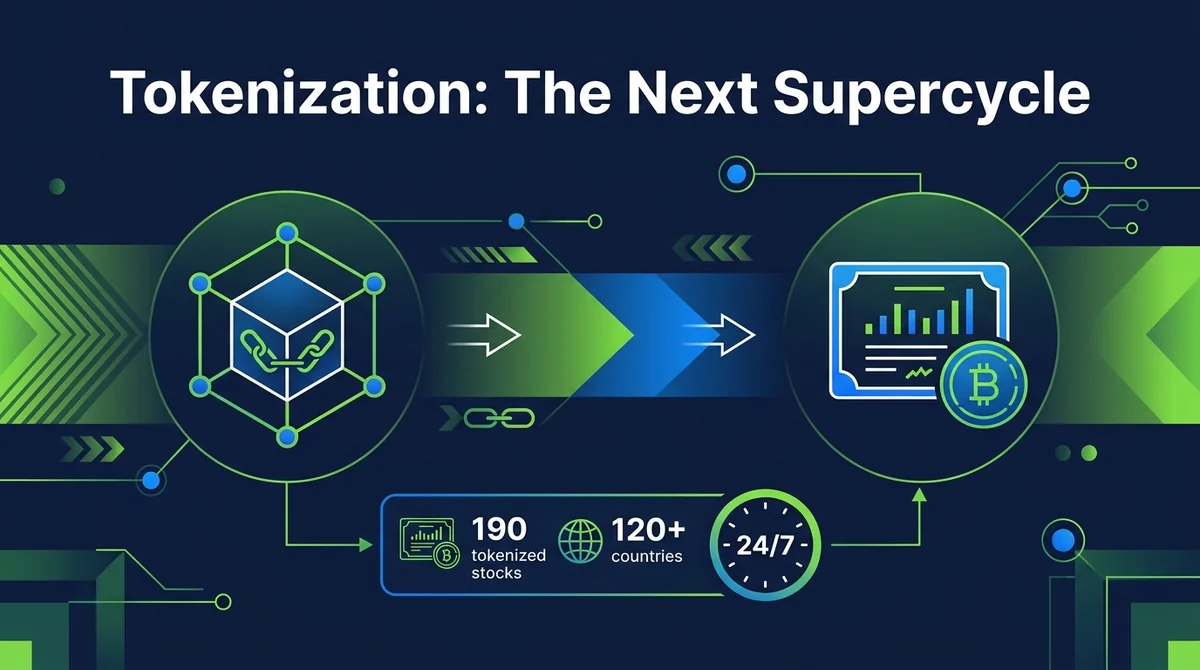
In recent public remarks, the CEO of a US brokerage argued that tokenization is at the starting point of a "supercycle" and could eventually take over the entire financial system. The claim comes as the brokerage has launched its own crypto blockchain in markets outside the US, with stock tokens positioned as one of its onchain-native asset classes.
According to the CEO, the company's PLTR tokenized stock lineup has expanded from an initial 90 to 190 names, supports 24/7 trading, and can be moved freely onchain like Bitcoin or any other crypto asset. The design gives users in more than 120 countries and regions exposure to US equities, and offers a reference roadmap for what the financial system could look like in the future.
Two Camps on Tokenization in the US Market
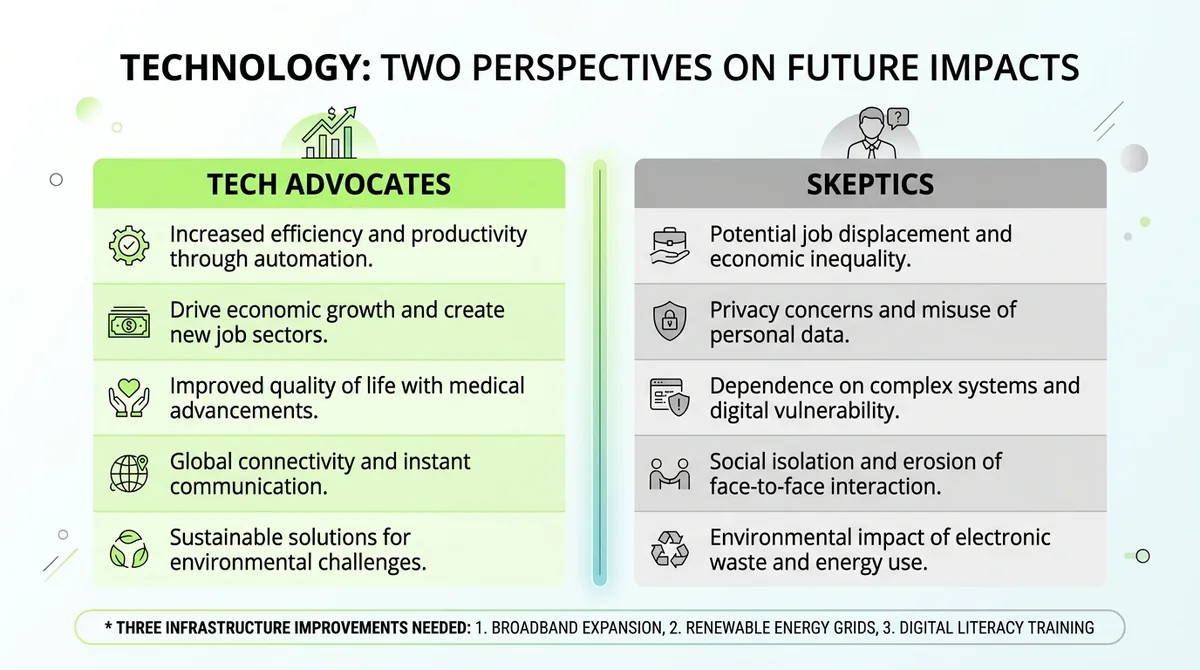
Within the US, the debate over tokenization broadly splits into two camps.
- Tech advocates: eager to gain this new capability as soon as possible, focused on "when it will launch in the US" and "what form it will take."
- Skeptics: argue that the US market already offers easy access routes, such as brokerage products with fractional share trading and near 24/5 trading hours, and therefore question "what problem tokenization actually solves."
Responding to the latter, the CEO laid out three key infrastructure-level improvements that tokenization delivers, arguing these can genuinely improve ordinary people's lives and make it easier for more Americans to become investors and owners of the US economy.
Stock Tokens Are the Starting Point; Private Markets Are the Real Opportunity
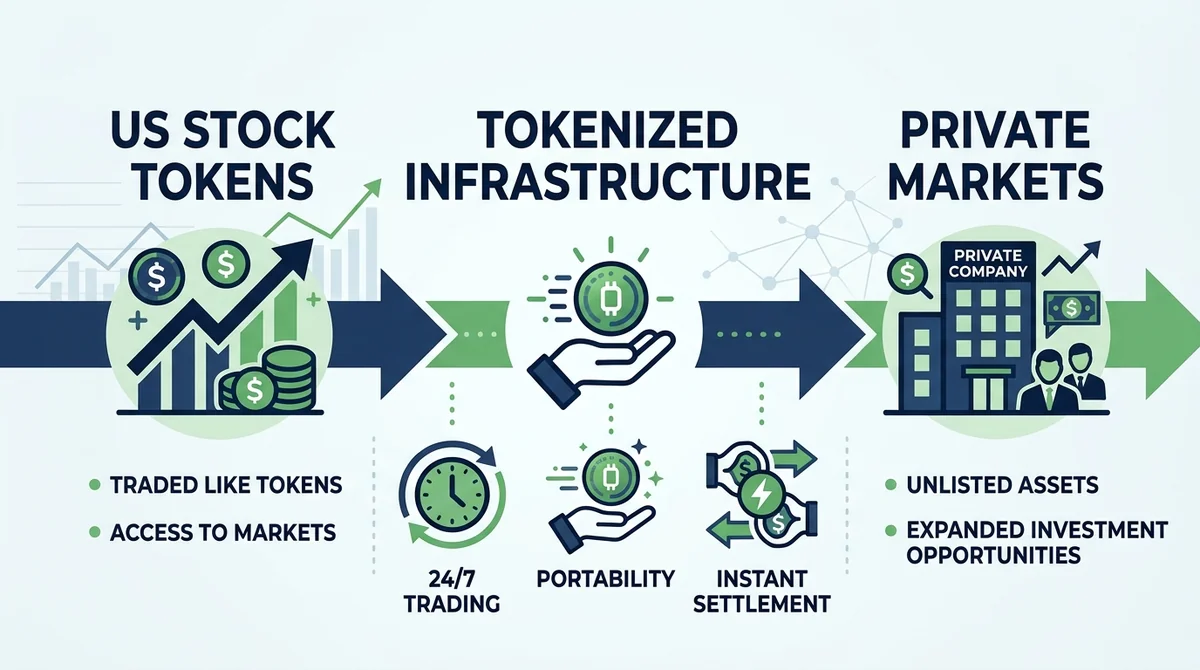
Current tokenization efforts start with US equities. As an asset class, stocks provide a solid foundation for "broad ownership," consistent with the brokerage's philosophy of promoting broad ownership of high-quality financial assets.
More notable, however, is the extensibility of the underlying infrastructure: the framework supporting 24/7 stock trading, asset portability and instant settlement would see its advantages amplified further once extended to asset classes where liquidity and access are more challenging.
Private companies are a typical example. The CEO noted that the private market's problem is not only "difficulty of access" but also insufficient liquidity and missing market infrastructure — there is currently no mature trading venue for private companies. Through tokenization, such trades can be executed on blockchains that already have global liquidity.
Innovation and Investor Protection Are Not Opposites
On the philosophical debate over whether private markets should open up at scale like public markets, the CEO's position is that a balance must be struck between innovation and investor protection, but the two are not in conflict.
In his view, the reason US capital markets lead the world stems precisely from the balance among strong regulation, broad access and investor protection. At the same time, he pointed to a real problem: while private companies such as AI firms and SpaceX create enormous economic value, ordinary individual investors have long been excluded. In his view, enabling more people to broadly hold such innovative companies is essential to maintaining a free, stable and prosperous society.
Trump Accounts Currently Support Only S&P 500 ETFs
The interview also touched on Trump Accounts, the family-oriented savings accounts. The CEO confirmed that the accounts can currently gain S&P 500 exposure only through a low-fee ETF provided by State Street.
The original design intent is to let every American participate in the US economy in the simplest way from birth, hold ownership stakes in these companies, and feel the power of compounding. Whether more options will be added in the future is already under discussion in the market, but the current default of a "diversified portfolio of the best-known companies" is seen as an effective and easy starting point.
Regulatory Calendar and Industry Signals
During this trip to Washington, D.C., the CEO will attend a White House meeting and, the following day, a separate meeting at the US Commodity Futures Trading Commission (CFTC). The topics include crypto regulation and prediction markets.
From an industry perspective, tokenization's shift from "offshore experiment" to "onshore discussion" reflects the accelerating convergence of traditional finance and onchain infrastructure. For market participants focused on RWA (real-world assets) and onchain tokenized US equities, the pace of evolution in the regulatory framework will be the key variable determining whether this trend can take root in the US.
This article is produced by the MSXGO editorial team, AI-assisted, and reviewed through an editorial process. Fee rates and figures are subject to each platform's latest official announcements.
Finished reading? Ready to try trading?
Tokenized stocks/ETFs, crypto spot, and perpetual futures in one account — perp maker 0.02% / taker 0.045%, RWA spot buy 0.3% / sell 0.
Free sign-up · 3 quick steps