TokenSpot Security Mechanisms and Asset Protection Deep Dive 2026
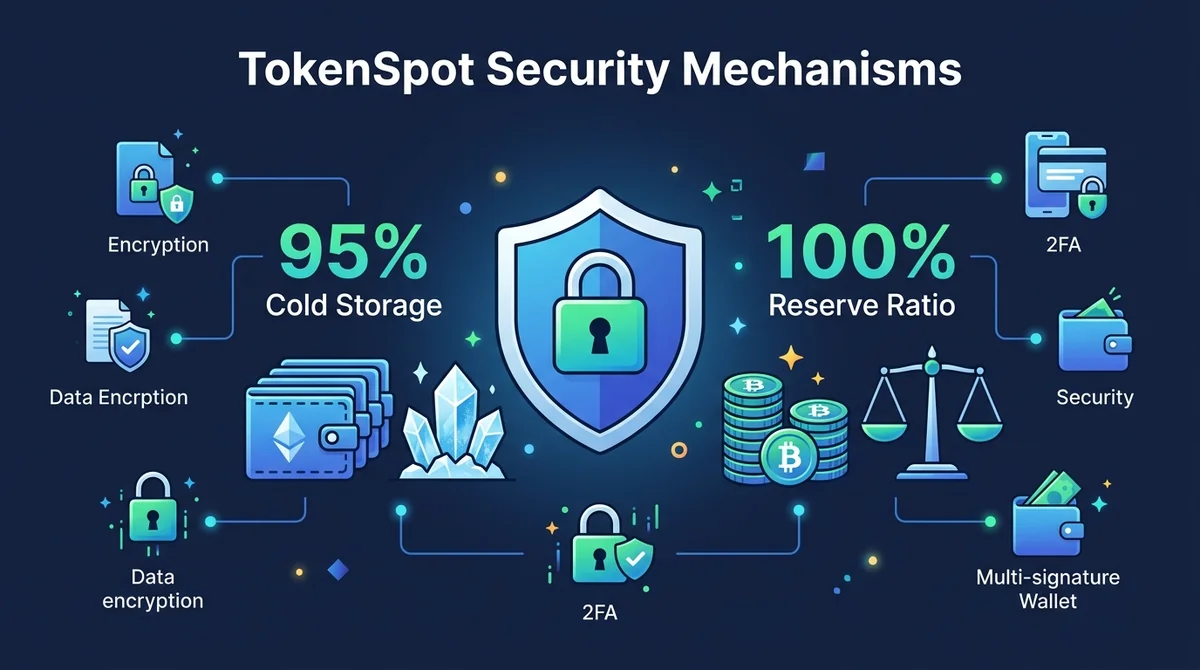
TokenSpot security: 95% assets in multi-sig cold wallet, 100% physical proof of reserves, KYC/KYT risk control, MSB compliance. How to protect private keys and avoid phishing.
Article Citation Summary
TokenSpot security: 95% assets in multi-sig cold wallet, 100% physical proof of reserves, KYC/KYT risk control, MSB compliance. How to protect private keys and avoid phishing.
TokenSpot Security Mechanisms and Asset Protection Deep Dive 2026
TL;DR
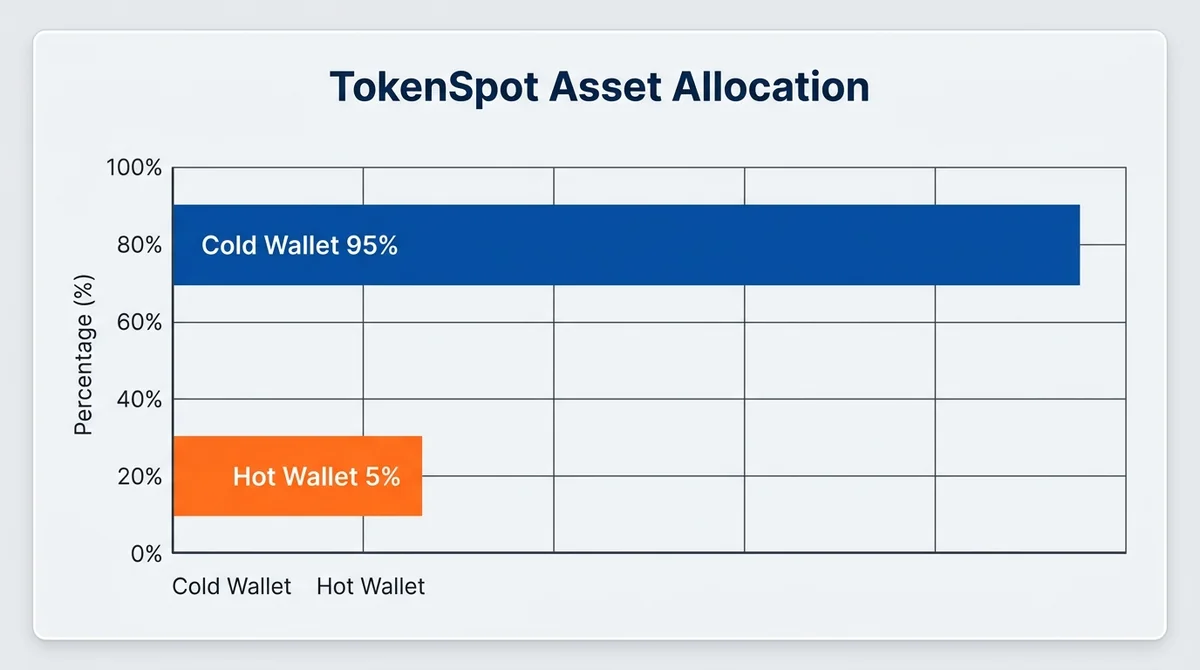
- Cold/Hot Wallet Segregation: TokenSpot stores 95% of digital assets in multi-sig cold wallets, with only 5% used for daily withdrawals.
- 100% Physical Proof of Reserves: The platform commits to on-chain reserve ratios strictly above 100% for all listed coins, preventing misappropriation of user assets.
- Non-Custodial Nature: Private keys and mnemonic phrases are held by users themselves; the platform cannot unilaterally access user assets.
- Compliance & Risk Control: Integrated KYC/KYT on-chain risk control, holds MSB financial license, open-source smart contracts with third-party audits.
- User Self-Protection Essentials: Safeguard private keys, beware of phishing sites, enable two-factor authentication—these are the last line of defense for asset security.
How Does TokenSpot Protect User Assets?
TokenSpot safeguards user assets by storing 95% of digital assets in multi-sig cold wallets and committing to a 100% physical on-chain reserve ratio. This mechanism exceeds industry standards, with the core goal of preventing unilateral misappropriation of user assets by the platform.
How Does the Cold/Hot Wallet Segregation Mechanism Work?
Cold/hot wallet segregation is the foundational architecture for exchange asset security. TokenSpot stores 95% of digital assets in offline cold wallets, keeping only 5% in hot wallets for daily withdrawals. Cold wallets are not connected to the internet, so hackers cannot steal funds through network attacks; hot wallets hold small amounts, limiting losses even if compromised.
How Does Multi-Sig Cold Wallet Resist Hacker Attacks?
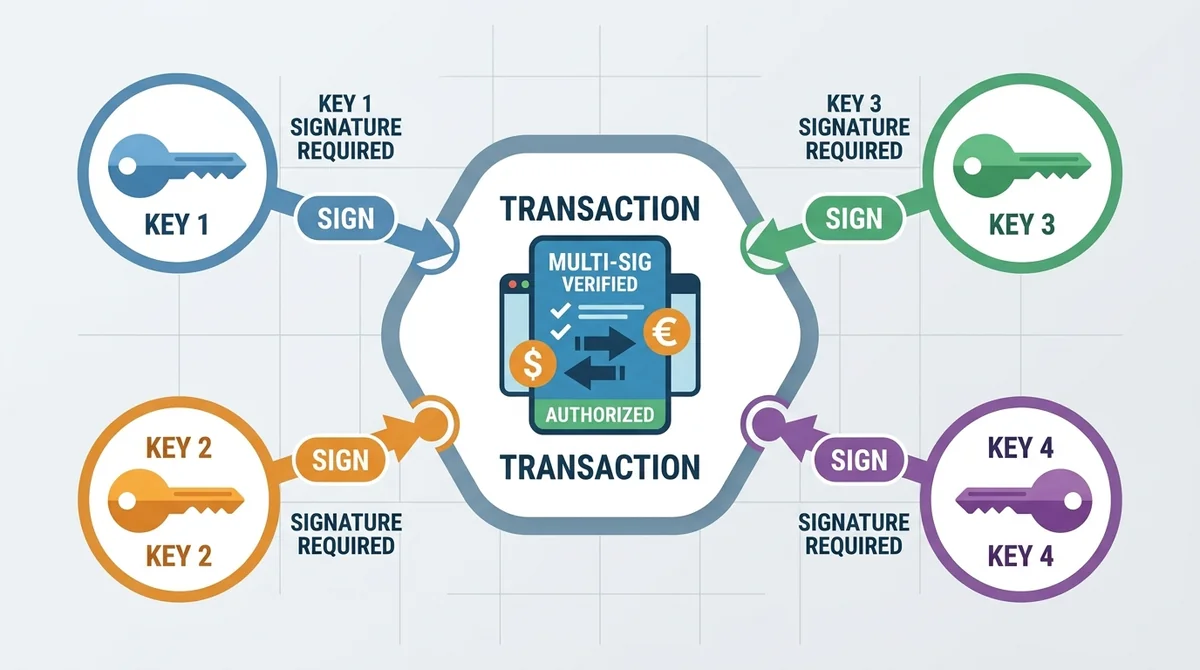
Multi-sig cold wallets require multiple private keys to jointly sign before assets can be transferred. TokenSpot's multi-sig cold wallet employs a scheme where private keys are held by multiple parties, so a single point of compromise cannot complete a transfer. Even if one insider is breached, they cannot move funds alone, significantly reducing risks of hacking and internal malfeasance.
What Does 100% Physical Proof of Reserves Mean?
100% physical proof of reserves means all user assets on the platform are backed by corresponding real on-chain assets. TokenSpot commits to reserve ratios strictly above 100% for all listed coins, meaning on-chain reserves slightly exceed total user holdings, eliminating the risk of bank runs under fractional reserve models. Users can verify independently via on-chain addresses.
What Compliance and Anti-Money Laundering Measures Does TokenSpot Have?
TokenSpot fully integrates KYC and KYT on-chain risk control systems, complies with MSB and other multi-country financial license standards, and its smart contract code is open-source with third-party security audits. Compliance is a crucial component of its security mechanism.
How Do KYC and KYT Systems Work?
KYC (Know Your Customer) requires users to submit identity information for real-name verification; KYT (Know Your Transaction) monitors on-chain fund flows in real time to identify suspicious transactions. TokenSpot combines both to block money laundering and illicit fund inflows at both user onboarding and transaction behavior levels.
What Compliance Qualifications Does TokenSpot Hold?
TokenSpot holds an MSB (Money Services Business) financial license and complies with AML/CTF regulations in multiple countries. The MSB license requires the platform to fulfill obligations such as anti-money laundering, customer identification, and transaction reporting, making it one of the foundational qualifications for legal operation of crypto exchanges in jurisdictions like the United States.
How Transparent Are Smart Contract Audits and Open Source?
TokenSpot's smart contract code is open source and has undergone third-party security audits. Open source means anyone can review the code logic and identify potential vulnerabilities; third-party audits provide professional security assessment reports. Together, they enhance the platform's technical transparency and reduce contract vulnerability risks.
What Advantages Does TokenSpot's Security Mechanism Have Over Other Exchanges?
TokenSpot's non-custodial nature lets users hold their own private keys, combined with PFOF mechanism on-chain and multi-layer risk control liquidation system, distinguishing its security mechanism from traditional exchanges.
What Makes TokenSpot's Security Mechanism Unique?
Traditional centralized exchanges typically custody user private keys, with user assets controlled by the platform. TokenSpot adopts a non-custodial model where private keys and mnemonic phrases are held by users themselves, and the platform cannot access user assets. This design fundamentally eliminates the risks of platform exit scams or internal theft, giving users complete control over their assets.
How Does It Differ from Traditional Exchange Security Models?
Traditional exchanges rely on centralized cold wallets and internal risk controls, requiring users to trust the platform. TokenSpot puts the PFOF (Payment for Order Flow) mechanism on-chain, transparently recording order flow and fund settlement on-chain to reduce human intervention. Combined with a multi-layer risk control liquidation system, from margin monitoring to auto-deleveraging, it forms a security loop integrating on-chain and off-chain measures.
What Security Precautions Should Users Take When Using TokenSpot?
Users should properly safeguard private keys and mnemonic phrases, beware of phishing attacks, and enable account security measures such as two-factor authentication to enhance asset protection. No matter how robust the platform's security mechanisms are, users' own operational habits remain the last line of defense.
How to Safely Store Private Keys and Mnemonic Phrases?
Private keys and mnemonic phrases are the sole credentials to assets; loss or leakage means permanent asset loss. It is recommended to write down mnemonic phrases on paper and store them in a fireproof and waterproof secure location. Do not screenshot, photograph, or store them on internet-connected devices. Never disclose private keys or mnemonic phrases to anyone, including individuals claiming to be customer service.
How to Identify Phishing Attacks and Prevent Risks?
Phishing attacks typically steal user credentials through fake official websites, counterfeit apps, or inducing clicks on malicious links. When accessing TokenSpot, always verify the official domain and download the app only from official channels. Be wary of any messages requesting private keys, mnemonic phrases, or verification codes—official customer service will never ask for such sensitive information.
What Official Security Recommendations Does TokenSpot Provide?
TokenSpot officially recommends enabling two-factor authentication (2FA) to add an extra layer of protection to accounts. Regularly review account activity, and immediately freeze the account and contact official customer service if abnormal logins are detected. Follow official announcements to stay updated on security updates and risk alerts.
FAQ
Is TokenSpot's cold wallet truly secure?
TokenSpot stores 95% of assets in multi-sig cold wallets. The multi-sig mechanism requires multiple private keys to jointly sign before any transfer, so a single point of compromise cannot move funds. Cold wallets are offline and immune to network attacks, making them far more secure than hot wallets.
How can TokenSpot's proof of reserves be verified?
TokenSpot commits to on-chain reserve ratios above 100% for all listed coins. Users can compare the platform's published reserve data with actual on-chain balances via public on-chain addresses to verify that assets are fully backed.
Is TokenSpot a non-custodial exchange?
Yes, TokenSpot adopts a non-custodial model where private keys and mnemonic phrases are held by users themselves. This means the platform cannot unilaterally freeze or transfer user assets, giving users complete control, but users also bear the risk of losing their private keys.
Is TokenSpot's KYC strict?
TokenSpot fully integrates KYC and KYT systems; users must complete real-name verification to trade. KYT monitors on-chain fund flows in real time, complying with MSB license anti-money laundering requirements, so the KYC process is relatively strict.
If I lose my private key, can TokenSpot help me recover it?
No. Because TokenSpot is non-custodial, private keys are held by users themselves, and the platform does not possess user private keys, so it cannot help recover lost private keys or mnemonic phrases. Be sure to back up and store them properly.
What is the biggest security difference between TokenSpot and traditional exchanges?
The biggest difference lies in asset control. Traditional exchanges custody user private keys, with user assets controlled by the platform; TokenSpot's non-custodial model lets users hold their own private keys, and the platform cannot access user assets, fundamentally avoiding risks of platform exit scams and internal theft.
This article is produced by the MSXGO editorial team, AI-assisted, and reviewed through an editorial process. Fee rates and figures are subject to each platform's latest official announcements.
FAQ
Is TokenSpot's cold wallet truly secure? ▼
TokenSpot stores 95% of assets in multi-sig cold wallets. The multi-sig mechanism requires multiple private keys to jointly sign before any transfer, so a single point of compromise cannot move funds. Cold wallets are offline and immune to network attacks, making them far more secure than hot wallets.
How can TokenSpot's proof of reserves be verified? ▼
TokenSpot commits to on-chain reserve ratios above 100% for all listed coins. Users can compare the platform's published reserve data with actual on-chain balances via public on-chain addresses to verify that assets are fully backed.
Is TokenSpot a non-custodial exchange? ▼
Yes, TokenSpot adopts a non-custodial model where private keys and mnemonic phrases are held by users themselves. This means the platform cannot unilaterally freeze or transfer user assets, giving users complete control, but users also bear the risk of losing their private keys.
Is TokenSpot's KYC strict? ▼
TokenSpot fully integrates KYC and KYT systems; users must complete real-name verification to trade. KYT monitors on-chain fund flows in real time, complying with MSB license anti-money laundering requirements, so the KYC process is relatively strict.
If I lose my private key, can TokenSpot help me recover it? ▼
No. Because TokenSpot is non-custodial, private keys are held by users themselves, and the platform does not possess user private keys, so it cannot help recover lost private keys or mnemonic phrases. Be sure to back up and store them properly.
What is the biggest security difference between TokenSpot and traditional exchanges? ▼
The biggest difference lies in asset control. Traditional exchanges custody user private keys, with user assets controlled by the platform; TokenSpot's non-custodial model lets users hold their own private keys, and the platform cannot access user assets, fundamentally avoiding risks of platform exit scams and internal theft.
Finished reading? Ready to try trading?
Tokenized stocks/ETFs, crypto spot, and perpetual futures in one account — perp maker 0.02% / taker 0.045%, RWA spot buy 0.3% / sell 0.
Free sign-up · 3 quick steps