The Real Drivers Behind Bitcoin's Sharp Rally: Treasury Buybacks, Short Squeeze and Regulatory Progress
Bitcoin's sharp rally stems from a short squeeze and expanded US Treasury buybacks, plus stablecoin, tokenization and crypto legislation progress.
Article Citation Summary
Bitcoin's sharp rally stems from a short squeeze and expanded US Treasury buybacks, plus stablecoin, tokenization and crypto legislation progress.
Market Move: Short Squeeze Amplifies the Rally
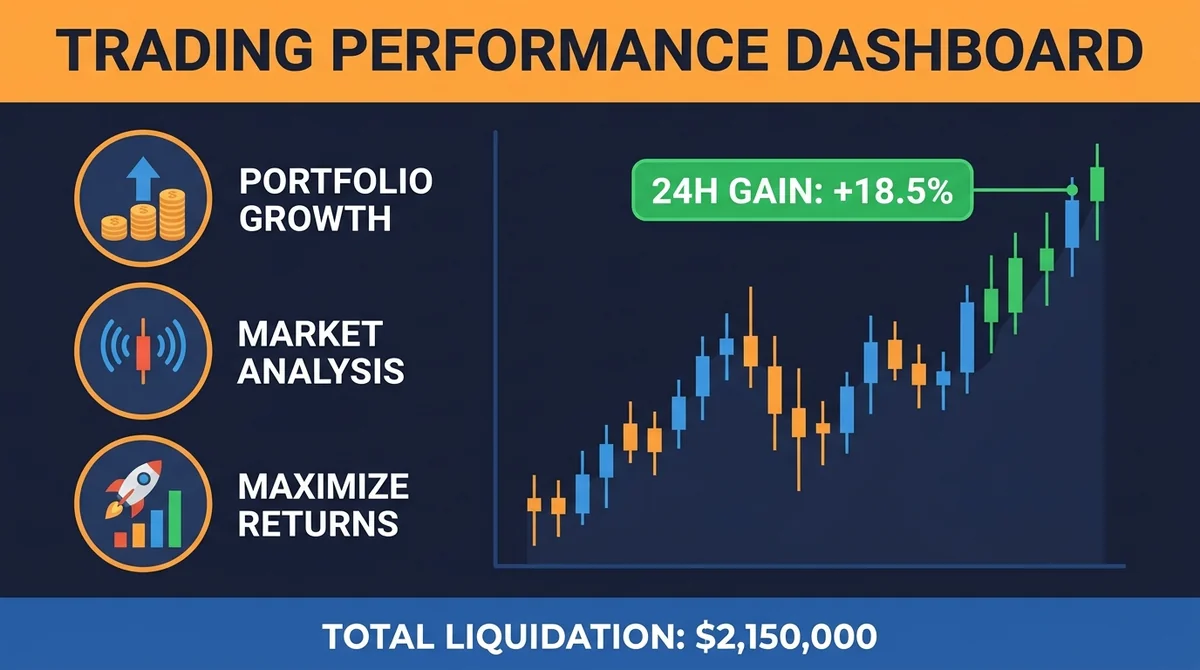
Bitcoin's price surged rapidly in a short period, at one point gaining more than 7% and touching a multi-month high. The direct driver of this move was not a large-scale influx of new buyers, but a concentrated unwind of short positions — roughly $1.2 billion in short positions were liquidated within an hour, and the forced buying pushed prices even higher.
Looking at the market structure, volume showed higher highs with rising participation, but selling pressure in a single down candle briefly exceeded the buying pressure that had driven the rally. This typically signals that sellers are nearing exhaustion: even with persistent selling pressure, price held near lows without breaking lower. Buyers, however, have not clearly stepped in yet, leaving the market in a phase of rebalancing between bulls and bears.
Treasury Expands Buybacks: Market Reads It as Backdoor QE
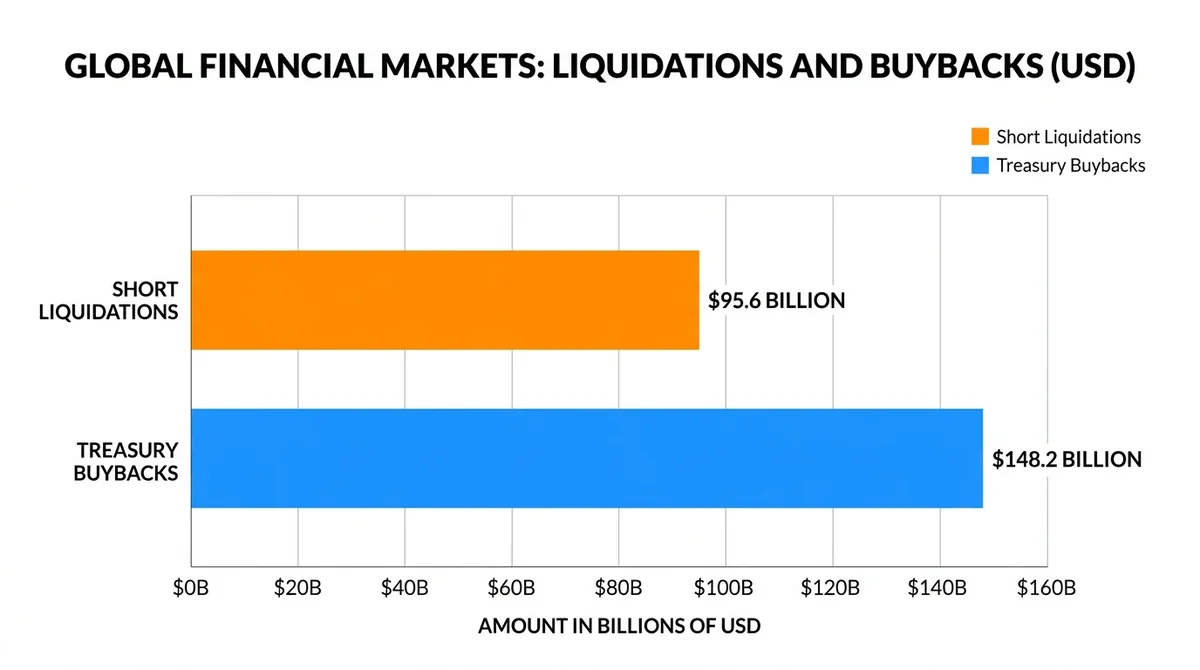
Alongside the price action, the US Treasury announced it would expand long-term treasury bond buybacks. Against a backdrop of rapidly rising Treasury yields, the Treasury raised its monthly buyback size from $2 billion to at least $4 billion, providing liquidity support for 10- to 30-year treasury bond maturities, at a time when total US Treasury debt is approaching $40 trillion.
The market widely interpreted this as "backdoor QE." The logic: buying back Treasuries is equivalent to injecting liquidity into the market, lowering the cost of capital and thus benefiting risk assets. The distinction to make is that this is not a Federal Reserve-style large-scale asset purchase program — the scale and magnitude are not comparable — but directionally it does help stabilize the bond market and buy time for policy.
On the operational details, the arrangement took effect on September 9 and runs through November 4, following a "regular and predictable" issuance communication cadence — the Treasury publishes upcoming auction sizes and purchase plans by maturity at the start of each month. Analysts view the move as limited in scale but stronger in signal: the Treasury is willing to support the bond market with whatever tools are necessary.
Regulatory Progress: Stablecoins, Tokenization and the Clarity Act

At a crypto industry summit at the White House, crypto executives and policymakers discussed issues together, signaling faster regulatory collaboration.
- Stablecoins and dollar expansion: Stablecoin usage and adoption continue to rise and are seen as an important channel for expanding the global reach of the US dollar. With related legislation advancing, more US Treasury assets are entering the stablecoin system and spreading to holders worldwide.
- Equity tokenization: Regulators are shifting from confrontation to cooperation, providing infrastructure for global distribution of US equity assets. Tokenization was described as still being at the start of a super cycle.
- Legislative timeline: The September 15 Clarity Act vote is seen as a key milestone, aimed at locking current policy progress into a long-lasting legal framework. Industry expects the bill needs more than 60 votes to pass; some large banks remain reserved due to competitive concerns, while others have chosen to support it.
Separately, the question of whether to include Bitcoin in a strategic reserve was mentioned, but comments remained at the level of "has been discussed," with no concrete plan yet.
Tokenized Assets and Onchain US Stocks: Latest Developments
Tokenized stocks are becoming an important direction for onchain asset expansion. One platform has launched an Ethereum-based blockchain network outside the US, using PLTR tokenized stock as a foundational component; the number of tokenized US stocks has expanded from an initial 90 to 190, supporting 24/7 trading and onchain transfers, giving users in more than 120 countries exposure to US equities.
On the compliance infrastructure side, one project obtained SEC transfer agent registration, and its affiliate can maintain ownership records for securities, bringing regulated market infrastructure into the tokenized assets news business. Such progress means the compliance pathway for tokenized assets is gradually being opened.
Implications for Risk Assets
Taken together, this rally is the result of three overlapping factors: technical buying from the short squeeze, liquidity expectations from Treasury buybacks, and narrative support from regulatory and tokenization progress.
For traders, the focus should not be the single-day gain but several sustainable variables: whether liquidity support for the bond market continues, whether stablecoin- and tokenization-related legislation is enacted, and whether spot buying truly follows through. With sellers near exhaustion but buyers not yet confirmed, position sizing and stop-loss/take-profit discipline remain the safer approach.
It should be emphasized that the above is merely a summary of market information and does not constitute investment advice or price predictions.
This article is produced by the MSXGO editorial team, AI-assisted, and reviewed through an editorial process. Fee rates and figures are subject to each platform's latest official announcements.
Finished reading? Ready to try trading?
Tokenized stocks/ETFs, crypto spot, and perpetual futures in one account — perp maker 0.02% / taker 0.045%, RWA spot buy 0.3% / sell 0.
Free sign-up · 3 quick steps