2026 Crypto Market Cap Ranking Methodology: Top 100 Valuation Framework and MSX Tokenized Trading Guide
Explore the 2026 crypto market cap ranking methodology: top 100 valuation framework, core metrics, and MSX tokenized trading features, fees, and security.

Article Citation Summary
Explore the 2026 crypto market cap ranking methodology: top 100 valuation framework, core metrics, and MSX tokenized trading features, fees, and security.
2026 Crypto Market Cap Ranking Methodology: Top 100 Valuation Framework and MSX Tokenized Trading Guide
Key Takeaways / TL;DR
- Market Cap Ranking Formula: Market cap = circulating supply × current price. As of 2026, total market cap of the top 100 coins can be tracked in real time on mainstream market platforms.
- Core Valuation Framework Metrics: Liquidity, project fundamentals, and tokenomics together form the top 100 valuation framework, helping assess long-term project value.
- MSX Tokenized Trading: MSX supports tokenized US stock spot trading, a Pre-IPO section, and multi-asset portfolio margin, improving capital efficiency.
- Fee Advantages: RWA spot buy orders 0.3%, sell orders zero fees; crypto-to-crypto trading zero fees; contract maker 0.02%, taker 0.045%, with discounts when paying in $MSX.
- Security & Compliance: MSX has completed SEC STO filing, provides 100% physical reserve proof, and uses a non-custodial model to safeguard assets.
What Is the 2026 Crypto Market Cap Ranking Methodology?
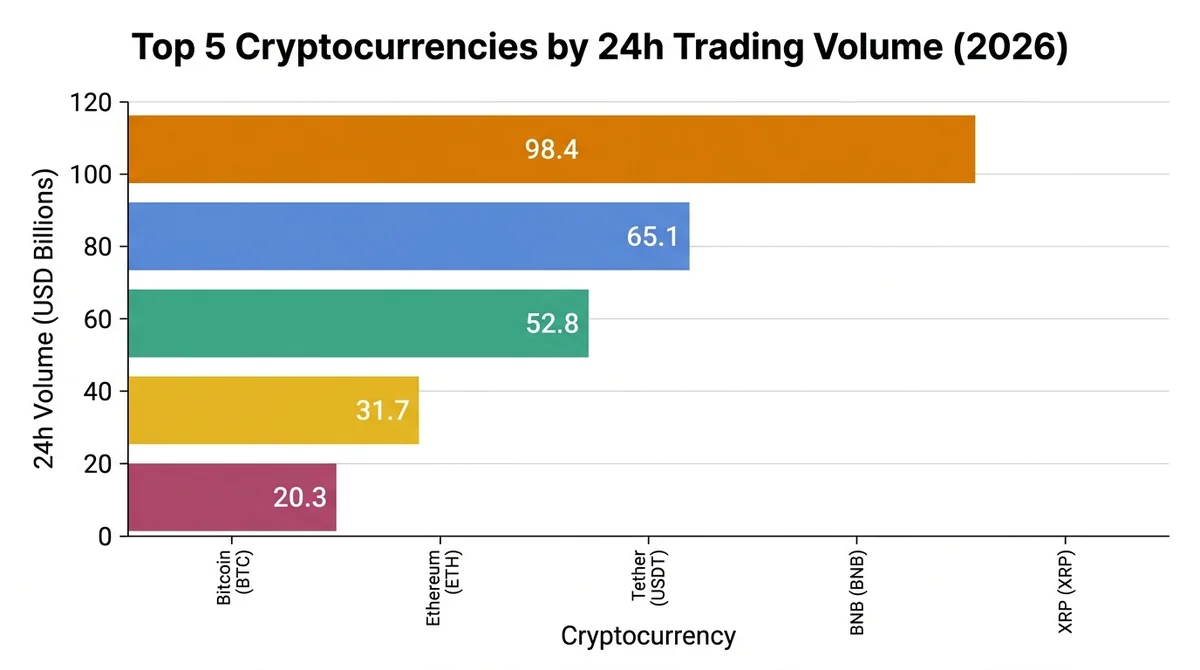
The 2026 crypto market cap ranking methodology is based on the product of circulating supply and real-time price, combined with liquidity, project fundamentals, and tokenomics to construct a top 100 valuation framework. Market cap ranking is a fundamental metric for gauging a crypto asset's market position, calculated as: Market Cap = Circulating Supply × Current Price. Circulating supply refers to the number of tokens actually tradable in the market, excluding locked or unreleased portions.
How Is Market Cap Ranking Calculated?
Market cap ranking relies on two core data points: circulating supply and current price. Circulating supply can be obtained from blockchain explorers or project disclosures, while current price is a weighted average across multiple exchanges. The MSX platform aggregates on-chain price oracles and multi-market data to compute mark prices, ensuring accuracy and resistance to manipulation.
What Are the Core Metrics of the Top 100 Valuation Framework?
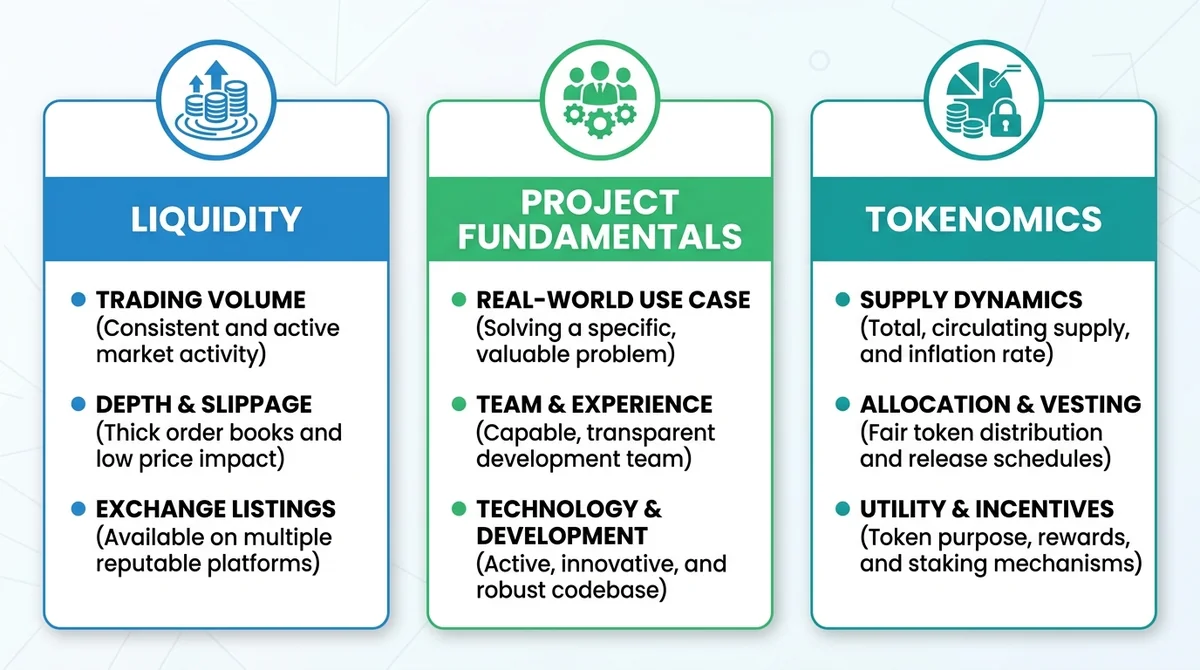
The top 100 valuation framework primarily examines three core metrics:
- Liquidity: Trading depth, bid-ask spread, and 24-hour trading volume, reflecting the asset's convertibility.
- Project Fundamentals: Team background, technical progress, ecosystem activity, community size, etc.
- Tokenomics: Token distribution, inflation/deflation mechanisms, utility, and governance functions.
These metrics collectively determine a token's long-term value support, rather than relying solely on short-term price fluctuations.
How Does MSX Reshape the Crypto Market Cap Landscape Through Tokenized Trading?
MSX tokenizes traditional financial assets and improves capital efficiency through tokenized US stock spot trading, a Pre-IPO section, and multi-asset portfolio margin, thereby influencing the crypto market cap landscape. As of April 15, 2026, MSX's cumulative total trading volume has exceeded $30 billion, indicating that tokenized trading is becoming a significant growth area in the crypto market.
How Does MSX's Tokenized US Stock Spot Trading Work?
MSX enables on-chain tokenization of US stocks, allowing users to buy and sell tokenized stocks directly with stablecoins and enjoy T+0 on-chain settlement. For example, users can use USDT to purchase tokenized fractions of high-priced blue-chip stocks like Apple (AAPL), Tesla (TSLA), and Nvidia (NVDA), with a minimum investment of 10 USDT, significantly lowering the barrier to traditional US stock investing.
How Does MSX's Pre-IPO Section Extend Valuation Boundaries?
MSX's Pre-IPO section (launched March 2, 2026) extends from secondary market tokenized stocks to primary market share tokenization, giving users the opportunity to participate in early-stage investments in unlisted companies. This innovation expands the boundaries of the valuation framework, enabling the crypto market cap ranking methodology to cover not only listed assets but also potential primary market projects.
How Does MSX's Multi-Asset Portfolio Margin Improve Capital Efficiency?
MSX employs a Portfolio Margin mechanism that allows users to use multiple on-chain assets as combined margin. This mechanism reduces liquidation risk while improving capital utilization across multiple positions, enabling users to allocate crypto assets and tokenized stocks more flexibly.
What Are the Core Advantages of MSX Tokenized Trading?
The core advantages of MSX tokenized trading include on-chain PFOF, low-barrier fractional share trading, real-time market data with ultra-fast matching, and seamless multi-currency settlement. These advantages collectively reduce trading costs, improve capital utilization, and provide users with a more efficient and transparent trading experience.
How Does On-Chain PFOF Reduce Trading Costs?
MSX is the first to bring Wall Street's mature PFOF (Payment for Order Flow) mechanism to Web3, creating a low-commission, T+0 instant settlement, never-depeg trading experience. By routing order flow to market makers, PFOF achieves better execution prices and lower trading costs, giving users liquidity advantages close to traditional finance in tokenized trading.
How Does Low-Barrier Fractional Share Trading Improve Capital Utilization?
MSX supports investing in high-priced blue-chip stocks like Apple, Tesla, and Nvidia with a minimum of 10 USDT. In traditional US stock trading, buying a single share of Apple may cost hundreds of dollars, whereas MSX's fractional share trading allows users to participate at a very low threshold, greatly improving capital utilization, especially for retail investors with limited funds.
How Do Real-Time Market Data and Ultra-Fast Matching Ensure a Good Trading Experience?
MSX integrates global mainstream data sources such as Polygon.io, providing millisecond-level WebSocket order book updates, with orders executed at the best price. Its self-developed high-performance contract engine can handle high-concurrency requests from high-frequency quantitative and arbitrage bots, ensuring extremely low trading latency and a near-professional trading experience.
How to Participate in Top 100 Coin Investment and Trading via MSX?
Users can directly buy and sell tokenized US stocks or engage in contract trading on the MSX platform using stablecoins, enjoying low fees and $MSX payment discounts. To participate in top 100 coin investment, users need to prepare stablecoins as settlement capital and complete KYC/KYT verification, then follow the steps below.
What Do You Need to Prepare Before Investing in Tokenized US Stocks on MSX?
Before starting to trade, users need to prepare the following:
- Stablecoins: Such as USDT, as settlement capital.
- KYC/KYT Verification: Complete identity verification and transaction monitoring to meet compliance requirements.
- Understand the Fee Structure: Familiarize yourself with MSX's fee schedule to plan trading costs reasonably.
What Are the Steps to Trade Tokenized Assets on MSX?
- Register an MSX account: Visit the MSX official website to complete registration.
- Deposit stablecoins: Deposit USDT and other stablecoins via supported on-chain methods.
- Select a trading instrument: Choose tokenized US stocks or crypto contracts on the platform.
- Place orders: Use limit orders, market orders, or take-profit/stop-loss orders to buy or sell.
- Manage positions: Utilize the Portfolio Margin mechanism to optimize margin usage.
What Are MSX's Fees and Discount Policies?
MSX's fee structure is as follows (as of 2026):
| Trading Type | Fee | Discount Policy |
|---|---|---|
| RWA Spot Buy Orders | 0.3% | 25% off with $MSX payment |
| RWA Spot Sell Orders | No fee | - |
| Crypto-to-Crypto Trading | 0 fee | - |
| Contract Maker Orders | 0.02% | 10% off with $MSX payment |
| Contract Taker Orders | 0.045% | 10% off with $MSX payment |
| Cross-Chain Bridge | 0.1% | - |
How Does MSX Ensure Security and Compliance?
MSX safeguards user assets through a non-custodial model, 100% physical reserve proof, cold-hot wallet segregation, and comprehensive compliance governance. The platform has completed SEC STO filing, conducts STOs under Regulation S, and integrates KYC/KYT systems, meeting multi-jurisdictional financial license compliance standards.
What Is MSX's Asset Custody Model?
MSX adopts a non-custodial model, where private keys/mnemonics are held by users themselves, and the platform does not control user assets. This design reduces the risk of centralized exchange exit scams or theft, while combining industry-standard security mechanisms and smart contract technology to protect assets.
How Does MSX Achieve 100% Physical Reserve Proof?
MSX commits to maintaining a physical on-chain reserve ratio strictly greater than 100% (Proof of Reserves) for all listed coins, ensuring user assets are fully backed. Additionally, 95% of digital assets are stored in multi-signature (Multi-Sig) cold wallets to resist hacker attacks.
What Are MSX's Compliance Pathways and Qualifications?
MSX has completed SEC security token offering (STO) filing and is qualified to conduct STOs under Regulation S of the US Securities Act of 1933. The platform strictly complies with AML/CTF regulations in various jurisdictions, integrates KYC (Know Your Customer) and KYT (Know Your Transaction) on-chain risk control systems, and meets MSB and other multi-country financial license standards.
Frequently Asked Questions (FAQ)
How Is Circulating Supply Determined in the Crypto Market Cap Ranking Methodology?
Circulating supply refers to the number of tokens actually tradable in the market, typically obtained from blockchain explorers or project disclosures, excluding locked or unreleased portions. MSX ensures the accuracy of supply data through on-chain data aggregation.
Which Metric Is Most Important in the Top 100 Valuation Framework?
There is no single most important metric; liquidity, project fundamentals, and tokenomics work together. Liquidity affects the trading experience, fundamentals determine long-term value, and tokenomics influence supply-demand dynamics. Investors should evaluate comprehensively.
What Assets Does MSX Tokenized Trading Support?
MSX supports tokenized US stocks (e.g., AAPL, TSLA, NVDA), cryptocurrency spot and contracts, and Pre-IPO share tokens. Users can buy and sell directly with stablecoins and enjoy T+0 on-chain settlement.
What Are MSX's Contract Trading Fees?
As of 2026, MSX's contract maker fee is 0.02% and taker fee is 0.045%. Using $MSX to pay fees gets a 10% discount. Please refer to the platform's fee page for details.
Is the MSX Platform Safe?
MSX adopts a non-custodial model, 100% physical reserve proof, 95% cold wallet storage, and has completed SEC STO filing, integrating KYC/KYT systems and meeting multi-country compliance standards. However, crypto assets are highly volatile; please do your own research and make independent decisions.
This article is for informational purposes only and does not constitute investment advice; crypto assets are highly volatile and may result in total loss of principal; please do your own research and make independent decisions (DYOR).
This article is produced by the MSXGO editorial team, AI-assisted, and reviewed through an editorial process. Fee rates and figures are subject to each platform's latest official announcements.
FAQ
How Is Circulating Supply Determined in the Crypto Market Cap Ranking Methodology? ▼
Circulating supply refers to the number of tokens actually tradable in the market, typically obtained from blockchain explorers or project disclosures, excluding locked or unreleased portions. MSX ensures the accuracy of supply data through on-chain data aggregation.
Which Metric Is Most Important in the Top 100 Valuation Framework? ▼
There is no single most important metric; liquidity, project fundamentals, and tokenomics work together. Liquidity affects the trading experience, fundamentals determine long-term value, and tokenomics influence supply-demand dynamics. Investors should evaluate comprehensively.
What Assets Does MSX Tokenized Trading Support? ▼
MSX supports tokenized US stocks (e.g., AAPL, TSLA, NVDA), cryptocurrency spot and contracts, and Pre-IPO share tokens. Users can buy and sell directly with stablecoins and enjoy T+0 on-chain settlement.
What Are MSX's Contract Trading Fees? ▼
As of 2026, MSX's contract maker fee is 0.02% and taker fee is 0.045%. Using $MSX to pay fees gets a 10% discount. Please refer to the platform's fee page for details.
Is the MSX Platform Safe? ▼
MSX adopts a non-custodial model, 100% physical reserve proof, 95% cold wallet storage, and has completed SEC STO filing, integrating KYC/KYT systems and meeting multi-country compliance standards. However, crypto assets are highly volatile; please do your own research and make independent decisions.
Finished reading? Ready to try trading?
Tokenized stocks/ETFs, crypto spot, and perpetual futures in one account — perp maker 0.02% / taker 0.045%, RWA spot buy 0.3% / sell 0.
Free sign-up · 3 quick steps