Hunter Biden's LAPTOP Meme Coin Crashes 95%: Rug Pull Allegations, On-Chain Evidence, and Liquidity Incentives Explained 2026
LAPTOP meme coin crashed 95% within the first hour of trading, with users alleging a rug pull. This article uses Bubblemaps and Nansen on-chain data to analyze the events, wallet losses, and team response measures.

Article Citation Summary
LAPTOP meme coin crashed 95% within the first hour of trading, with users alleging a rug pull. This article uses Bubblemaps and Nansen on-chain data to analyze the events, wallet losses, and team response measures.
Hunter Biden's LAPTOP Meme Coin Crashes 95%: Rug Pull Allegations, On-Chain Evidence, and Liquidity Incentives Explained 2026
Key Takeaways / TL;DR
- LAPTOP meme coin dropped over 95% in its first hour of trading, with some users alleging it was a rug pull.
- Bubblemaps on-chain analysis shows the top 60% of token holders are new wallets with no prior activity, consistent with rug pull characteristics.
- Nansen data reveals one wallet has an unrealized loss of $117,800, and another has a paper loss of $12,300.
- Hunter Biden denies profiting, stating team tokens are locked; the team announced deploying 4 million tokens as liquidity incentives for an Aerodrome pool and plans to burn 10 million tokens in the first week.
What Exactly Happened with the LAPTOP Meme Coin's 95% Crash?
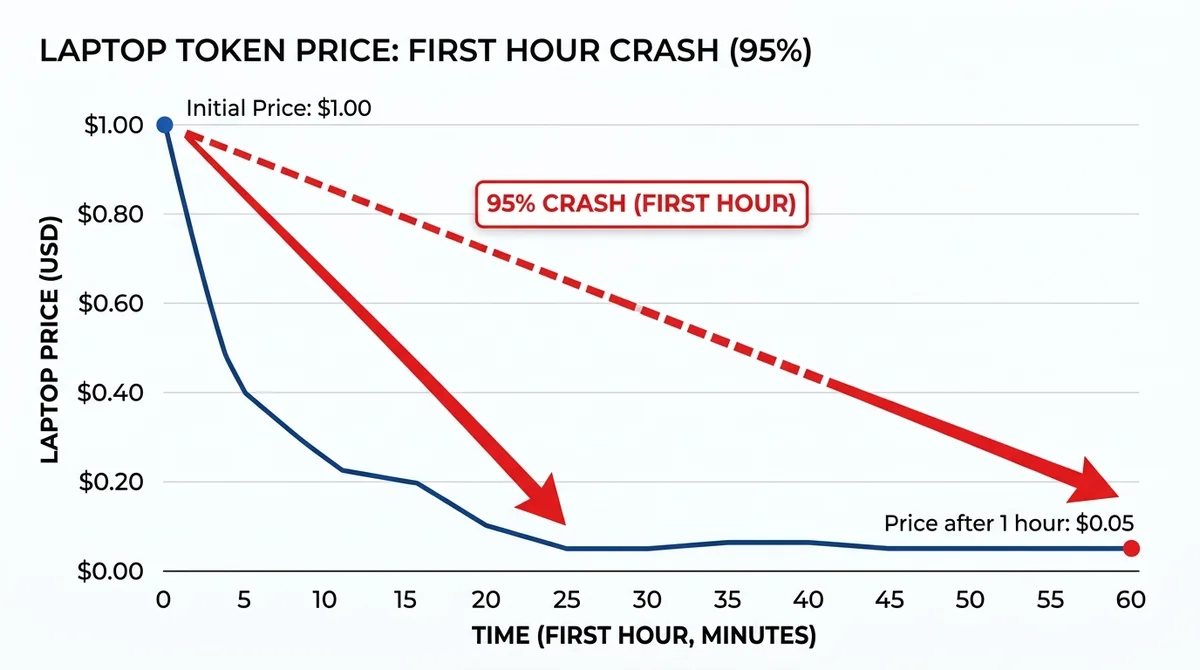
The LAPTOP meme coin plummeted over 95% within the first hour of trading, sparking strong market suspicions of a rug pull (a scam where project founders abscond with funds). According to a Cointelegraph report on September 10, 2026, the token's price collapsed rapidly after launch, with some users accusing the project team of profiting through liquidity manipulation. Hunter Biden subsequently denied profiting from the token, stating that team tokens are locked and no one has sold.
How Did LAPTOP Token Perform in Its First Hour of Trading?
In its first hour, LAPTOP's price crashed by more than 95%, meaning nearly all early buyers incurred losses. Such extreme drops are not uncommon in meme coins (speculative tokens based on internet trends), but combined with subsequent on-chain data, the market suspects this was not merely normal market volatility.
Why Do Users Allege LAPTOP Is a Rug Pull?
The core basis for user allegations is that liquidity was rapidly drained after the token launched, the price fell off a cliff, and the project team did not disclose lockup details in advance. A rug pull refers to a scenario where project founders suddenly withdraw liquidity or dump tokens after attracting investor buys, causing the price to collapse to zero.
How Does On-Chain Data Reveal LAPTOP Token's Early Distribution?
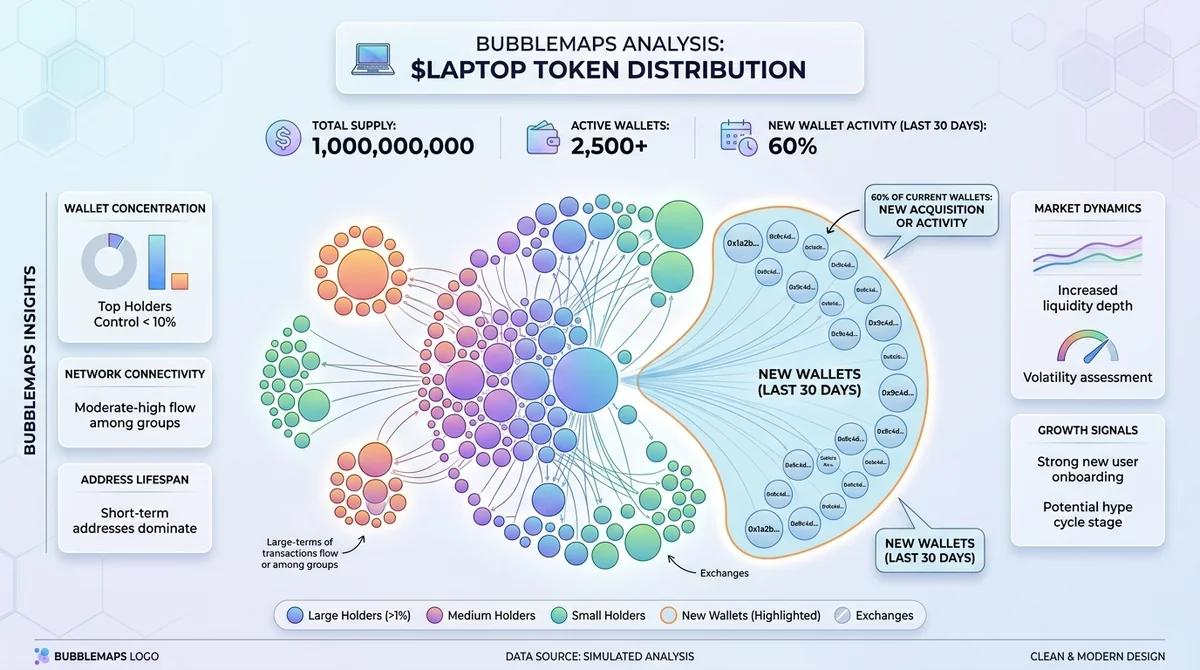
Bubblemaps' on-chain analysis shows that the top 60% of LAPTOP holders are new wallets with no prior activity, a distribution pattern highly consistent with rug pull allegations. Concentrated holdings in new wallets typically indicate that insiders pre-allocated tokens to sell at higher prices later.
What Anomalies Did Bubblemaps Analysis Find?
After visualizing on-chain holding relationships, Bubblemaps found that the top 60% of tokens are held by a cluster of wallets with no historical transaction records, and these wallets may be interconnected. In legitimate projects, early holders often have active on-chain histories, whereas the collective appearance of brand-new wallets is a red flag.
What Does Concentrated Holding in New Wallets Imply?
Concentrated holding in new wallets suggests that tokens may have been pre-distributed to a small number of insider addresses before listing. These addresses can sell at high prices when liquidity is sufficient, then withdraw liquidity. This is a classic precondition for a rug pull, and investors should be highly vigilant.
What Specific Wallet Losses Does Nansen Data Reveal?
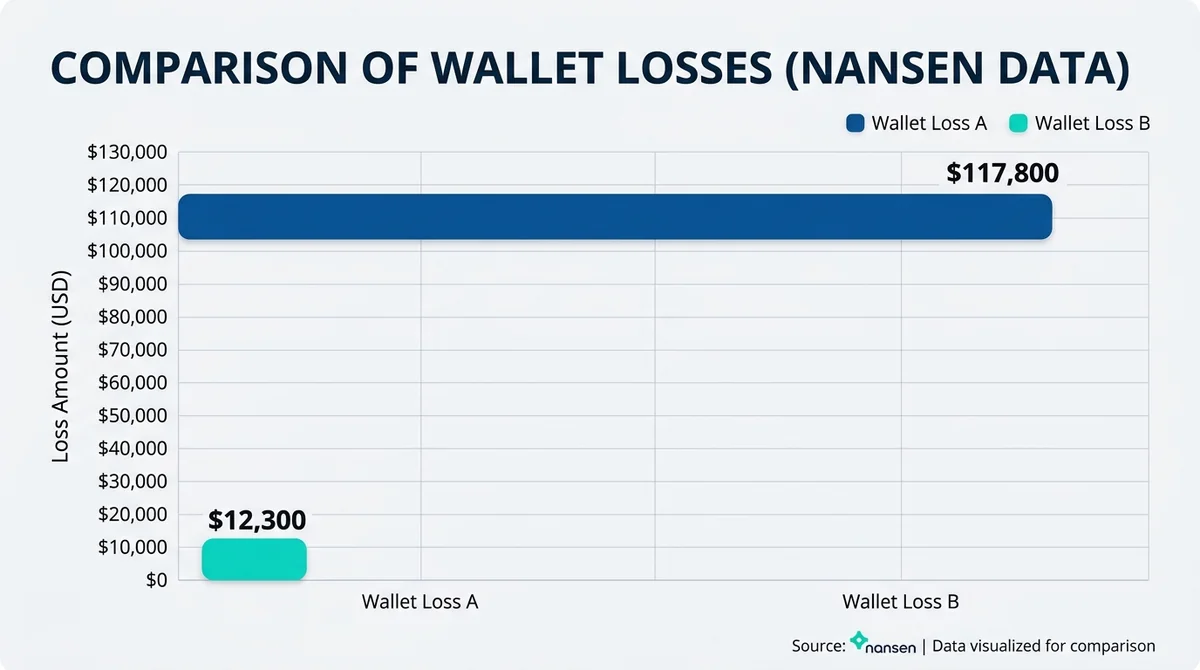
Nansen's on-chain data shows that one LAPTOP wallet has an unrealized loss of $117,800, and another has a paper loss of $12,300, highlighting the high risks of meme coin investing. These loss cases demonstrate that even small investments can suffer significant losses in extreme market conditions.
Which Addresses Show Large Unrealized Losses?
The two addresses tracked by Nansen show losses of $117,800 and $12,300 respectively, both unrealized losses (meaning current market value is below purchase cost, but the positions have not been sold). If holders continue to wait for a rebound, losses could widen further.
What Warnings Do These Loss Figures Provide for Investors?
The loss figures warn investors that meme coin prices are extremely volatile, liquidity depth is insufficient, and large positions are difficult to exit without affecting the price. Blindly chasing hot trends can lead to severe erosion of principal.
What Are the LAPTOP Team's Liquidity Incentive and Token Burn Plans?
The LAPTOP team announced it will deploy 4 million tokens as liquidity incentives for an Aerodrome pool and plans to burn 10 million tokens in the first week, attempting to stabilize market confidence. Whether these measures will be effective remains questionable, as rug pull allegations have severely damaged trust.
How Will the Aerodrome Pool Liquidity Incentives Be Deployed Specifically?
The team plans to inject 4 million LAPTOP tokens into an Aerodrome liquidity pool as incentives to attract liquidity providers. Liquidity incentives are a common tool used by decentralized exchanges to reduce trading slippage and improve market depth.
What Impact Will Burning 10 Million Tokens in the First Week Have?
Burning 10 million tokens (a portion of the total supply) theoretically reduces circulating supply and could provide price support. However, if the market has already concluded the project is a rug pull, a simple burn is unlikely to restore trust.
What Lessons Should Investors Learn from the LAPTOP Incident?
Investors should learn from the LAPTOP incident, be wary of rug pull signals such as concentrated holdings in new wallets, and use on-chain analysis tools for due diligence. Meme coin investing requires strict position control to avoid heavy allocation driven by FOMO (fear of missing out).
How to Identify Rug Pull Risks in Meme Coins?
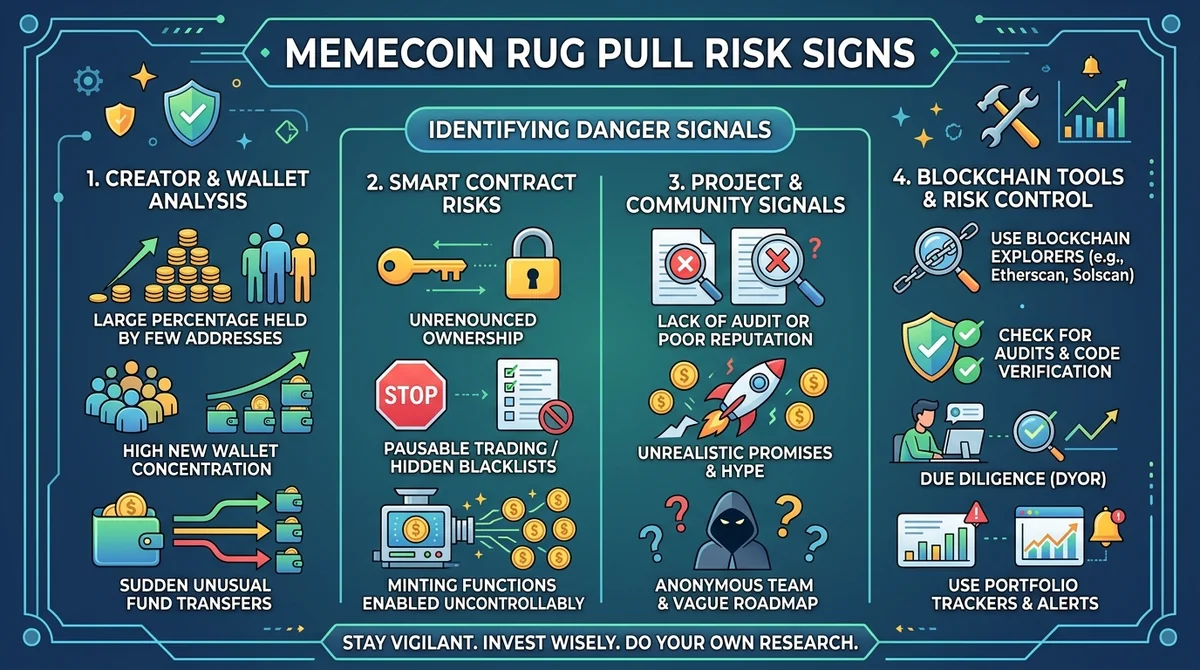
To identify rug pull risks, watch for the following signals: large token holdings concentrated in new wallets, unlocked or short-duration liquidity pool locks, anonymous project teams, and excessive social media promotion. Using tools like Bubblemaps to examine token distribution is an effective approach.
What Protection Can On-Chain Analysis Tools Provide?
On-chain analysis tools like Bubblemaps and Nansen can reveal token distribution, wallet history, and large position changes, helping investors spot anomalies before buying. However, tools can only assist judgment and cannot completely eliminate risk.
Frequently Asked Questions
Has the LAPTOP Meme Coin Been Confirmed as a Rug Pull?
Currently, the rug pull allegations have not been officially confirmed, but the concentrated holding pattern in new wallets shown by Bubblemaps is highly consistent with rug pull characteristics. Investors should remain cautious and await further evidence.
Did Hunter Biden Profit from the LAPTOP Token?
Hunter Biden publicly denied profiting from the LAPTOP token, stating that team tokens are locked and no one has sold. This statement has not been independently verified.
What Do the Bubblemaps and Nansen Data Indicate?
Bubblemaps data shows that the top 60% of holder addresses are new wallets with no historical activity, suggesting possible insider manipulation; Nansen data shows specific wallet losses of $117,800 and $12,300, reflecting actual investor losses.
What Are Common Risks of Meme Coin Investing?
Meme coin risks include: extreme price volatility, insufficient liquidity, rug pull scams, anonymous project teams, and lack of real-world utility. Investors should only invest amounts they can afford to lose entirely.
How to Use On-Chain Tools to Avoid Pitfalls?
Before buying, use Bubblemaps to check token distribution, use Nansen to track smart money movements, verify whether the liquidity pool is locked, and check if the project team is doxxed. These steps can reduce the probability of encountering a rug pull.
This article is produced by the MSXGO editorial team, AI-assisted, and reviewed through an editorial process. Fee rates and figures are subject to each platform's latest official announcements.
FAQ
Has the LAPTOP Meme Coin Been Confirmed as a Rug Pull? ▼
Currently, the rug pull allegations have not been officially confirmed, but the concentrated holding pattern in new wallets shown by Bubblemaps is highly consistent with rug pull characteristics. Investors should remain cautious and await further evidence.
Did Hunter Biden Profit from the LAPTOP Token? ▼
Hunter Biden publicly denied profiting from the LAPTOP token, stating that team tokens are locked and no one has sold. This statement has not been independently verified.
What Do the Bubblemaps and Nansen Data Indicate? ▼
Bubblemaps data shows that the top 60% of holder addresses are new wallets with no historical activity, suggesting possible insider manipulation; Nansen data shows specific wallet losses of $117,800 and $12,300, reflecting actual investor losses.
What Are Common Risks of Meme Coin Investing? ▼
Meme coin risks include: extreme price volatility, insufficient liquidity, rug pull scams, anonymous project teams, and lack of real-world utility. Investors should only invest amounts they can afford to lose entirely.
How to Use On-Chain Tools to Avoid Pitfalls? ▼
Before buying, use Bubblemaps to check token distribution, use Nansen to track smart money movements, verify whether the liquidity pool is locked, and check if the project team is doxxed. These steps can reduce the probability of encountering a rug pull.
Finished reading? Ready to try trading?
Tokenized stocks/ETFs, crypto spot, and perpetual futures in one account — perp maker 0.02% / taker 0.045%, RWA spot buy 0.3% / sell 0.
Free sign-up · 3 quick steps