Will Quantum Computing Break Bitcoin? IonQ Superion Progress and Post-Quantum Defense Frontiers 2026
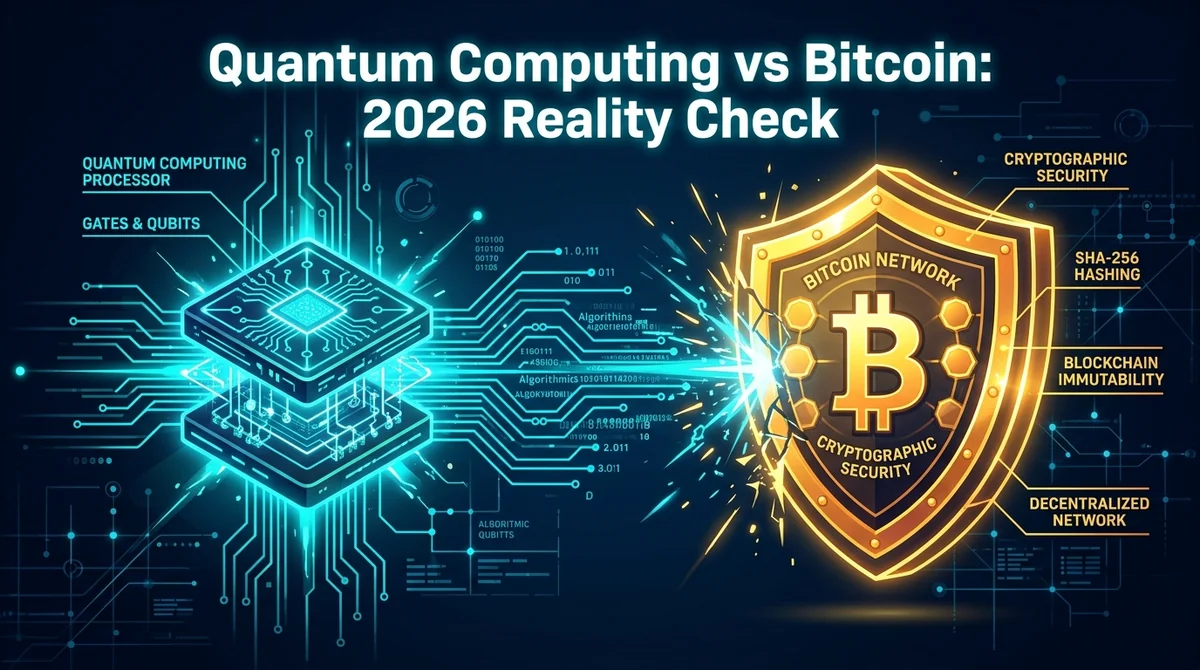
IonQ launches Superion 256. Can quantum computers crack Bitcoin? Explore physical vs logical qubits, Galaxy's $5M fund, and PQC upgrade paths.
Article Citation Summary
IonQ launches Superion 256. Can quantum computers crack Bitcoin? Explore physical vs logical qubits, Galaxy's $5M fund, and PQC upgrade paths.
Will Quantum Computing Break Bitcoin? IonQ Superion Progress and Post-Quantum Defense Frontiers 2026
Key Takeaways / TL;DR
- Clear IonQ Hardware Delivery Milestones: IonQ Superion 256 is now open for customer orders with deliveries scheduled for 2027, while the fault-tolerant Superion 10K system plans to demonstrate error-corrected computing in 2027 and enter commercial deployment in 2028.
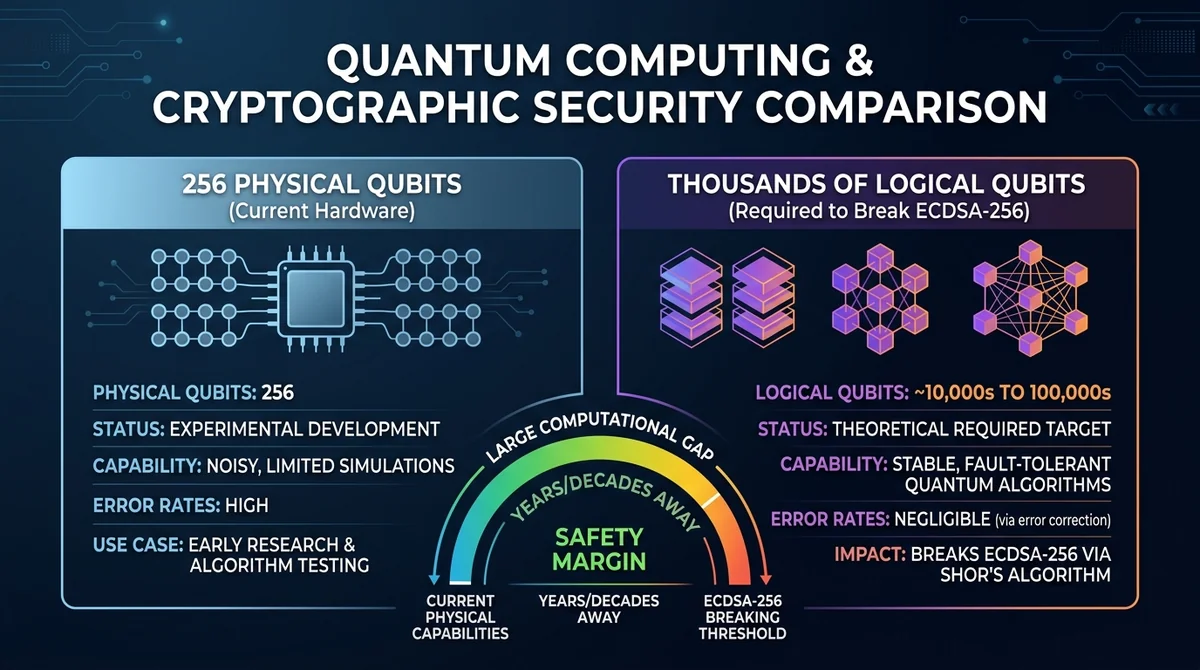
- Physical Qubits Do Not Equal Breaking Cryptography: Theoretically, quantum computers can derive private keys from exposed public keys. However, breaking 256-bit elliptic curve cryptography requires thousands of stable, fault-tolerant logical qubits; a 256-physical-qubit machine remains far below the threat threshold.
- Institutional Funding Accelerates Defenses: Galaxy has launched a $5 million Bitcoin Quantum Security Defense Grants Program to support research and development for post-quantum cryptography (PQC) soft fork upgrades.
- Primary Risks Lie in Exposed Public Keys and Perception Biases: Bitcoin addresses that avoid address reuse remain highly secure. The main short-term risk stems from irrational market volatility triggered by exaggerated narratives around quantum hardware.
What Recent Breakthroughs Have Occurred in Quantum Computing Hardware?
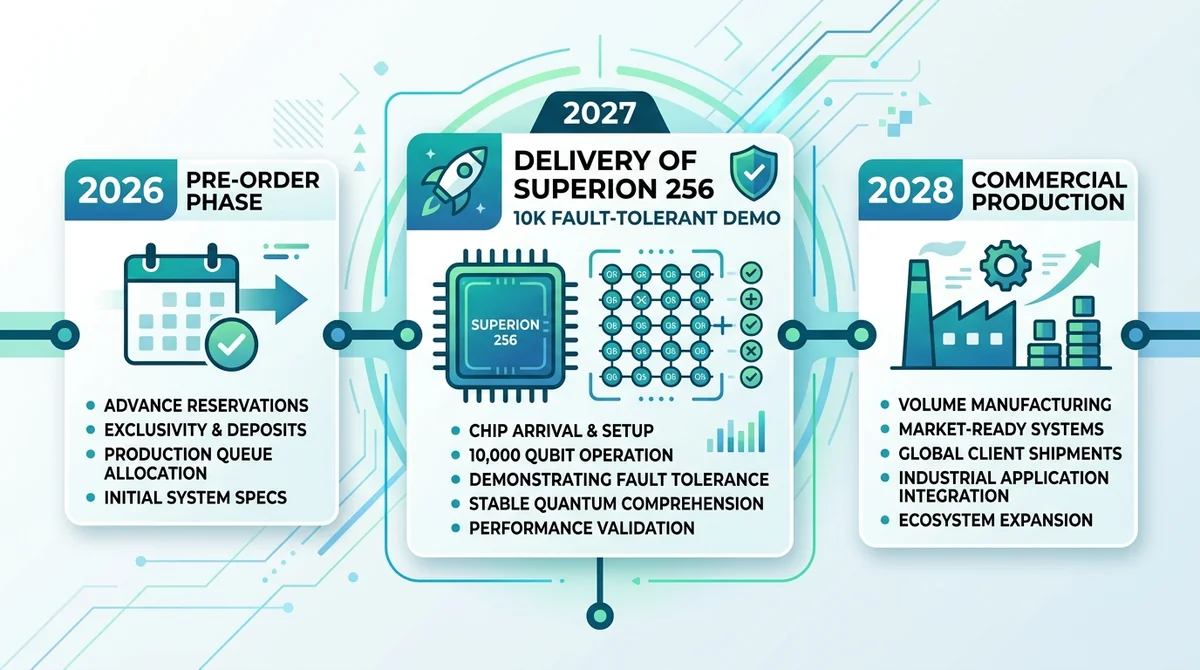
IonQ officially announced its Superion 256 quantum computer and opened customer orders, with system deliveries expected to begin in 2027, alongside plans to commercialize the fault-tolerant Superion 10K system in 2028.
IonQ Superion 256 Specifications and Delivery Timeline
Quantum hardware provider IonQ has introduced its next-generation Superion 256 model. According to public announcements, the machine is currently open for pre-orders by enterprise and research institutions, with phased system deliveries scheduled to start in 2027. This marks a critical step toward commercializing large-scale physical qubit manufacturing and prompts the market to reassess the timeline of quantum hardware impacts on legacy cryptographic systems.
Superion 10K Fault-Tolerant Computing Roadmap and Commercialization Milestones
In addition to the 256-qubit model, IonQ unveiled an advanced development roadmap for the Superion 10K:
- 2027 Milestone: Publicly demonstrate fault-tolerant quantum computing (using quantum error correction codes to mitigate environmental noise and preserve quantum coherence).
- 2028 Milestone: Formally initiate mass commercial production and deployment of Superion 10K systems.
As hardware roadmaps accelerate, developers across the crypto industry and traditional financial infrastructure are stepping up implementation testing for post-quantum defense frameworks.
Why Is Quantum Computing Breakthrough Significant for the Crypto Market?
Quantum computers can theoretically utilize Shor's algorithm to reverse-engineer private keys from exposed public keys. However, an actual exploit requires thousands of high-fidelity logical fault-tolerant qubits; the count of physical qubits does not equate to cryptanalytic capability.
Underlying Cryptographic Logic of Public-to-Private Key Derivation
Modern public blockchains universally rely on the Elliptic Curve Digital Signature Algorithm (ECDSA—an asymmetric cryptographic mechanism whose security rests on the hardness of the discrete logarithm problem over elliptic curves) to verify transaction ownership. Under classical computing power, deriving a private key from a public key cannot be accomplished within realistic timeframes. Theoretically, however, a sufficiently scaled fault-tolerant quantum computer running Shor's algorithm could solve discrete logarithms in polynomial time, exposing on-chain public keys to the risk of reverse key derivation.
Difference Between 256 Physical Qubits and Breaking 256-Bit Cryptography
Market participants often confuse hardware parameters. It is essential to strictly distinguish between physical qubits and logical qubits:
| Dimension | Physical Qubits | Logical Fault-Tolerant Qubits |
|---|---|---|
| Definition & Properties | Actual hardware-level physical carriers; highly susceptible to environmental noise leading to decoherence | Stable, low-error computing units formed via error-correcting codes across numerous physical qubits |
| IonQ Superion 256 Status | Reaches a scale of 256 physical qubits | Has not achieved the logical scale required to execute Shor's algorithm against practical cryptosystems |
| Threshold to Break SECP256k1 | Academic estimates require millions to tens of millions of physical qubits for error correction (depending on physical fidelity) | Theoretically requires ~2,000 to 4,000 high-fidelity fault-tolerant logical qubits |
| Current Practical Threat Assessment | Cannot directly break 256-bit elliptic curve private keys | In early prototype validation stages; currently lacks practical cryptanalytic capability |
Understanding the evolution of cryptographic infrastructure provides a comprehensive view of network security, much like how investors evaluate multi-layered asset protection in the In-Depth 2026 Binance vs OKX Security and Proof of Reserves Comparison.
What Are the Real-World Impacts of Quantum Advances on the Bitcoin Network?
Potential quantum threats to Bitcoin are primarily confined to addresses with public keys already exposed on-chain. The Bitcoin network can execute smooth upgrades by introducing post-quantum cryptographic signatures via soft forks.
Vulnerability Analysis of Exposed Public Key Addresses (e.g., Early Addresses)
Bitcoin's security architecture features a dual-layer defense: before an address sends an outgoing transaction, its public key is shielded by SHA-256 and RIPEMD-160 dual-hash functions (hash algorithms are exceptionally quantum-resistant). The public key is only revealed in the transaction inputs once an outgoing transfer occurs. Therefore:
- Unused/Non-Reused Addresses: The public key is never exposed on-chain in plaintext, preventing quantum computers from directly mounting reverse-derivation attacks.
- Reused / Pay-to-Public-Key (P2PK) Addresses: Early Bitcoin addresses (including certain Satoshi-era P2PK addresses) that directly expose public keys carry relatively higher potential vulnerability.
Defense Acceleration via Galaxy's $5 Million Quantum-Resistant Fund
Institutional research and capital allocation toward post-quantum defenses are gaining significant momentum. According to industry disclosures, Galaxy announced a dedicated $5 million Bitcoin Quantum Security Defense Grants Program in July. The fund focuses on three primary pillars:
- Directly funding Bitcoin Core developers to build and test quantum-resistant cryptographic algorithms.
- Partnering with academic cryptography institutions to benchmark the performance and data overhead of post-quantum signature schemes.
- Establishing a Quantum Security Advisory Committee to formulate a standardized technical roadmap for smooth network upgrades.
Technical Pathways for Bitcoin Post-Quantum Cryptography (PQC) Signature Upgrades
Post-Quantum Cryptography (PQC)—cryptographic algorithms running on classical hardware that resist attacks from quantum computers—represents a vital upgrade path for Bitcoin. Through community consensus, Bitcoin can implement lattice-based cryptography or hash-based signature algorithms (such as SPHINCS+ or Falcon) via a soft fork, granting quantum resistance to addresses without altering historical ledger integrity.
How Does Quantum Computing Differently Impact Other Layer-1 Chains and Altcoins?
Major Layer-1 blockchains widely rely on elliptic curve signature schemes. Their varying capabilities to withstand quantum advances depend primarily on governance efficiency, upgrade execution, and smart contract migration overhead.
Quantum Resistance Status Across Signature Schemes (ECDSA vs. Ed25519 vs. BLS)
The signature schemes utilized across mainstream public chains exhibit homogeneous vulnerabilities under quantum threat models:
- Ethereum and EVM Ecosystem: Primarily utilize ECDSA (secp256k1), facing discrete logarithm attack risks comparable to Bitcoin.
- Solana and Cardano: Utilize Ed25519 signatures, which are similarly non-immune to Shor's algorithm over the long term.
- Ethereum PoS Consensus Layer: Relies on BLS aggregate signatures based on elliptic curve pairings, which will also require migration to quantum-resistant schemes in the future.
When analyzing the security evolution of base-layer networks, you can also consult the Tokenized Stocks Sector Watch: On-Chain TVL Surge and the New DeFi Lending Paradigm to understand how Layer-1 upgrades influence decentralized finance applications built on top.
Governance and Migration Challenges for Smart Contract Chains Upgrading to PQC
Upgrading smart contract platforms to post-quantum standards presents greater complexity than on UTXO-only architectures:
- State Bloat: PQC signatures and public keys are generally substantially larger than classical elliptic curve keys (several to dozens of times larger), causing node storage demands and gas costs to surge.
- Smart Contract Compatibility: Decentralized applications (DApps) with hardcoded signature validation logic require developers to refactor contract code.
- On-Chain Governance Coordination: Core development teams, validators, and ecosystem projects must reach strong consensus to coordinate unified migration schedules.
What Technical and Market Scenarios Might Unfold in the Future?
The most probable trajectory for the crypto ecosystem is that mainstream blockchain networks will preemptively deploy quantum-resistant algorithms via soft forks before fault-tolerant quantum computers reach practical scale.
Scenario 1: Post-Quantum Algorithm Upgrades Precede Fault-Tolerant Quantum Computers
Looking at the development pace, the standardization and deployment of post-quantum defenses significantly outpace hardware breakthroughs in fault-tolerant quantum computing:
- Defense Pace: Global standards bodies like NIST have progressively finalized PQC standards, and core communities including Bitcoin are actively drafting quantum-resistant Bitcoin Improvement Proposals (BIPs).
- Attack Pace: IonQ Superion 10K aims to demonstrate fault tolerance in 2027 and commercialize by 2028; achieving thousands of logical qubits for practical cryptanalysis still has an extended timeline window.
Scenario 2: Accelerated Quantum Hardware Triggers Short-Term Market Volatility
If quantum hardware achieves unexpected breakthroughs in coherence time or error-correction efficiency, short-term panic could hit the market. Understanding liquidity flows and market structure becomes crucial in such periods; readers can review Why Is the Crypto Market Up Today? BTC Breaks $80K, $220M Short Liquidations, and Strive Accumulation 2026 to rationally interpret the relationship between technological progress, derivatives liquidations, and asset pricing.
What Key Risks Should Crypto Investors Monitor Right Now?
Investors should focus on avoiding premature public key exposure caused by address reuse, while staying vigilant against irrational sell-offs fueled by media hype exaggerating physical qubit metrics.
Public Key Exposure and Address Reuse Risks
Address reuse refers to repeatedly using the same receiving address across multiple transactions. For routine asset storage, investors should follow Hierarchical Deterministic (HD) wallet best practices by generating a fresh address for every incoming transfer, ensuring the public key remains hidden behind cryptographic hashes prior to spending.
Short-Term Extreme Price Volatility Driven by Panic Narratives
Non-peer-reviewed hardware claims or misunderstandings regarding physical qubit counts are frequently sensationalized on social media into false narratives claiming "cryptography has been broken overnight." Investors should look beyond raw hardware specifications to verify whether systems possess logical error-correction capabilities and practical cryptanalytic power.
Security Risks of Un-Upgraded Legacy Assets
When blockchain networks eventually roll out post-quantum soft forks, long-dormant legacy addresses (such as early cold storage wallets) that fail to upgrade their signature schemes could become potential vulnerabilities in the distant future. For an analysis of on-chain dormant assets, refer to Dormant BTC Activity Hits 4-Year Low, ETH/BTC Ratio Reaches 3-Month High: Comprehensive 2026 Crypto Bull/Bear Signals and MSX Strategy.
What Key Signals Should Investors Track Next?
Investors should closely track IonQ's fault-tolerant computing milestones across 2027–2028, alongside the merge cadence of Bitcoin quantum-resistant BIP proposals and Galaxy-funded code repositories.
Core Tracking Checklist: Hardware and Developer Dimensions
When evaluating the post-quantum security landscape, focus on three primary indicators:
- IonQ Delivery & Fault-Tolerance Validation: Track actual customer deliveries of Superion 256 in 2027, the Superion 10K fault-tolerance demonstration in 2027, and commercialization in 2028.
- Bitcoin Quantum-Resistant BIP Progression: Monitor discussions and testnet deployments in the Bitcoin Core repository regarding post-quantum signature schemes (such as lattice-based soft forks).
- Galaxy $5M Fund Deliverables: Watch performance optimization milestones from funded academic teams and developers (e.g., signature size reduction proposals).
At the asset management level, monitoring underlying technical developments is just as essential as tracking exchange liquidity. Traders can also check the Lowest SUIUSDT perpetual futures fees Exchanges in 2026: Comprehensive Maker/Taker Rate Comparison to optimize execution and holding costs across their trading strategies.
Frequently Asked Questions (FAQ)
Can quantum computing break Bitcoin private keys in the short term?
No. While quantum computers could theoretically derive private keys from exposed public keys, practical attacks require thousands of stable, fault-tolerant logical qubits. Current machines like IonQ Superion 256 feature physical qubits, and a 256-physical-qubit machine does not equate to breaking 256-bit cryptography. Bitcoin private keys cannot be cracked in the near term.
What are the latest developments regarding IonQ Superion 256 and Superion 10K?
IonQ has launched the Superion 256 quantum computer and opened customer orders, with system deliveries expected to begin in 2027. It is also developing the Superion 10K, targeting a demonstration of fault-tolerant quantum computing in 2027 and commercial production in 2028.
What quantum defense measures is the Bitcoin network implementing?
The industry is deploying defenses across both financial and technical fronts. Galaxy established a $5 million Bitcoin Quantum Security Defense Grants Program to support developers and academic research, while Bitcoin Core developers are actively exploring post-quantum cryptography (PQC) signature algorithms via soft forks.
What precautions should regular crypto holders take today?
The primary action is to avoid address reuse. By using a new receiving address for each transaction, public keys remain protected behind dual-hash algorithms, preventing quantum computers from executing reverse-derivation attacks.
This article is produced by the MSXGO editorial team, AI-assisted, and reviewed through an editorial process. Fee rates and figures are subject to each platform's latest official announcements.
FAQ
Can quantum computing break Bitcoin private keys in the short term? ▼
No. While quantum computers could theoretically derive private keys from exposed public keys, practical attacks require thousands of stable, fault-tolerant logical qubits. Current machines like IonQ Superion 256 feature physical qubits, and a 256-physical-qubit machine does not equate to breaking 256-bit cryptography. Bitcoin private keys cannot be cracked in the near term.
What are the latest developments regarding IonQ Superion 256 and Superion 10K? ▼
IonQ has launched the Superion 256 quantum computer and opened customer orders, with system deliveries expected to begin in 2027. It is also developing the Superion 10K, targeting a demonstration of fault-tolerant quantum computing in 2027 and commercial production in 2028.
What quantum defense measures is the Bitcoin network implementing? ▼
The industry is deploying defenses across both financial and technical fronts. Galaxy established a $5 million Bitcoin Quantum Security Defense Grants Program to support developers and academic research, while Bitcoin Core developers are actively exploring post-quantum cryptography (PQC) signature algorithms via soft forks.
What precautions should regular crypto holders take today? ▼
The primary action is to avoid address reuse. By using a new receiving address for each transaction, public keys remain protected behind dual-hash algorithms, preventing quantum computers from executing reverse-derivation attacks.
Finished reading? Ready to try trading?
Tokenized stocks/ETFs, crypto spot, and perpetual futures in one account — perp maker 0.02% / taker 0.045%, RWA spot buy 0.3% / sell 0.
Free sign-up · 3 quick steps